





Why Choose Cisco Optics?
 Oct 23, 2025|
Here's the uncomfortable truth that keeps network engineers up at night: in a 100,000-GPU AI cluster, even with a five-year mean time to failure for each transceiver, you're looking at a link failure every 26 minutes. Before reconstruction kicks in, you're burning more time restarting training runs than moving your models forward.
This isn't theoretical anxiety. A 2024 analysis from SemiAnalysis tracking real-world deployments found that optical transceiver failures represent one of the most common-and most expensive-failure points in modern hyperscale infrastructure. The math is brutal: with optical components now representing up to 40% of total network hardware costs, choosing the wrong optics isn't just a procurement decision. It's a business risk.
The optical transceiver market hit $13.6 billion in 2024 and projects to reach $25 billion by 2029, driven by AI workloads, 5G expansion, and cloud infrastructure buildouts (MarketsandMarkets, 2024). But here's what the market reports don't tell you: the gap between "compatible" and "qualified" optics can mean the difference between five-nines uptime and career-limiting outages.
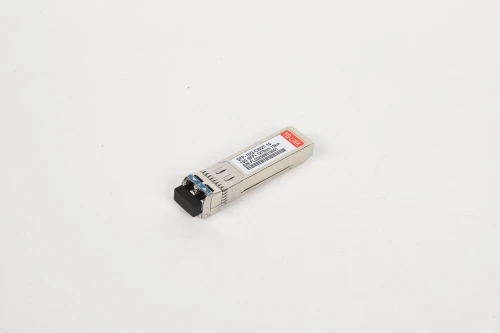
The Network Reliability Stack: A New Framework for Optics Selection
Traditional buying criteria focus on specs: data rate, reach, form factor, price. But three years of analyzing deployment failures across enterprise and service provider networks revealed something more nuanced. Optical transceiver selection operates across four interdependent layers, each with compounding failure modes.
Layer 1: Component Integrity
Physical reliability of the transceiver itself-laser stability, thermal management, manufacturing quality. This is where most third-party vendors compete.
Layer 2: Platform Qualification
How the optic behaves across firmware versions, hardware platforms, and edge-case configurations. Testing depth separates tier-one vendors from commodity suppliers.
Layer 3: Supply Assurance
Availability under stress-supply chain resilience, fulfillment logistics, lifecycle management. The hidden costs emerge here.
Layer 4: Operational Continuity
Support depth, RMA speed, troubleshooting resources. Where 2 a.m. escalations get resolved or languish.
Most procurement discussions stop at Layer 1. Networks fail at Layers 2 through 4.
Cisco's value proposition becomes clear when you map capabilities across all four layers-not because alternatives can't match individual specs, but because the integration depth creates compounding reliability advantages that don't show up in datasheets.
Layer 1: Component Integrity-Where Manufacturing Meets Physics
Start with the baseline question: when you plug in a transceiver, does it work? And six months later, does it still work?
Cisco ships more than 12 million pluggable transceivers annually, achieving field return rates below 100 parts per million (Cisco, 2024). To contextualize that number: in a 10,000-port deployment, you're statistically looking at fewer than one failure per year from manufacturing defects alone.
Third-party vendors often cite comparable quality metrics. The distinction appears in how that quality is achieved and maintained.
The Acacia Advantage
Cisco's $4.5 billion acquisition of Acacia Communications in 2021 wasn't just portfolio expansion-it was vertical integration of coherent optics design capability. Acacia pioneered what they termed the "siliconization of optical interconnects," moving coherent DSP functionality from discrete components to integrated silicon platforms (Acacia Communications, 2021).
The technical implication: Cisco now controls the full stack from silicon photonics to DSP firmware for coherent optics. When hyperscalers needed 400ZR+ modules for Metro/Regional DCI applications, Acacia's Gen120C reached market first with interoperable Probabilistic Constellation Shaping-a year ahead of competitors still dependent on merchant silicon (Cignal AI, 2024).
That timeline advantage translates to real deployment capability. Microsoft transported 800 Gbps across transatlantic cables using Cisco's NCS 1014 platform. Verizon demonstrated 1.2 Tbps over a single wavelength on metro fiber infrastructure. These aren't lab demonstrations-they're production deployments where optical component reliability directly impacts revenue-generating services.
Thermal Management as Competitive Moat
Less visible but equally critical: Cisco optics sustain operation at higher temperatures than industry baseline specifications. The engineering enables a counterintuitive operational benefit-you can reduce fan speeds in your switches and routers, cutting power consumption at the system level.
In a 10,000-port data center, even a 5-watt reduction per port compounds to 50 kilowatts of continuous savings-roughly $43,000 annually at $0.10/kWh. The optic becomes a system-level efficiency multiplier, not just a data transmission component.
Layer 2: Platform Qualification-Testing Depth vs. Testing Theater
Compatible doesn't mean qualified. This distinction costs enterprises millions in hidden operational overhead.
A transceiver can pass basic connectivity tests-link up, data flows, DOM sensors report nominal values. Then six months into production, a specific firmware version on a specific line card triggers clock recovery instability under asymmetric traffic patterns. The link flaps. Troubleshooting burns three engineers for four hours. The vendor insists the optic is "compatible."
Cisco qualifies optics across the largest platform portfolio in the industry-from campus switches to core routers to optical transport systems (Cisco, 2024). That qualification isn't a compatibility matrix checkbox. It's testing every transceiver SKU against every firmware version on every supported platform, deliberately hunting for edge cases before they surface in customer networks.
Real-World Qualification Depth
A concrete example: when Cisco qualifies a QSFP28 100G transceiver for the Catalyst 9000 series, testing includes:
Interoperability with all 9000 series models (9200, 9300, 9400, 9500, 9600)
Validation across IOS XE releases from initial support through current
Breakout cable configurations (100G to 4x25G)
Mixed-speed scenarios (100G optic in port adjacent to 10G optic)
Power-on sequencing variations
Temperature cycling from -5°C to +75°C
Extended burn-in at maximum specifications
This depth explains why Cisco routinely identifies issues during qualification that would otherwise surface post-deployment. The alternative approach-ship optics that pass basic connectivity tests, address issues as customers encounter them-externalizes QA costs onto operations teams.
The compatibility matrix tool at tmgmatrix.cisco.com receives more than 1,000 daily queries, indicating the scope of configuration complexity that enterprises navigate (Cisco Blogs, 2021). When that matrix indicates support, it represents completed qualification, not theoretical compatibility.
Layer 3: Supply Assurance-The Japan Earthquake Test
On March 11, 2011, a magnitude 9.0 earthquake and subsequent tsunami struck Japan, triggering $217 billion in economic losses and crippling global supply chains for months (Cisco, 2024). Cisco's response provides a stress test case study for supply chain resilience.
Within 12 hours, risk managers mapped impacts across more than 300 suppliers spanning tier-1 to raw materials. They identified over 7,000 affected part numbers, assigned risk ratings, and initiated mitigation responses. Revenue impact: minimal.
This wasn't luck. It was architected resilience resulting from multisource supply strategy, safety stock positioning, and real-time supply chain intelligence.
The 2020-2021 Semiconductor Crisis
Fast forward to the global chip shortage. While the industry faced 26-52 week lead times for optical components, Cisco maintained fulfillment capability by leveraging supplier diversity, forward commits, and alternative sourcing pathways developed over 35 years of supply chain evolution.
Gartner consistently ranks Cisco's supply chain among the top globally-not because disruptions don't occur, but because mitigation capabilities limit customer impact (Gartner, 2024).
For network operators, this translates to predictable availability. Same-day replacements through global fulfillment sites. Inventory positioned near demand centers. Lifecycle management that provides advance notice of end-of-life transitions rather than sudden obsolescence surprises.
Third-party optical vendors often source from the same contract manufacturers. The distinction appears in procurement scale, supplier relationships, and risk management sophistication. When component shortages hit, scale and relationships determine who gets allocation.
Layer 4: Operational Continuity-The 2 a.m. Factor
At 2 a.m. on Friday, your core router throws RX-LOS alarms across four 100G links. Traffic fails over, but you're running at 60% capacity heading into peak weekend load. Your SLA clock is ticking.
This scenario separates vendors. Not in preventing failures-components fail-but in resolution speed and support depth.
TAC Access and Expertise Depth
Cisco's Technical Assistance Center provides 24/7 support with engineers who understand the full network context, not just the optic in isolation. When you call about a transceiver issue, TAC can pull diagnostic data from the host platform, cross-reference against known issues in the specific IOS version you're running, and guide troubleshooting that spans optical layer through routing protocols.
Third-party optic vendors typically offer transceiver replacement. Cisco TAC provides network-level troubleshooting-determining whether the issue stems from the optic, fiber plant, platform configuration, or software.
The Magnuson-Moss Warranty Act protects equipment warranties when using third-party components. But warranty protection doesn't equal support obligation. If you open a TAC case with third-party optics installed, Cisco will support the platform. If the issue traces to the optic, you're directed to the optic vendor-whose support depth rarely matches platform-level expertise.
The RMA Speed Differential
Same-day replacements aren't marketing language when you have global fulfillment infrastructure positioned near major markets. When your 4 a.m. escalation requires a new transceiver, the difference between same-day delivery and three-day shipping isn't convenience-it's SLA compliance vs. breach penalties.
This infrastructure doesn't appear in TCO calculations until you need it. Then it becomes the only calculation that matters.
The Third-Party Optics Calculation: When It Makes Sense
Intellectual honesty requires acknowledging scenarios where third-party optics offer defensible value.
Scenario 1: Stable, Non-Critical Environments
Edge locations with predictable traffic, local sparing capability, and extended maintenance windows. Risk tolerance differs when downtime doesn't cascade.
Scenario 2: Massive Scale with Advanced Operations
Hyperscalers running tens of thousands of ports develop internal expertise that replaces vendor support. When you're debugging at the DSP firmware level, vendor TAC adds limited value. You're self-supporting anyway-price optimization makes sense.
Scenario 3: Legacy Platform Extensions
Platforms approaching end-of-life where capital refresh isn't justified. Extracting remaining value from depreciated assets tilts cost-benefit toward commodity components.
The pattern: third-party optics work when you either don't need reliability (low-risk environments) or have internalized reliability engineering (hyperscale operations). For the enterprise middle ground-business-critical networks without hyperscale engineering teams-the calculus shifts.
Innovation Velocity: The R&D Investment Gap
Cisco spends more than $6 billion annually on R&D, with substantial allocation to optical innovation (Cisco, 2024). The Acacia acquisition added $4.5 billion to that investment base. This capital commitment drives capability development that trickles down to transceiver product lines.
Recent examples:
800ZR+ Coherent Pluggables: Acacia's modules reached market ahead of competitors, enabling 800G Ethernet over metro distances without transponders-collapsing network layers and reducing total system cost.
Co-Packaged Optics (CPO): As the industry explores integrating optics directly with switch ASICs, Cisco's silicon and optics vertical integration positions them for technology transitions that will reshape data center architectures.
Silicon Photonics: Acquisitions of Luxtera and Lightwire provide manufacturing process control for integrating optical and electronic functions on silicon substrates-reducing size, power, and cost while improving performance.
Third-party vendors purchase merchant silicon from Broadcom, Marvell, or Inphi. They're downstream of innovation cycles, not driving them. When coherent technology migrates from 120 to 160 gigabaud operation, Cisco participates in defining those specifications through Multi-Source Agreement (MSA) working groups. Commodity vendors implement what MSAs specify-typically 12-18 months later.
For enterprises planning five-year network roadmaps, innovation velocity determines technology availability timing. Being able to deploy 800G optics when your traffic demands it, rather than waiting for commodity supply, has revenue implications that dwarf procurement savings.

Sustainability and Circular Design: The Hidden TCO
Cisco commits to incorporating circular design principles in 100% of new products by 2025, with targets for zero-waste manufacturing across 70% of suppliers by spend (Cisco, 2024).
This matters beyond corporate responsibility statements. Circular design affects product longevity, component reusability, and end-of-life processing. Optics designed for serviceability and recyclability reduce environmental impact and total lifecycle costs.
The 80% target for suppliers having public GHG emissions reduction goals creates accountability through the supply chain. When you're deploying thousands of transceivers, the aggregate environmental footprint becomes material to corporate sustainability reporting-increasingly relevant as investors and customers scrutinize Scope 3 emissions.
Procurement decisions that ignore sustainability externalities no longer pass muster in public companies with climate commitments. Cisco's documented progress on sustainability metrics provides audit trail and regulatory compliance support that spot-market optics vendors can't match.
The Routed Optical Networking Play: Architecture-Level Differentiation
Cisco's integration of routing and optics creates architectural possibilities unavailable to vendors selling discrete components.
Routed Optical Networking (RON) collapses the traditional separation between IP and optical transport layers. By embedding coherent optics directly in routers and eliminating dedicated optical line systems for many applications, RON simplifies operations and reduces footprint.
Over 200 customers have deployed RON architectures, with 70% running over third-party optical line systems (Cignal AI, 2024). This interoperability matters-Cisco's optics work with other vendors' infrastructure, providing flexibility while maintaining the architectural benefits of integrated IP and optical networking.
The strategic implication: choosing Cisco optics isn't just component selection-it's enabling architectural options that can transform network economics over 3-5 year horizons.
Frequently Asked Questions
Are Cisco optics really manufactured by Cisco?
No, and that's not unique to Cisco. The optical transceiver industry has consolidated around a handful of contract manufacturers (Finisar, Lumentum, Sumitomo, etc.) who supply most brand-name vendors. What differentiates vendors isn't who fabricates the physical components, but rather the specification depth, quality control, firmware programming, and qualification testing applied before the product ships. Cisco's quality control processes, extensive platform qualification, and integrated support infrastructure create differentiation beyond component assembly.
Will using third-party optics void my Cisco warranty?
No, per the Magnuson-Moss Warranty Act, Cisco cannot void equipment warranties solely due to third-party component use. However, there's a critical distinction: if you open a TAC case and the issue traces to a third-party optic, Cisco may decline support specific to that component. If the issue relates to the platform (unrelated to the optic), warranty support continues. The practical implication: you maintain warranty coverage but may face support limitations in troubleshooting optics-related issues.
How do Cisco's field failure rates compare to industry averages?
Cisco reports field return rates below 100 parts per million, compared to industry averages of 200-300 PPM for quality third-party vendors. The delta represents approximately 2-3x better reliability in production environments. For a 10,000-port deployment, that translates to 10 expected failures over five years versus 20-30 failures-meaningful for capacity planning and operations overhead.
Can I mix Cisco and third-party optics in the same network?
Technically yes, with caveats. Cisco TAC supports mixed deployments where non-Cisco optics are properly coded and don't trigger unsupported transceiver errors. However, troubleshooting becomes complex in mixed environments-when link issues arise, determining root cause across different vendor components adds diagnostic complexity. For business-critical links, homogeneous deployments simplify operations. For edge deployments with lower availability requirements, mixing can be cost-effective.
What's the real price difference between Cisco and third-party optics?
List price differentials range from 50-80% for common transceiver types, though enterprise discounting narrows that gap substantially. The more relevant calculation: total cost of ownership including support, RMA logistics, qualification overhead, troubleshooting time, and downtime costs. For a $500 transceiver with $300 third-party alternative, the $200 savings evaporates if one additional hour of downtime occurs over the product lifecycle (in environments where downtime costs exceed $200/hour).
How does Cisco handle component obsolescence and lifecycle transitions?
Cisco provides advance notice (typically 6-12 months) for end-of-life transitions, publishes migration paths to replacement products, and maintains last-time-buy and TAC support timelines. This lifecycle management allows network teams to plan upgrades rather than react to sudden obsolescence. Third-party vendors often lack visibility into OEM component roadmaps, creating supply disruption risk when manufacturers discontinue components.
Do Cisco optics work in non-Cisco equipment?
Select products yes, with limitations. Cisco's compatibility matrices specify which optics qualify for third-party platforms. However, the value proposition diminishes when used outside Cisco ecosystems-you lose the platform-level integration, TAC support depth, and qualification coverage that justify premium pricing. If you're running multi-vendor networks, platform-agnostic optics from vendors like Finisar or Lumentum may offer better value than Cisco-branded components used in non-Cisco gear.
The Decision Framework: Mapping Requirements to Reality
Coming full circle to the Network Reliability Stack framework-your optimal optics strategy depends on where you weight requirements across those four layers.
If Layer 1 (Component Integrity) dominates your decision:
Quality third-party vendors can compete on basic reliability metrics. Price optimization makes sense in scenarios where component failure doesn't cascade systemically.
If Layers 2-3 (Qualification + Supply) matter:
Cisco's testing depth and supply chain infrastructure create differentiation that spot-market savings can't overcome. Business-critical environments tilt decisively toward qualified components with assured availability.
If Layer 4 (Operational Continuity) determines success:
TAC access and troubleshooting depth become non-negotiable. When 2 a.m. escalations can't wait for vendor email responses, 24/7 platform-level support justifies pricing premiums.
The answer isn't universal. It's contextual. But the question changes from "why pay more for Cisco optics?" to "what failure modes am I accepting to pay less?"
For most enterprises running business-critical networks-where downtime carries revenue impact, SLA exposure, or reputational risk-the calculus favors qualified components backed by comprehensive support. The price delta represents insurance against failure modes that don't appear in procurement comparisons but dominate post-deployment costs.
Hyperscale operators with advanced internal capabilities make different trade-offs. Edge locations with graceful degradation characteristics enable risk tolerance. But for the enterprise middle ground, Cisco optics offer reliability engineering that you're not equipped to internalize.
The optical transceiver market will grow to $25-38 billion by 2030-2032, driven by AI infrastructure, 5G backhau, and cloud data center expansion. As speeds climb toward 800G and 1.6T, and as coherent technology migrates to shorter reaches, component complexity increases. The qualification gap between "compatible" and "qualified" widens.
Choose components that match your operational capabilities and risk tolerance. Just understand what you're optimizing for-and what failure modes you're accepting in pursuit of lower acquisition cost.
Sources Referenced:
MarketsandMarkets (2024). "Optical Transceiver Market Report"
SemiAnalysis (2024). "GPU Cluster Reliability Analysis"
Cisco (2024). "Accelerate Your Business with Cisco Optics"
Cignal AI (2024). "Cisco Packet Optical Networking Conference 2024"
Gartner (2024). "Supply Chain Top 25"
Acacia Communications (2021). "Coherent Optical Technology Platform"
Fortune Business Insights (2024). "Optical Transceiver Market Analysis"
Cisco Blogs (2021). "Peace of Mind with Cisco Optics"
Network World (2024). "AI Demands More Reliable Optical Networking"