Establishing robust fiber optic infrastructure traditionally requires substantial financial investment and considerable time commitment. xWDM solutions enable expansion of transmission capabilities within existing optical networks without requiring additional cable installation. This approach optimizes current fiber resources by leveraging multiple wavelengths for data transport.
Our portfolio encompasses CWDM solutions designed for small-to-medium operators alongside DWDM systems optimized for intercity connectivity. Additionally, we provide multiplexing/demultiplexing equipment, dispersion compensation modules, and EDFA optical amplifiers, enabling operators to achieve infrastructure optimization.
Dense wavelength-division multiplexing represents an optical multiplexing technique that enhances fiber network bandwidth capabilities. This technology consolidates multiple data signals from various sources onto a single fiber pair while preserving individual stream separation. Each signal utilizes a distinct light wavelength for transmission.

Enhanced Capacity
This technology facilitates concurrent transmission across numerous data channels, amplifying overall network throughput. Internet service providers can thereby address escalating consumer bandwidth requirements, delivering uninterrupted browsing, rapid file transfers, and fluid video content delivery.
Protocol Independence
Operating at the physical layer, this architecture transparently accommodates both TDM and various data protocols including ATM, Gigabit Ethernet, ESCON, and Fibre Channel through standardized interfaces across a unified physical infrastructure.
Expansion Capability
The technology capitalizes on unused fiber resources prevalent in metropolitan and enterprise environments, rapidly addressing capacity demands on point-to-point connections and existing SONET/SDH ring segments.
Economic Efficiency
Maximizing data transmission capability eliminates the expensive requirement for deploying supplementary fiber-optic infrastructure. This approach reduces capital expenditure while minimizing network disruption during enhancement phases.
Adaptive Configuration
Service providers can dynamically adjust wavelength allocation to modulate network capacity according to fluctuating requirements. This adaptability enables future expansion without substantial infrastructure reinvestment.
Extended Reach
The technology supports data transmission across considerable distances while maintaining signal integrity. This capability extends FTTH network coverage, allowing service providers to serve broader customer bases without service quality degradation.
This technology dramatically expands optical fiber capacity through wavelength multiplexing, enabling simultaneous transport of substantial data volumes across individual fibers.
Extensive deployment occurs in long-haul and metro optical infrastructures, facilitating high-velocity, extended-range data transport. Providers leverage this to satisfy increasing bandwidth demands across wide geographical territories.
The technology connects geographically separated data centers across extended distances, enabling efficient data exchange and ensuring high-performance, minimal-latency interconnection between distributed facilities.
Telecommunication operators integrate this technology into backbone networks for efficient transport of substantial voice, data, and video traffic volumes across long distances, interconnecting various urban centers and territories.
Channel Configuration
Both technologies follow International Telecommunications Union specifications, with CWDM employing 20nm channel separation compared to DWDM's tighter 0.8nm or 0.4nm spacing. Consequently, CWDM accommodates up to 18 channels while DWDM supports 40, 80, or up to 96 channels on identical fiber pairs.
Frequency Allocation
CWDM channels occupy the 1271nm to 1611nm spectrum, whereas DWDM predominantly utilizes the "C-band" range spanning 1530nm to 1565nm, where optical fiber exhibits reduced attenuation enabling extended transmission distances.
Laser Technology
Temperature fluctuations cause lasers to emit at marginally different frequencies, creating potential "drift" from narrow frequency windows. DWDM's closely-spaced wavelengths require superior frequency stability compared to CWDM's broader channel separation. DWDM addresses this through cooled laser implementation, ensuring extended accuracy periods. However, this introduces elevated power consumption and increased complexity, historically resulting in higher DWDM operational costs. Manufacturing expenses traditionally centered on laser components, though technological advancement has substantially narrowed the price differential between both technologies.
Transmission Range
CWDM signals lack amplification capability but maintain integrity across all 18 ITU channels for distances reaching 80km, positioning it as an economical metropolitan network solution. Conversely, DWDM employs EDFA or RAMAN amplification to achieve distances exceeding 3000km, suitable for long-haul and submarine cable deployments. However, DWDM signal quality progressively degrades through fiber attenuation, with amplification simultaneously enhancing noise levels. Optical Signal to Noise Ratio proves critical in long-haul DWDM implementations, limiting amplification cycles while maintaining decodable signals at destination points. Additional challenges include chromatic dispersion, where different wavelengths travel at varying velocities, causing signal blending over extended distances.
Throughput Capacity
DWDM delivers superior per-channel bandwidth compared to CWDM. Current pluggable DWDM transceivers achieve 400 Gbps, with integrated components exceeding 1 Tbps, whereas CWDM currently peaks at 100 Gbps. For elevated bandwidth requirements over reduced distances, DWDM presents a compelling alternative.
Passive Implementation
To minimize electrical power requirements, both passive CWDM and DWDM offer viable options. Passive DWDM enables high-velocity systems with substantial channel capacity, though transmission distance restricts deployment to metropolitan networks requiring rapid communications. Passive multiplexing's strength lies in its straightforward nature. Compared to active multiplexing, passive solutions simplify specification, installation, and maintenance procedures. Simplified comparison: Active implementation = elevated CAPEX and OPEX. Passive implementation = reduced CAPEX and eliminated OPEX.

DWDM employs narrower wavelength separation, accommodating additional channels per fiber. Optimal deployment occurs in configurations exceeding eight active wavelengths per fiber. Through precise spectral division, the technology easily accommodates over 40 channels within C-band frequency parameters.
Contemporary optical fiber DWDM deployments achieve 100 Gbps throughput. When integrated with network management platforms and add-drop multiplexers, carriers implement optically-based transmission infrastructures. This methodology addresses expanding bandwidth requirements at substantially reduced costs compared to new fiber installation.
DWDM wavelength channels utilize infrared laser beam arrays. Each channel supports 100 Gbps transmission, with 192 channels per fiber pair yielding 19.2 terabits per second capacity per pair. The channels' physical distinctness and non-interference characteristics, derived from light properties, permit independent data format utilization and variable transmission rate operation across channels.
Wavelength Channel Alignment
● Channel Spacing: Verify transceiver operation on the designated DWDM grid specified by your infrastructure. Systems employ predetermined wavelength grids (typically 100 GHz or 50 GHz spacing) preventing channel interference. Ensure transceiver grid compatibility to prevent wavelength conflicts.
● Wavelength Configuration: Confirm transceiver alignment with designated wavelength channels within your system. Operations typically occur in C-band (1528-1561 nm) and L-band (1577-1603 nm) ranges. Verify transceiver wavelength correspondence with available channels.
Distance Parameters
● Range Requirements: Establish necessary data transmission distances within your infrastructure. Transceivers offer varied reach capabilities including short-haul, metro, long-haul, and ultra-long-haul configurations. Choose transceivers matching required transmission parameters. ● Amplification Requirements: Extended distances may necessitate optical amplification or regeneration nodes throughout the network, influencing transceiver selection and overall architectural design.
Data Rate Specifications
● Rate Compatibility: Define required network data rates. Transceivers span various rate specifications, including DWDM SFP, SFP+, SFP28, and QSFP28 formats.
● Scalability Planning: Consider future expansion and growth trajectories. Anticipating increased rate requirements warrants transceiver selection supporting elevated data rates when necessary.
Power and Sensitivity Parameters
● Transmission Power: Emission intensity represents the optical signal strength generated by transceivers. Excessive intensity induces signal distortion and potential receiving equipment damage, while insufficient power causes signal loss and compromised network performance.
● Reception Sensitivity: This characteristic defines transceiver capability for detecting weak optical signals. Select transceivers with enhanced sensitivity ensuring reliable signal reception, even under suboptimal network conditions.
Forward Error Correction
FEC represents an error correction methodology enhancing transmission reliability. It functions by embedding redundant correction codes within transmission data streams. These codes identify and rectify errors resulting from signal degradation during transmission, particularly across extended distances. FEC effectively mitigates signal attenuation effects, strengthening network data transmission security and dependability. Consequently, selecting FEC-compatible transceivers enables optical network link extension and coverage expansion, ensuring robust, error-free data delivery.
Dispersion Characteristics
● Dispersion Resistance: This parameter reflects module capacity to withstand and counteract dispersion phenomena in optical signals. Dispersion naturally manifests as signals traverse optical fibers, causing signal spread and potential distortion. Substantial dispersion tolerance in modules proves essential for maintaining signal integrity, ensuring reliable data transmission across extensive optical connections.
● Dispersion Mitigation: Assess requirements for dispersion management approaches, including dispersion compensation fibers (DCF) or modules (DCM), to minimize dispersion impact on signal quality.
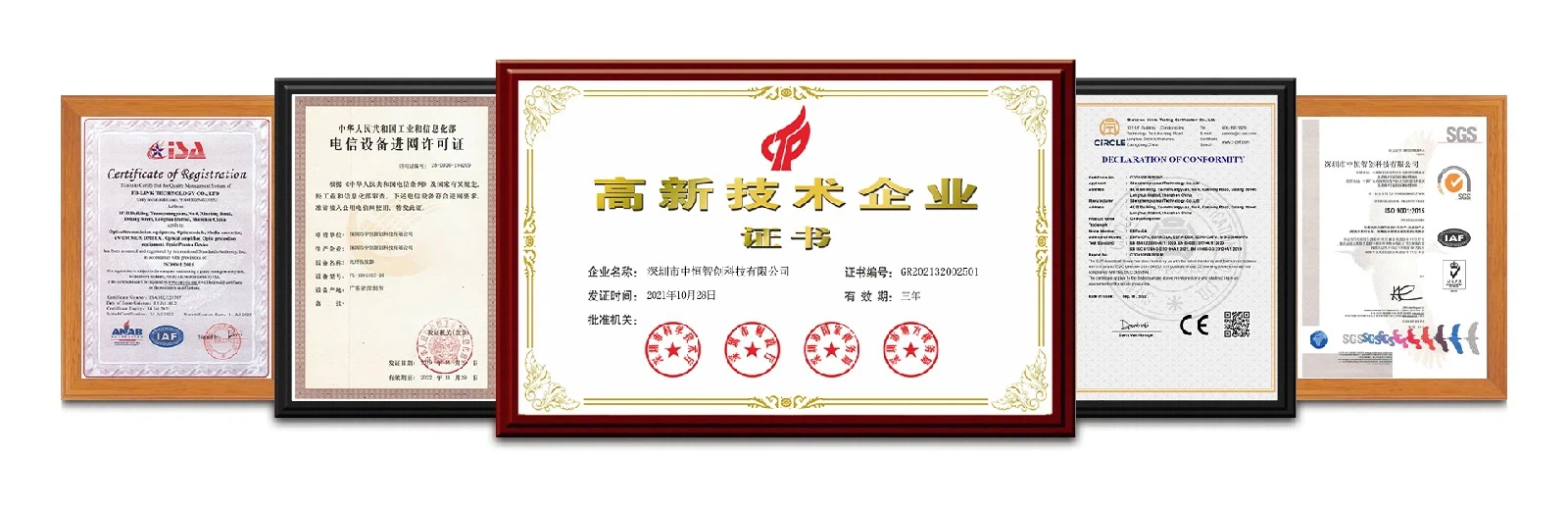
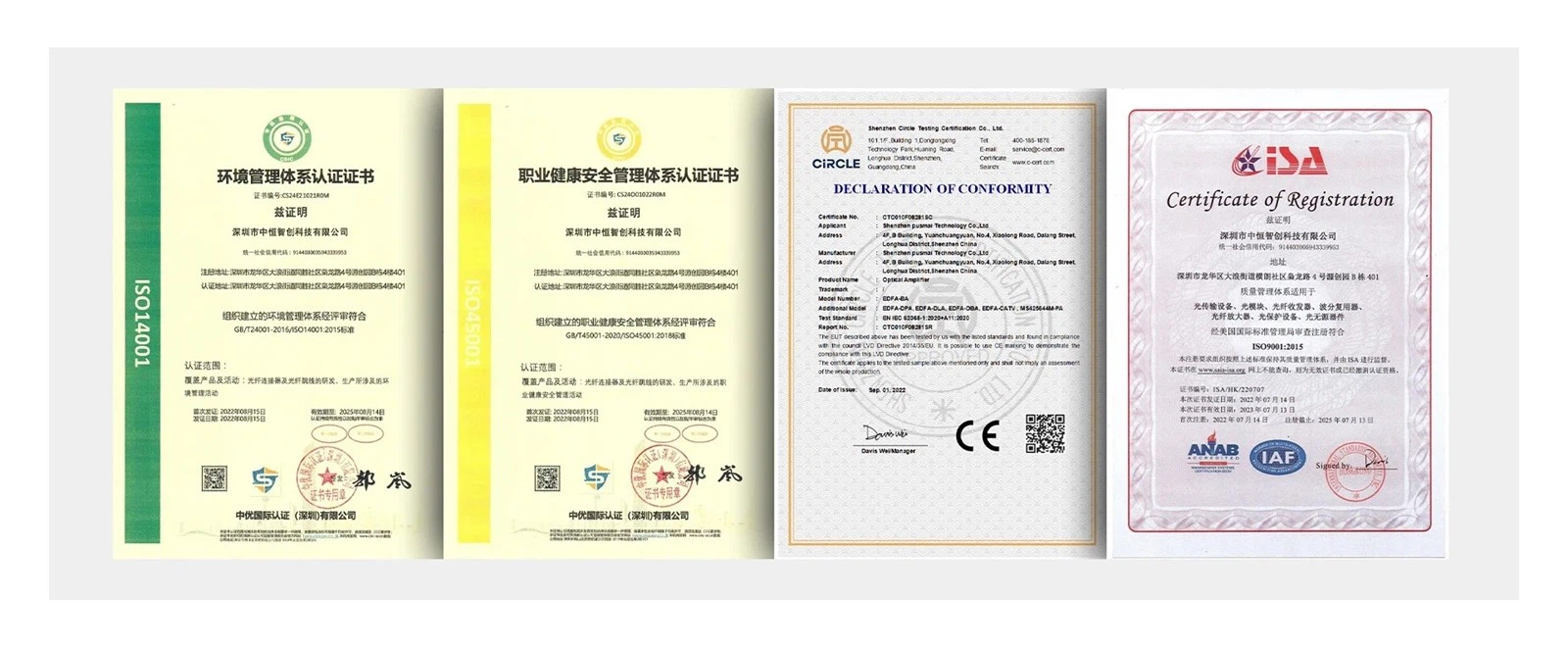
Up to now, FB-LINK has secured over 65 invention patents and more than 90 software copyrights, achieving national high-tech enterprise designation. Furthermore, the company has received national innovation fund support multiple times within the internet security sector.


FB-LINK has a technical team with strong engineering, installation, and project management capabilities that can handle end-to-end network deployments for TSPs, CSPs, Cable MSOs, and large enterprises. Professional technicians can provide one-stop solutions such as on-site deployment.


As one of the leading dwdm manufacturers and suppliers in China, we warmly welcome you to wholesale or buy discount dwdm in stock here from our factory. All customized products are with high quality and competitive price. Contact us for quotation and free sample.