FB-LINK 16CH CWDM Mux Demux 1270-1570nm Dual Fiber Module
Sixteen wavelengths on one fiber pair, 3.5dB typical insertion loss, LC/UPC pigtails in a sealed ABS box. Manufactured and OEM supplied direct by FB-LINK in Shenzhen.

- Product Introduction
Is This 16 Channel CWDM Mux Demux the Right Plan for Your Route?
-
Yes, if you need up to 16 channels of service on one duplex pair and your installed fiber is low water peak G.652.C/D.
-
Look at 8CH instead if eight services cover you and you want the lower 2.5dB loss budget.
- Look at 18CH instead if you need every wavelength the grid offers and can source 1590/1610nm optics.
- Ask for a skip band build if your fiber grade is mixed or unconfirmed. Same price, same lead time.
The sixteen wavelengths this module carries on the ITU-T G.694.2 grid

Full Specifications of the 16CH CWDM Dual Fiber Mux Demux ABS Box Module
Optical parameters. The 16 Channel column applies to this module; the other columns are shown so you can size a mixed project from one table.
| Parameter | 4 Channel | 8 Channel | 16 Channel | 18 Channel |
|---|---|---|---|---|
| Center wavelength (nm) | 1270~1610 / 1271~1611 | |||
| Center wavelength accuracy (nm) | ±0.5 | |||
| Channel spacing (nm) | 20 | |||
| Channel passband (@-0.5dB bandwidth) (nm) | ±7.5 / ±6.5 | |||
| Insertion loss (dB) | ≤1.5 | ≤2.5 | ≤3.5 | ≤3.5 |
| Channel uniformity (dB) | ≤0.6 | ≤1.0 | ≤1.5 | ≤1.5 |
| Isolation, adjacent (dB) | >30 | |||
| Isolation, non-adjacent (dB) | >40 | |||
| Isolation, express with filter (dB) | >30 | |||
| Isolation, express without filter (dB) | >12 | |||
| Channel ripple (dB) | <0.3 | |||
| Insertion loss temperature sensitivity (dB/°C) | <0.005 | |||
| Wavelength temperature shifting (nm/°C) | <0.002 | |||
| Polarization dependent loss (dB) | <0.1 | |||
| Polarization mode dispersion (ps) | <0.1 | |||
| Directivity (dB) | >50 | |||
| Return loss (dB) | >45 | |||
| Maximum power handling (mW) | 300 | |||
| Operating temperature (°C) | -40 ~ +85 | |||
| Storage temperature (°C) | -40 ~ +85 | |||
| Package dimension, glass tube (mm) | 5.5 × 25 | |||
| Package dimension, steel tube (mm) | 5.5 × 34 | |||
| Package dimension, ABS box (mm) | L100×W80×H10 · L120×W80×H18 · L141×W115×H18 | |||
| Configuration | Dual fiber duplex, matched Mux and Demux pair | |||
| Connector | LC/UPC as listed. FC/APC, FC/PC, SC/APC, SC/PC, LC and ST selectable in the ordering code below. | |||
Ordering code HC-CWDM-A-B-C-D-E-F
| A, channels | B, 1st channel | C, configuration | D, fiber type | E, fiber length | F, connector |
|---|---|---|---|---|---|
| 04: 4 Channel 08: 8 Channel 16: 16 Channel 18: 18 Channel N: N Channel |
27: 1270nm …… 47: 1470nm 49: 1490nm …… 61: 1610nm |
M: Mux D: Demux O: OADM |
1: Bare fiber 2: 900µm loose tube 3: 2mm cable 4: 3mm cable |
1: 1m 2: 2m S: Specify |
0: None 1: FC/APC 2: FC/PC 3: SC/APC 4: SC/PC 5: ST 6: LC S: Specify |
Send us the code, or just tell us the plan in plain words and our engineers will write the code for you.
How This Passive 16 Channel CWDM Multiplexer Puts Sixteen Services on One Fiber Pair
A thin film filter stack inside the box splits the 1270 to 1570nm window into sixteen 20nm slots and merges them onto a single duplex pair. Put a CWDM Mux Demux at each end and a route that used to carry one service now carries sixteen, each one independent, each one transparent to whatever protocol and bit rate you run over it.
Nothing in that path draws power. There is no laser to age, no fan to fail and no firmware to patch, which is why this class of passive wavelength multiplexer keeps turning up in unmanned huts and manhole splice points where a truck roll is expensive.
Loss is held at 3.5dB or better and channel uniformity at 1.5dB or better, so the sixteenth wavelength behaves much like the first. Adjacent isolation above 30dB and non adjacent isolation above 40dB keep the channels from bleeding into each other once the plan is fully loaded.
Why Project Buyers Pick This Wholesale 16 Channel CWDM Mux Demux
One power budget number covers all sixteen wavelengths
Loss is bounded at 3.5dB per unit. A dual fiber link uses two multiplexers, so 7.0dB of module loss covers both ends before you add fiber attenuation and patch connectors. Uniformity of 1.5dB bounds the spread across all 16 channels as well.
What that saves you is a spreadsheet. Your engineers size transceiver reach against one worst case figure instead of derating wavelength by wavelength, and when a service gets moved to a different channel next year nobody has to redo the arithmetic.
16 channels keeps your optics inside mainstream part numbers
This plan stops at 1570nm and leaves 1590 and 1610nm on the shelf. Those two sit at the far L band edge, which is exactly where coloured optics get harder to second source and slower to restock.
So the CWDM Mux Demux still lands sixteen services on the pair, but every transceiver that populates them is a part number you can get quoted from more than one vendor. The two unused wavelengths stay free for an OADM drop or an expansion build later.
How the 16 channel plan compares with 8CH and 18CH
Same platform, same test standard. Pick on services needed and fiber grade, not on price per channel alone.
| Plan | Wavelengths | Insertion loss | Uniformity | Choose it when |
|---|---|---|---|---|
| 8 channel | Eight of the grid | ≤2.5dB | ≤1.0dB | Eight services is enough and you want the loosest loss budget |
| 16 channel, 1270-1570nm | Sixteen consecutive | ≤3.5dB | ≤1.5dB | High density on a confirmed G.652.C/D route, mainstream optics |
| 18 channel | All eighteen, to 1610nm | ≤3.5dB | ≤1.5dB | You need every wavelength the grid has and can source L band edge optics |
Fully passive and rated from -40 to +85 degrees
No power feed, no cooling, 300mW handling and the same -40 to +85°C rating for operation and storage. At a tower site or a roadside cabinet a passive CWDM multiplexer means one less breaker position, one less rectifier and nothing added to the thermal calculation.
Not sure which plan fits your route? Send the route length, the fiber grade and how many services you need to land. FB-LINK will come back with a channel plan, a link budget and a factory direct price, usually the same day.
Inside the Thin Film Filter Optical Path of This CWDM Module
The filters inside every CWDM Mux Demux are assembled with non flux metal bonding micro optics packaging, so there is no epoxy sitting in the beam path where years of thermal cycling would otherwise cause drift.
Passband and thermal behaviour
- Passband of ±7.5 / ±6.5nm at -0.5dB against ±0.5nm centre wavelength accuracy, so the filter window is far wider than the drift of a standard uncooled coloured optic.
- Wavelength shift under 0.002nm per degree and loss shift under 0.005dB per degree.
- Channel ripple under 0.3dB.
Across the full 125 degree span the wavelength moves less than a quarter of a nanometre. That is why an outdoor cabinet needs no heater and no cooler for this box.
Reflection, polarisation and enclosure
- Return loss above 45dB and directivity above 50dB.
- Polarization dependent loss under 0.1dB and polarization mode dispersion under 0.1ps, so the box is not the limiting element for your 10G or 25G services.
- Pigtailed ABS box in L100×W80×H10, L120×W80×H18 and L141×W115×H18mm.
The ABS box drops into a splice tray, a wall bracket or a shelf. If your site standard calls for something else, the same optics ship in an aluminium box, an LGX cassette or a 1U 19 inch rack unit.
Where Project Ready CWDM Mux Demux Modules Get Deployed
Metro fiber capacity expansion
When a carrier hits a strand count ceiling on an existing metro route, sixteen services go onto one duplex pair instead of into a trench. Sixteen channel working means business Ethernet, mobile backhaul and residential aggregation share the pair without touching each other.
Data centre interconnect
Each wavelength carries its own 1G, 10G or 25G link between sites. Because the path is passive, an intermediate manhole or splice point on the DCI route needs no equipment, no power and no maintenance window.
5G fronthaul and backhaul aggregation
A hub site CWDM Mux Demux gathers traffic from a cluster of remote radio units onto one pair back to the baseband controller. As densification adds sites, the strand count between them stays where it is.
Check your fiber grade before you specify this plan
The 1390 and 1410nm channels sit in the water peak, where legacy G.652.A/B fiber shows an attenuation spike from residual OH ions. On low water peak G.652.C/D, which is the modern default, all sixteen channels run normally. If the route is mixed or you simply do not know, ask for the skip band build that leaves those two out. It costs the same and ships in the same window.
Custom CWDM Mux Demux OEM Manufacturing Built to Your Channel Plan
Everything below is set on the production line, not adapted on site. Tell us the plan and FB-LINK builds to it as your OEM manufacturer, including your own branding and labelling if this ships under your part number.
Wavelength plan
- Any subset of the grid from 2 to 18 channels, odd counts included
- Skip band layouts that avoid 1390 and 1410nm
- A 1310/1550nm expansion port so a DWDM overlay can be stacked inside one CWDM channel later
Connectors and pigtails
- LC/UPC, LC/APC, SC/UPC, SC/APC, FC/PC, FC/APC and ST
- Bare fiber, 900µm loose tube, 2mm or 3mm cable
- 1m, 2m or a length you specify
Housing and branding
- ABS box, aluminium box, LGX cassette, 1U 19 inch rack or wall mount bracket
- Optional 1% or 2% tap for non intrusive power monitoring
- Your label, your carton, your documentation on ODM programmes
Every CWDM Mux Demux We Ship Is Factory Tested Against Its Own Optical Report
Insertion loss, channel isolation, return loss and wavelength accuracy are measured on each CWDM multiplexer across the full operating temperature range, and the report travels with the box. Your incoming inspection checks a document written for that serial number rather than a generic datasheet.
- ISO 9001 for the manufacturing process.
- Telcordia GR-1221 as the reliability process applied to these passive modules.
- RoHS and REACH materials compliance across the line.
- 3-year warranty, with the individual test report supplied per unit.
Packaging and Shipping for Bulk Order CWDM Multiplexer Projects
Pigtails are coiled and retained inside the enclosure with the end faces protected, so the unit arrives ready to mount and nobody has to re dress fiber on site. The optical test report ships in the box with it.
CWDM Mux Demux consignments leave the Shenzhen factory by courier, air or sea. On staged rollouts we schedule batch delivery against your programme instead of dropping the whole order at once, and project labelling, carton marking and packing lists are prepared on request.
MOQ and Lead Times for the 16CH CWDM Dual Fiber Mux Demux
| Order type | MOQ | Lead time | Notes |
|---|---|---|---|
| Sample, any standard configuration | No MOQ, 1 unit | 3-5 business days | Buffer stock held on popular plans |
| Standard 4 / 8 / 10 / 16 / 18CH | Low, negotiable | 3-5 business days | Popular channel plans held in stock |
| Custom wavelength or channel plan, 2 to 18λ | Project based | 7-10 business days | Any subset of the G.694.2 grid, odd counts supported |
| Bulk or OEM project | Volume based | Quoted per project | Factory direct pricing, scheduled batch delivery |
Ready to price it? Tell us quantity, connector and channel plan. FB-LINK quotes wholesale CWDM Mux Demux orders factory direct, and a single sample unit ships with no minimum.
Gallery of the 16CH CWDM Dual Fiber Mux Demux ABS Box Module


FB-LINK Is Your Factory Direct CWDM Mux Demux Manufacturer and Supplier
FB-LINK is a dedicated CWDM Mux Demux manufacturer and OEM supplier in Shenzhen, building 4, 8, 10, 16 and 18 channel passive multiplexer modules across the full 1270 to 1610nm grid.
The whole channel range from one line
Every CWDM multiplexer from 4CH through 18CH comes off the same thin film filter platform and the same test standard, so a project that mixes hub and spur sites is supplied by one factory instead of assembled from three vendors.
The optics that populate it, on the same order
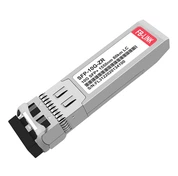
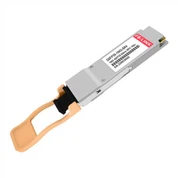
Coloured SFP, SFP+, SFP28 and QSFP28 transceivers on the ITU grid come from FB-LINK too. CWDM Mux Demux and optics get quoted, tested and shipped together, and there is no finger pointing if a channel misbehaves.
Engineering help before you commit
Send the route length, the fiber grade and the service list. We check the channel plan and the link budget before a purchase order exists, not after the first unit reaches site.
Terms you can plan around
Samples with no minimum, standard plans in 3-5 days, custom plans in 7-10, and bulk pricing scheduled against your build programme.
Procurement FAQs About the 16CH CWDM Dual Fiber Mux Demux
Which sixteen wavelengths are in the 1270 to 1570nm plan?
1270, 1290, 1310, 1330, 1350, 1370, 1390, 1410, 1430, 1450, 1470, 1490, 1510, 1530, 1550 and 1570nm. That is sixteen consecutive channels on the ITU-T G.694.2 grid at 20nm spacing with ±0.5nm centre wavelength accuracy. The remaining two grid wavelengths, 1590 and 1610nm, are not carried by this plan.
Should I buy the 16 channel version or the 18 channel version?
Take the 16 channel build when sixteen services cover the route and the cost and availability of the attached optics matters to you, because 1590 and 1610nm are the two hardest wavelengths to second source. Take eighteen when maximum capacity on a single pair is the binding constraint and your fiber is confirmed low water peak. Both CWDM Mux Demux versions are built on the same platform with the same 3.5dB loss ceiling.
Will this channel plan run on our installed fiber?
On low water peak G.652.C/D fiber, yes, all sixteen channels behave normally. On legacy G.652.A/B the 1390 and 1410nm channels fall in the water peak and get unreliable over distance. Confirm the grade end to end first. If it is mixed or unknown, ask for the skip band variant that omits those two wavelengths at the same price and lead time.
How much insertion loss should we budget for a complete link?
Budget 3.5dB per module, so 7.0dB for the mux and demux together on a dual fiber link, before fiber attenuation and patch connectors. Uniformity of 1.5dB bounds the spread across the sixteen channels, so one worst case figure covers all 16 channels. Send us the route and FB-LINK will check the budget against your transceiver reach before you order.
Can we change the connector, pigtail, monitor port or housing?
Yes. On a made to order CWDM Mux Demux the connector, fiber type, pigtail length and channel plan are all selected in the ordering code, and LC/APC, SC/UPC, SC/APC, FC/PC, FC/APC and ST sit alongside the standard LC/UPC. A 1% or 2% monitor tap and a 1310/1550nm expansion port are optional extras, and the same optics ship in ABS box, aluminium box, LGX cassette, 1U rack or wall mount housings.
What are the MOQ, the lead time and the OEM terms?
Samples ship with no minimum order, one unit in 3-5 business days. Standard 16 channel modules ship in the same window, and custom channel plans run 7-10 business days as made to order. As a wholesale CWDM Mux Demux supplier with in house assembly and test, FB-LINK quotes bulk and OEM projects factory direct with scheduled batch delivery, your own branding and your documentation.
Do you supply matching CWDM transceivers?
Yes. Any coloured SFP, SFP+, SFP28 or QSFP28 tuned to the ITU grid works with these modules, and FB-LINK supplies them as a CWDM Mux Demux manufacturer that also builds the optics. Ordering the mux and the transceivers together means both sides are tested against the same wavelength plan before they leave the factory.
Request a Quote From FB-LINK, a China CWDM Mux Demux Manufacturer
Tell us the channel plan, the quantity and the connector standard. If you are not sure of the plan yet, give us the route length and the number of services and we will propose one.
- Quote returned within one business day
- One sample unit, no minimum order, 3-5 business days
- Individual optical test report and 3-year warranty on every unit
Hot Tags: 16 Channel CWDM Mux Demux,CWDM