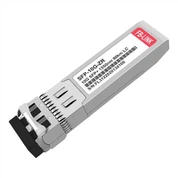
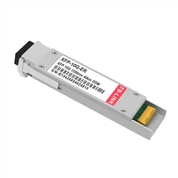
10GBASE CWDM SFP+
The 10G CWDM SFP+ series optical transceiver can support a variety of transmission distance from 10km to 80km.

- Product Introduction
Item Spotlights
● Hot pluggable SFP+ MSA form package, SFP+ MSA compliant
● Compliant with SDH STM64/SONET OC-192/10G FC
● Support Multi Protocol from 9.9Gb/s to 11.3Gb/s
● 18-Wavelengths CWDM (1270~1610nm) are available
● Duplex LC Connector
● 2-wire Interface for Management, Built-in digital diagnostic functions
● Low power consumption
● Supports a variety of transmission distances from 220m to 100km
● RoHS compliant
● Operating temperature range: 0~70°C(Commercial) /-40~85℃(industrial)
Description
|
Compatible |
10GBASE CWDM SFP+ |
||
|
Vendor Name |
FB-LINK |
||
|
Max Data Rate |
10.3125Gbps |
||
|
Max Cable Distance |
10km |
40km |
80km |
|
Wavelength |
1270-1610nm |
1470-1610nm |
1470-1610nm |
|
TX Power |
-4~+4dBm |
0~+5.5dBm |
0~+5.5dBm |
|
Receiver Sensitivity |
<-14.4dBm |
<-16dBm |
<-23dBm |
|
Transmitter Type |
DFB |
EML |
EML |
|
Receiver Type |
PIN |
PIN |
APD |
|
Commercial Temperature Range |
0 to 70°C (32 to 158°F) |
||
|
DDM/DOM |
Supported |
||
|
Warranty |
3 Years |
||
Fully compatible

Application

Transmission

The rapid expansion of data networks has created an unprecedented demand for reliable, high-speed connectivity solutions. Optical transceivers have emerged as the critical components enabling businesses to meet bandwidth requirements while maintaining cost efficiency and scalability. These compact devices serve as the bridge between electrical and optical signals, making seamless data transmission across fiber optic networks possible.
What Makes Optical Transceivers Essential for Network Infrastructure
Optical transceivers function as both transmitters and receivers, converting electrical signals into optical signals for transmission and vice versa for reception. This bidirectional capability makes them indispensable in modern telecommunications, data centers, enterprise networks, and metropolitan area networks.
The technology behind these modules has evolved significantly, with current-generation optical transceivers supporting speeds from 1 Gigabit to 400 Gigabit per second and beyond. Their hot-swappable design allows network administrators to upgrade or replace modules without shutting down entire systems, minimizing downtime and maintaining business continuity.
CWDM Technology: Maximizing Fiber Utilization
Coarse Wavelength Division Multiplexing represents a breakthrough in fiber optic efficiency. By transmitting multiple data streams simultaneously over different wavelengths on a single fiber strand, CWDM optical transceivers dramatically increase network capacity without requiring additional fiber installation.
This wavelength-based approach creates distinct channels operating independently within the spectrum range, typically utilizing wavelength intervals that prevent signal interference. The result is a cost-effective solution for organizations seeking to expand bandwidth capacity using existing fiber infrastructure.
Key Advantages of Implementing Optical Transceivers
Scalability and Future-Proofing
Modern optical transceivers offer unprecedented scalability. As network demands grow, organizations can simply add modules with different wavelengths or upgrade to higher-speed variants without overhauling their entire infrastructure. This modular approach protects technology investments and provides a clear upgrade path.
Energy Efficiency and Space Optimization
Compared to traditional copper-based solutions, optical transceivers consume significantly less power while occupying minimal rack space. This efficiency translates to reduced cooling requirements, lower operational costs, and smaller carbon footprints-increasingly important considerations in today's sustainability-focused business environment.
Distance and Performance
Fiber-based optical transceivers overcome the distance limitations inherent in copper cabling. Depending on the module type and fiber quality, these devices can maintain signal integrity across distances ranging from several hundred meters to over one hundred kilometers, all while delivering consistent high-speed performance.
Protocol Versatility
Today's optical transceivers support multiple protocols and data rates, providing flexibility for diverse network architectures. Whether deploying Ethernet, Fibre Channel, or SDH/SONET applications, appropriate transceiver modules can accommodate various requirements within a unified infrastructure framework.
Selecting the Right Optical Transceivers for Your Network
Assessing Distance Requirements
Distance stands as the primary consideration when specifying optical transceivers. Short-reach applications within buildings typically utilize multi-mode fiber with corresponding transceivers, while campus or metropolitan deployments require single-mode fiber variants capable of spanning greater distances.
Understanding Compatibility Standards
Ensuring compatibility between optical transceivers and existing network equipment is crucial. Industry-standard form factors like SFP, SFP+, QSFP, and QSFP28 guarantee interoperability across vendor platforms. Multi-source agreement (MSA) compliance ensures that transceivers from different manufacturers can work seamlessly within the same network environment.
Environmental Considerations
Operating environment significantly impacts transceiver selection. Standard commercial-grade optical transceivers function reliably in controlled indoor environments, while industrial-grade variants withstand extreme temperatures, humidity, and vibration-essential for outdoor installations, industrial facilities, or harsh operating conditions.
Maintenance and Best Practices
Regular Inspection and Cleaning
Contamination represents the leading cause of optical transceiver performance degradation. Implementing regular inspection protocols using fiber microscopes and maintaining cleanliness through proper cleaning procedures ensures optimal signal transmission and extends module lifespan.
Digital Diagnostics Monitoring
Modern optical transceivers incorporate digital diagnostic monitoring capabilities, providing real-time visibility into critical parameters like temperature, voltage, laser bias current, transmitted optical power, and received signal strength. Proactive monitoring enables early detection of potential issues before they impact network performance.
Proper Handling Procedures
Optical transceivers contain sensitive components requiring careful handling. Following electrostatic discharge (ESD) precautions, avoiding touching optical interfaces, and properly storing unused modules in protective caps preserves their integrity and ensures reliable operation.
Frequently Asked Questions About Optical Transceivers
What's the difference between single-mode and multi-mode optical transceivers?
Single-mode optical transceivers use lasers to transmit light through narrow-core fiber, enabling long-distance transmission ranging from several kilometers to over one hundred kilometers. Multi-mode transceivers typically use LEDs or VCSELs with larger-core fiber, optimized for shorter distances up to a few hundred meters but at lower costs.
Can I mix optical transceivers from different manufacturers in the same network?
Yes, provided the optical transceivers conform to industry MSA standards and match the required specifications (speed, wavelength, distance). However, it's essential to verify compatibility and ensure all modules meet the same protocol requirements for reliable interoperability.
How do I know when an optical transceiver needs replacement?
Signs indicating replacement needs include frequent link drops, increased bit error rates, diminishing signal strength shown in diagnostic data, or physical damage to the module. Modern optical transceivers with digital diagnostics provide early warnings when parameters fall outside normal operating ranges.
What does hot-swappable mean for optical transceivers?
Hot-swappable optical transceivers can be installed or removed while network equipment remains powered on and operational. This feature eliminates the need for system shutdowns during maintenance, upgrades, or troubleshooting, significantly reducing network downtime.
Are there differences in quality between branded and compatible optical transceivers?
Quality varies based on manufacturing standards rather than branding alone. Reputable compatible optical transceivers manufactured to rigorous specifications often perform identically to OEM versions at substantially lower costs. The key is sourcing from established vendors offering comprehensive testing, warranty coverage, and quality assurance.
How does temperature affect optical transceiver performance?
Optical transceivers have specified operating temperature ranges. Exceeding these ranges can cause performance degradation, increased error rates, or complete failure. Commercial-grade modules typically operate from 0°C to 70°C, while industrial variants function in extended ranges from -40°C to 85°C for demanding environments.
What is the typical lifespan of optical transceivers?
Under normal operating conditions with proper maintenance, optical transceivers typically last 10-15 years or more. However, actual lifespan depends on environmental factors, usage intensity, power cycling frequency, and maintenance practices. Quality modules from reputable manufacturers generally offer longer service life.
Can optical transceivers be repaired, or must they be replaced?
Optical transceivers are typically replaced rather than repaired due to their sealed construction and the precision required for optical components. The cost and complexity of repair usually exceed replacement costs. However, proper maintenance and careful handling maximize operational lifespan, delaying replacement needs.
The Future of Optical Transceivers
The evolution of optical transceivers continues accelerating to meet ever-increasing bandwidth demands. Emerging technologies like coherent optics, silicon photonics, and higher-order modulation schemes promise even greater performance. As 400G becomes mainstream and 800G deployments begin, these modules will remain central to network infrastructure advancement, enabling the data-intensive applications defining our connected future.
Hot Tags: 10gbase cwdm sfp+, China 10gbase cwdm sfp+ suppliers, manufacturers, factory
You Might Also Like