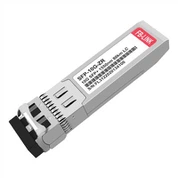
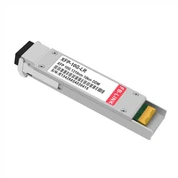
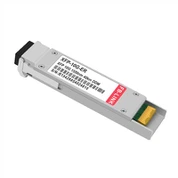
10GBASE SFP+ LR
10GBASE SFP+ LR is a very compact 10Gb/s optical transceiver module for serial optical communication applications at 10Gb/s.

- Product Introduction
10Gb/s 1310nm SFP+ 10km Transceiver
10GBASE SFP+ LR is a very compact 10Gb/s optical transceiver module for serial optical communication applications at 10Gb/s. The OP3910D converts a 10Gb/s serial electrical data stream to 10Gb/s optical output signal and a 10Gb/s optical input signal to 10Gb/s serial electrical data streams. The high speed 10Gb/s electrical interface is fully compliant with SFI specification. The high performance 1310nm DFB transmitter and high sensitivity PIN receiver provide superior performance for Ethernet applications at up to 10km links.
The SFP+ Module compliant with SFF-8431, SFF-8432 and IEEE 802.3ae 10GBASE-LR. Digital diagnostics functions are available via a 2-wire serial interface, as specified in SFF-8472.The fully SFP compliant form factor provides hot pluggability, easy optical port upgrades and low EMI emission.
Item Spotlights
● Hot-pluggable SFP+ form factor
● Supports 2.5~10.52Gb/s bit rate
● Power dissipation <1W
● Industrial case temperature range of -40°C to 85°C
● Single 3.3V power supply
● Maximum link length of 10km on Single Mode Fiber (SMF)
● Aligned with IEEE 802.3ae
● 10G DFB transmitter and 10G PIN receiver
● Duplex LC receptacles
● I2C management interface
● RoHS compliant
Description
|
Compatible |
10GBASE SFP+ LR |
Vendor Name |
FB-LINK |
|
Form Factor |
SFP+ |
Max Data Rate |
10.52Gbps |
|
Wavelength |
1310nm |
Max Cable Distance |
10km |
|
Connector |
Duplex LC |
Media |
SMF |
|
Transmitter Type |
DFB |
Receiver Type |
PIN |
|
TX Power |
-8.2~0.5dBm |
Receiver Sensitivity |
<-14.4dBm |
|
Powerbudget |
6.2dB |
Receiver Overload |
0.5dBm |
|
Power Consumption |
≤1W |
Extinction Ratio |
>3.5dB |
|
DDM/DOM |
Supported |
Commercial Temperature Range |
0 to 70°C (32 to 158°F) |
|
Protocols |
IEEE 802.3ae, SFF-8472, SFF-8431, SFF-8432, SFP+ MSA Compliant, CPRI, eCPRI |
Warranty |
3 Years |

When businesses demand faster, more reliable network connections, optical transceivers emerge as the backbone of modern data transmission. These compact yet powerful devices have revolutionized how enterprises handle bandwidth-intensive applications, cloud services, and data center operations.
What Makes Optical Transceivers Essential for Modern Networks
Optical transceivers serve as the critical link between electronic equipment and fiber optic cables, converting electrical signals into optical signals and vice versa. This bidirectional capability enables seamless data transmission across vast distances without the signal degradation common in traditional copper-based systems.
The technology behind optical transceivers has evolved significantly, offering solutions that support various data rates, distances, and network architectures. From basic gigabit connections to advanced 10-gigabit and beyond, these modules provide the flexibility that growing businesses require.
Key Technologies Behind High-Performance Optical Transceivers
Modern optical transceivers incorporate sophisticated components that work in harmony to deliver exceptional performance. The transmitter section typically employs DFB (Distributed Feedback) laser technology, which generates stable, high-quality optical signals at specific wavelengths. This precision ensures consistent performance across extended fiber runs.
The receiver component utilizes PIN photodiode technology, offering excellent sensitivity to detect weak optical signals that have traveled long distances. This combination of advanced transmitter and receiver technologies enables optical transceivers to maintain signal integrity even in challenging network environments.
Applications Where Optical Transceivers Excel
Data Center Interconnects: High-density data centers rely heavily on optical transceivers to connect switches, routers, and storage systems. The hot-pluggable nature of these modules allows IT teams to upgrade or replace connections without system downtime.
Enterprise Networks: Companies implementing 10-gigabit Ethernet infrastructure benefit from the scalability that optical transceivers provide. Whether connecting buildings across a campus or linking offices in different locations, these modules handle the bandwidth demands of modern business applications.
Telecommunications Infrastructure: Service providers deploy optical transceivers extensively in their networks, supporting everything from mobile backhaul to metropolitan area networks. The extended reach capabilities make them ideal for carrier-grade deployments.
Industrial Environments: Ruggedized optical transceivers withstand harsh conditions, including extreme temperatures and electromagnetic interference, making them suitable for manufacturing facilities, utilities, and outdoor installations.
Selecting the Right Optical Transceivers for Your Network
Several critical factors influence the selection of appropriate optical transceivers:
Distance Requirements: Single-mode fiber optical transceivers excel at long-distance transmission, supporting links up to 10 kilometers or more. Understanding your maximum span requirements helps narrow down suitable options.
Data Rate Compatibility: Modern optical transceivers support multiple speed grades, from 1Gbps to 100Gbps and beyond. Choosing modules that align with your current and future bandwidth needs ensures long-term value.
Form Factor Considerations: The SFP+ form factor has become an industry standard for 10-gigabit applications, offering excellent port density and flexibility. Compatibility with existing network equipment simplifies deployment and reduces costs.
Power Efficiency: Energy consumption matters, especially in large-scale deployments. Quality optical transceivers maintain power dissipation below 1 watt while delivering full performance, contributing to lower operational expenses.
Advanced Features That Enhance Network Management
Digital diagnostics capabilities have become standard in enterprise-grade optical transceivers. These built-in monitoring functions provide real-time visibility into critical parameters such as temperature, voltage, transmit power, receive power, and laser bias current. Network administrators can proactively identify potential issues before they impact service.
The standardized management interface enables seamless integration with network monitoring systems, allowing centralized oversight of all deployed optical transceivers. This visibility proves invaluable for troubleshooting, capacity planning, and maintaining optimal network performance.
Installation and Maintenance Best Practices
Deploying optical transceivers requires attention to detail for optimal results. Always handle modules by their edges, avoiding contact with optical ports. Inspect fiber connectors for cleanliness before insertion, as contamination represents the leading cause of optical transmission issues.
Hot-pluggable optical transceivers offer tremendous convenience, but following proper insertion and removal procedures prevents damage to both the module and the host equipment. Ensure the module clicks securely into place and that the bail clasp engages properly.
Regular monitoring of diagnostic data helps identify degrading components before failure occurs. Tracking transmit power trends, for instance, can reveal aging lasers that may require replacement during scheduled maintenance windows.
Future-Proofing Your Network Investment
The networking landscape continues evolving, with bandwidth demands growing exponentially. Selecting optical transceivers that support multiple protocol standards ensures compatibility with both current and emerging technologies. Look for modules that comply with IEEE, MSA, and SFF specifications for maximum flexibility.
Consider the total cost of ownership beyond initial purchase price. Quality optical transceivers from reputable manufacturers offer extended warranties, reducing the risk of unexpected replacement costs. The reliability premium pays dividends through reduced downtime and lower operational overhead.
Frequently Asked Questions About Optical Transceivers
Q: Can I use optical transceivers from different manufacturers in the same network?
A: Yes, as long as the modules comply with industry standards like SFF-8431, SFF-8432, and relevant IEEE specifications. However, ensuring compatibility with your specific switch or router model is essential. Some equipment may require vendor-coded modules, while others accept third-party compatible options.
Q: What's the difference between single-mode and multi-mode optical transceivers?
A: Single-mode optical transceivers use lasers and work with single-mode fiber for long-distance transmission, typically 10km to 80km or more. Multi-mode versions use LEDs or VCSELs with multi-mode fiber for shorter distances, usually up to 300-550 meters. The choice depends on your distance requirements and existing fiber infrastructure.
Q: How do I know if an optical transceiver is failing?
A: Modern modules with digital diagnostic monitoring provide early warning signs. Watch for decreasing optical power levels, increasing temperatures, or unstable laser bias current. Physical symptoms include intermittent link failures, increased error rates, or complete loss of connectivity.
Q: Are optical transceivers universal across different data rates?
A: No, optical transceivers are designed for specific speed ranges. A 10Gbps module cannot operate at 1Gbps speeds, though some modules support a limited range (like 2.5Gbps to 10.52Gbps). Always match the module specification to your required data rate.
Q: What does RoHS compliance mean for optical transceivers?
A: RoHS (Restriction of Hazardous Substances) compliance indicates the module is manufactured without harmful materials like lead, mercury, and cadmium. This certification matters for organizations with environmental policies and for compliance with regulations in various jurisdictions.
Q: How important is the operating temperature range?
A: Extremely important for deployment environment. Commercial-grade optical transceivers operate from 0°C to 70°C, suitable for climate-controlled facilities. Industrial-grade modules function from -40°C to 85°C, necessary for outdoor installations, factories, or locations without environmental controls.
Q: Can I clean optical transceiver ports myself?
A: Yes, using proper tools. Use optical-grade cleaning swabs and isopropyl alcohol specifically designed for fiber optics. Never use compressed air or household cleaning products. If unsure, consult with a fiber optic professional to avoid damaging sensitive optical components.
Q: What's the typical lifespan of optical transceivers?
A: Quality modules typically last 5-7 years or longer with proper environmental conditions and handling. The laser component gradually degrades over time, but digital diagnostics allow you to monitor performance and plan replacements before failure occurs.
Hot Tags: Optical Transceivers
You Might Also Like