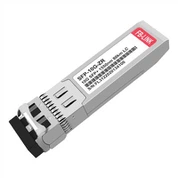
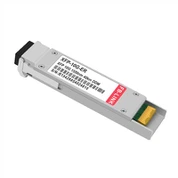
10GBASE DWDM SFP+
10GBASE DWDM SFP+ transceiver module adopts DWDM technology, Multiple optical signals are multiplexed at different wavelengths into a single fiber for transmission without consuming any power.

- Product Introduction
Item Spotlights
● Hot Pluggable SFP+ Form Factor
● LC Duplex Connector Transceiver Module
● DWDM EML Transmitter and APD Receiver
● Compliant with IEEE 802.3ae, SFF-8472, SFF-8431 and SFP+ MSA Ethernet Standard
● Max Power consumption < 1.5W
● Power Supply 3.3V
● Compliant with RoHS Environmental Standard (Lead-free)
● Class1/1M Standard Products, Compliant with IEC60825-1 Requirements
● Compliant with Telcordia(bellcore)GR-468-CORE Reliability
● Compliant with EMI and ESD Requirements
Description
|
Compatible |
10GBASE DWDM SFP+ |
Vendor Name |
FB-LINK |
|
Form Factor |
SFP+ |
Max Data Rate |
10.3125Gbps |
|
Wavelength |
C21-C60 |
Max Cable Distance |
40KM/80KM |
|
Connector |
Duplex LC |
Media |
SMF |
|
Transmitter Type |
EML |
Receiver Type |
PIN/APD |
|
TX Power |
-1~+4dBm |
Receiver Sensitivity |
<-16dBm/-23dBm |
|
Powerbudget |
6.2dB |
Receiver Overload |
0.5dBm |
|
Power Consumption |
≤1.5W |
Extinction Ratio |
>6dB |
|
DDM/DOM |
Supported |
Commercial Temperature Range |
0 to 70°C (32 to 158°F) |
|
Protocols |
IEEE 802.3ae, SFF-8472, SFF-8431, SFF-8432, SFP+ MSA Compliant, CPRI, eCPRI |
Warranty |
3 Years |
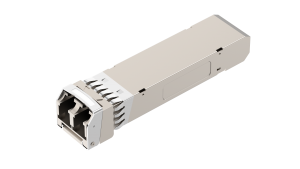
On ITU grid in C-band
| Channel |
Frequency |
Wavelength |
Channel |
Frequency |
Wavelength |
|
H60 |
196.05 |
1529.163 |
C60 |
196 |
1529.553 |
|
H59 |
195.95 |
1529.944 |
C59 |
195.9 |
1530.334 |
|
H58 |
195.85 |
1530.725 |
C58 |
195.8 |
1531.116 |
|
H57 |
195.75 |
1531.507 |
C57 |
195.7 |
1531.898 |
|
H56 |
195.65 |
1532.290 |
C56 |
195.6 |
1532.681 |
|
H55 |
195.55 |
1533.073 |
C55 |
195.5 |
1533.465 |
|
H54 |
195.45 |
1533.858 |
C54 |
195.4 |
1534.250 |
|
H53 |
195.35 |
1534.643 |
C53 |
195.3 |
1535.036 |
|
H52 |
195.25 |
1535.429 |
C52 |
195.2 |
1535.822 |
|
H51 |
195.15 |
1536.216 |
C51 |
195.1 |
1536.609 |
|
H50 |
195.05 |
1537.003 |
C50 |
195 |
1537.397 |
|
H49 |
194.95 |
1537.792 |
C49 |
194.9 |
1538.186 |
|
H48 |
194.85 |
1538.581 |
C48 |
194.8 |
1538.976 |
|
H47 |
194.75 |
1539.371 |
C47 |
194.7 |
1539.766 |
|
H46 |
194.65 |
1540.162 |
C46 |
194.6 |
1540.557 |
|
H45 |
194.55 |
1540.953 |
C45 |
194.5 |
1541.349 |
|
H44 |
194.45 |
1541.746 |
C44 |
194.4 |
1542.142 |
|
H43 |
194.35 |
1542.539 |
C43 |
194.3 |
1542.936 |
|
H42 |
194.25 |
1543.333 |
C42 |
194.2 |
1543.730 |
|
H41 |
194.15 |
1544.128 |
C41 |
194.1 |
1544.526 |
|
H40 |
194.05 |
1544.924 |
C40 |
194 |
1545.322 |
|
H39 |
193.95 |
1545.720 |
C39 |
193.9 |
1546.119 |
|
H38 |
193.85 |
1546.518 |
C38 |
193.8 |
1546.917 |
|
H37 |
193.75 |
1547.316 |
C37 |
193.7 |
1547.715 |
|
H36 |
193.65 |
1548.115 |
C36 |
193.6 |
1548.515 |
|
H35 |
193.55 |
1548.915 |
C35 |
193.5 |
1549.315 |
|
H34 |
193.45 |
1549.715 |
C34 |
193.4 |
1550.116 |
|
H33 |
193.35 |
1550.517 |
C33 |
193.3 |
1550.918 |
|
H32 |
193.25 |
1551.319 |
C32 |
193.2 |
1551.721 |
|
H31 |
193.15 |
1552.122 |
C31 |
193.1 |
1552.524 |
|
H30 |
193.05 |
1552.926 |
C30 |
193 |
1553.329 |
|
H29 |
192.95 |
1553.731 |
C29 |
192.9 |
1554.134 |
|
H28 |
192.85 |
1554.537 |
C28 |
192.8 |
1554.940 |
|
H27 |
192.75 |
1555.343 |
C27 |
192.7 |
1555.747 |
|
H26 |
192.65 |
1556.151 |
C26 |
192.6 |
1556.555 |
|
H25 |
192.55 |
1556.959 |
C25 |
192.5 |
1557.363 |
|
H24 |
192.45 |
1557.768 |
C24 |
192.4 |
1558.173 |
|
H23 |
192.35 |
1558.578 |
C23 |
192.3 |
1558.983 |
|
H22 |
192.25 |
1559.389 |
C22 |
192.2 |
1559.794 |
|
H21 |
192.15 |
1560.200 |
C21 |
192.1 |
1560.606 |
The exponential growth of data traffic demands innovative solutions for network infrastructure. Dense Wavelength Division Multiplexing (DWDM) has emerged as a game-changing technology, enabling multiple data streams to coexist on a single fiber strand. Optical transceivers equipped with DWDM capabilities represent a crucial advancement in addressing bandwidth challenges while maximizing existing fiber infrastructure investments.
Why DWDM Matters for Network Infrastructure
Traditional networking approaches often require laying additional fiber cables to meet growing capacity demands-an expensive and time-consuming process. DWDM-enabled optical transceivers solve this challenge elegantly by multiplexing dozens of wavelengths onto existing fiber, effectively multiplying capacity without new cable installations. This technology proves particularly valuable for metropolitan area networks, enterprise backbones, and telecommunications providers managing increasingly complex traffic patterns.
Key Advantages of DWDM-Based Optical Transceivers
Scalability Without Infrastructure Overhaul Organizations can incrementally add capacity by deploying additional wavelengths rather than installing new fiber routes. This approach significantly reduces capital expenditure while maintaining flexibility for future growth.
Extended Reach Capabilities Advanced modulation techniques and high-quality components enable transmission distances reaching 80 kilometers or more without signal regeneration. This extended reach eliminates intermediate equipment in many deployment scenarios, simplifying network architecture.
Protocol Flexibility Modern optical transceivers support multiple protocols simultaneously, including Ethernet, Fibre Channel, CPRI for mobile fronthaul, and SONET/SDH for legacy systems. This versatility simplifies network consolidation and reduces equipment diversity.
Energy Efficiency Despite handling multiple wavelengths, DWDM optical transceivers maintain low power consumption profiles, typically under 1.5 watts per module. This efficiency contributes to reduced operational costs and supports green networking initiatives.
Critical Deployment Considerations
Channel Planning and Wavelength Management The ITU-T G.694.1 standard defines the C-band grid spanning from approximately 1529nm to 1561nm, with channels spaced at 100GHz or 50GHz intervals. Proper channel planning prevents interference and ensures optimal system performance. Network architects must coordinate wavelength assignments across the entire DWDM system to avoid conflicts.
Link Budget Calculations Successful deployments require careful attention to optical power budgets. Factors including fiber attenuation, connector losses, splicing losses, and dispersion compensation must be accounted for. High-quality optical transceivers with sufficient transmit power and receiver sensitivity margins ensure reliable operation across varying environmental conditions.
Temperature Management Commercial-grade modules typically operate from 0°C to 70°C, suitable for controlled environments. Extended or industrial-grade optical transceivers may be necessary for outdoor cabinets, cell tower installations, or harsh industrial environments where temperature extremes occur.
Application Scenarios
5G Fronthaul Networks The transition to 5G architecture creates enormous demand for fronthaul connectivity between radio units and baseband processing. DWDM optical transceivers supporting CPRI and eCPRI protocols enable efficient aggregation of multiple cell sites onto shared fiber infrastructure, reducing both fiber count and operational complexity.
Data Center Interconnection As enterprises distribute workloads across multiple data centers, high-bandwidth interconnects become critical. DWDM technology allows multiple 10G, 25G, or higher-rate connections to share fiber pairs, maximizing the value of inter-facility fiber assets.
Metropolitan Service Delivery Service providers use DWDM optical transceivers to deliver diverse services-internet access, private lines, cloud connectivity, and video distribution-over converged optical infrastructure. This consolidation reduces network complexity while improving service agility.
Integration Best Practices
Compatibility Verification While most modern optical transceivers follow industry standards, verifying interoperability with existing DWDM multiplexers, optical amplifiers, and management systems prevents integration challenges. Testing with actual equipment before large-scale deployment mitigates risk.
Digital Diagnostics Monitoring DOM/DDM functionality provides real-time visibility into transceiver performance including optical power levels, temperature, and voltage. Proactive monitoring through these digital diagnostics enables predictive maintenance and rapid troubleshooting.
Proper Handling and Installation Optical components require careful handling to prevent contamination and damage. Always use dust caps when modules are not installed, clean connector end-faces before mating, and avoid exceeding maximum insertion/removal cycles.
Future-Proofing Network Investments
Selecting optical transceivers with appropriate specifications ensures longevity as network demands evolve. Consider factors beyond immediate requirements: Will your network need to support additional protocols? Might transmission distances increase? Will environmental conditions change? Answering these questions guides selection of modules with adequate performance margins and feature sets.
The industry continues advancing DWDM technology with higher channel counts, increased data rates per wavelength, and improved coherent detection methods. Organizations investing in quality optical transceivers today position themselves to leverage these innovations through straightforward upgrades rather than complete system replacements.
Frequently Asked Questions
What is the difference between CWDM and DWDM optical transceivers? CWDM (Coarse Wavelength Division Multiplexing) uses wider channel spacing (20nm) allowing up to 18 wavelengths, while DWDM employs narrow spacing (0.8nm or 0.4nm) supporting 40, 80, or more channels. DWDM provides greater capacity and longer reach but requires more precise wavelength control and typically costs more per channel. CWDM suits shorter distances with moderate channel requirements, whereas DWDM excels in high-capacity, long-haul scenarios.
Can I mix different vendors' optical transceivers in the same DWDM system? Yes, provided all modules adhere to relevant standards (IEEE 802.3ae, ITU-T G.694.1) and operate at compatible wavelengths. However, ensuring consistent performance characteristics-such as transmit power, dispersion tolerance, and chromatic dispersion compensation-across vendors improves system reliability. Always verify interoperability through testing when mixing vendors.
How do I calculate if a DWDM transceiver will work for my fiber span? Calculate total link loss by adding fiber attenuation (typically 0.2-0.25 dB/km at 1550nm), connector losses (0.3-0.5 dB each), splice losses, and any passive component losses. Ensure the transceiver's power budget (transmit power minus receiver sensitivity) exceeds total link loss by at least 3dB margin. Also verify chromatic dispersion stays within transceiver specifications-standard single-mode fiber exhibits approximately 17 ps/(nm·km) at 1550nm.
What does the "C21-C60" wavelength specification mean? This refers to ITU-T grid channels in the C-band (conventional band). The "C" designation indicates standard 100GHz channel spacing, while numbers represent specific wavelength positions. C21 corresponds to 1560.606nm, and C60 to 1529.553nm, providing 40 discrete wavelength options. Some systems use H-band (50GHz spacing) for doubled channel density.
Do DWDM optical transceivers require special switches or routers? No, DWDM optical transceivers insert into standard SFP+ ports on switches, routers, and media converters just like conventional modules. The DWDM functionality relates to optical wavelength, not electrical signaling. However, you need separate DWDM multiplexer/demultiplexer equipment to combine multiple wavelengths onto shared fiber and separate them at the receiving end.
What maintenance do optical transceivers require? Primary maintenance involves monitoring digital diagnostics for degradation trends in optical power or increasing error rates. Keep optical connectors clean using appropriate cleaning tools-contaminated connectors are the leading cause of optical link failures. Verify adequate cooling airflow around equipment, as elevated temperatures reduce transceiver lifespan. Most quality modules require no other maintenance during their operational life.
Can I use a 40km DWDM transceiver for a 20km link? Yes, longer-reach optical transceivers work perfectly fine on shorter distances. The receiver can handle the stronger optical signal from reduced fiber attenuation. However, verify the received power doesn't exceed the receiver's overload specification, typically around 0 to +0.5 dBm for APD-based receivers. If necessary, add inline optical attenuators to prevent receiver saturation.
What's the significance of hot-pluggable capability? Hot-pluggable modules can be inserted or removed while the host equipment remains powered and operational. This capability enables network maintenance, upgrades, and troubleshooting without service disruptions affecting other ports or modules. All modern SFP+ optical transceivers support hot-plugging, making them ideal for mission-critical networks requiring high availability.
Hot Tags: Optical Transceivers
You Might Also Like