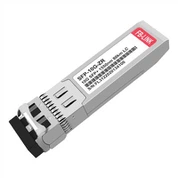
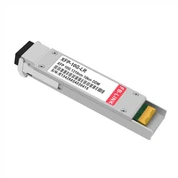
10GBASE XFP ZR
10GBASE XFP ZR Small Form Factor 10G (XFP) transceivers are compliant with the current XFP Multi-Source Agreement (MSA) Specification.

- Product Introduction
Item Spotlights
● Hot-pluggable XFP footprint
● Supports 9.95Gb/s to 11.3Gb/s bit rates
● Supports Lineside and XFI loopback
● RoHS-6 Compliant (lead-free)
● Power dissipation <3.5W
● Case temperature range:0°C to 70°C
● Maximum link length of 80km
● Cooled 1550nm EML and APD Receiver
● Full Duplex LC connector
● No Reference Clock required
● Built-in digital diagnostic functions
● Standard bail release mechanism
Description
|
Compatible |
10GBASE XFP ZR |
Vendor Name |
FB-LINK |
|
Form Factor |
XFP |
Max Data Rate |
10.3125Gbps |
|
Wavelength |
1550nm |
Max Cable Distance |
80km |
|
Connector |
Duplex LC |
Media |
SMF |
|
Transmitter Type |
DFB |
Receiver Type |
APD |
|
TX Power |
0~4dBm |
Receiver Sensitivity |
<-24dBm |
|
Power Consumption |
≤3.5W |
Extinction Ratio |
>8.2dB |
|
DDM/DOM |
Yes |
Commercial Temperature Range |
0 to 70°C (32 to 158°F) |
|
Protocols |
SFP+ MSA Compliant, CPRI, eCPRI |
Warranty |
3 Years |
When businesses need to transmit data across extended distances without compromising speed or reliability, selecting the right optical transceivers becomes critical. The XFP ZR transceiver represents a powerful solution for organizations requiring robust 10-gigabit connectivity over substantial geographical spans.
Understanding XFP Technology for Enterprise Networks
Optical transceivers serve as the backbone of modern data centers and telecommunications infrastructure. These compact devices convert electrical signals into optical signals and vice versa, enabling high-speed data transmission through fiber optic cables. Among various form factors available, XFP modules have established themselves as reliable workhorses for 10-gigabit applications.
The extended reach variant specifically addresses scenarios where standard transceivers fall short. Healthcare facilities connecting multiple campuses, educational institutions linking various buildings, and enterprises with geographically distributed offices all benefit from this extended range capability.
Key Performance Characteristics
High-performance optical transceivers distinguish themselves through several technical parameters. The 1550nm wavelength provides optimal performance for long-haul applications, offering lower attenuation rates compared to shorter wavelengths. This particular spectrum enables signals to travel further distances while maintaining signal integrity.
Temperature tolerance plays a crucial role in deployment flexibility. Commercial-grade modules operating across 0°C to 70°C accommodate diverse environmental conditions, from climate-controlled data centers to less regulated network closets. This thermal range ensures consistent performance across varying installation scenarios.
Power efficiency remains paramount for large-scale deployments. Modern optical transceivers consume minimal power while delivering maximum performance, reducing operational expenses and simplifying cooling requirements in densely populated equipment racks.
Digital Diagnostic Monitoring Capabilities
Contemporary optical transceivers incorporate intelligent monitoring features that provide real-time visibility into operational parameters. Network administrators can track transmit power, receive power, temperature, and voltage levels without physical inspection. This proactive monitoring capability enables predictive maintenance strategies, reducing unexpected downtime.
These diagnostic functions integrate seamlessly with network management systems, allowing centralized monitoring of distributed infrastructure. When performance metrics drift outside acceptable parameters, automated alerts notify technical teams before service degradation occurs.
Application Scenarios and Use Cases
Metropolitan area networks frequently deploy extended-reach optical transceivers to interconnect facilities within urban environments. Financial institutions connecting trading floors with data centers, government agencies linking departmental offices, and service providers building metro Ethernet networks all leverage this technology.
Storage area networks extending across multiple locations benefit significantly from high-capacity, long-distance connectivity. Organizations implementing disaster recovery strategies often position backup storage facilities at considerable distances from primary data centers, requiring reliable optical links.
Telecommunications carriers utilize these modules extensively in their transport networks. The combination of 10-gigabit capacity and extended reach provides cost-effective bandwidth expansion without requiring intermediate amplification equipment for many deployments.
Compatibility and Standards Compliance
Industry standards ensure interoperability across equipment from different manufacturers. Compliance with IEEE 802.3ae specifications guarantees compatibility with standard 10-Gigabit Ethernet infrastructure. Similarly, adherence to Multi-Source Agreement specifications ensures mechanical and electrical compatibility across various networking platforms.
Protocol support extends beyond basic Ethernet connectivity. Modern optical transceivers accommodate specialized protocols used in telecommunications applications, providing flexibility for diverse deployment scenarios. This versatility eliminates the need for specialized modules in multi-protocol environments.
Installation Best Practices
Proper installation maximizes performance and longevity of optical transceivers. Always inspect fiber optic connectors before insertion, ensuring cleanliness to prevent signal degradation. Even microscopic contamination can significantly impact optical performance.
Handle modules by their edges, avoiding contact with electrical contacts or optical ports. Static electricity can damage sensitive components, so proper ESD precautions should be observed during installation and removal procedures.
Verify compatibility between the transceiver wavelength and fiber optic cable type. Single-mode fiber is essential for extended-reach applications, as multimode fiber cannot support the required transmission distances.
Troubleshooting Common Issues
When optical transceivers experience connectivity problems, systematic troubleshooting identifies root causes efficiently. Begin by verifying link status indicators on network equipment. Most switches and routers provide visual feedback on optical link status.
Check digital diagnostic parameters to assess whether transmit and receive power levels fall within acceptable ranges. Significant deviations from specified values indicate potential fiber issues or module degradation.
Inspect fiber optic cables for excessive bending or damage. Fiber optic cables have minimum bend radius specifications; violating these limits causes signal loss. Cable routing should avoid sharp corners and crushing hazards.
Future-Proofing Network Infrastructure
As bandwidth demands continue escalating, selecting appropriate optical transceivers ensures infrastructure longevity. While 10-gigabit connectivity suffices for many current applications, thoughtful deployment planning accommodates future expansion requirements.
Consider aggregate bandwidth needs across multiple links. Sometimes deploying several moderate-reach optical transceivers proves more cost-effective than implementing extended-reach modules for every connection. Network topology design should balance performance requirements with budget constraints.
Evaluate power consumption across large-scale deployments. In installations with hundreds of ports, even modest per-port power differences accumulate significantly, impacting cooling requirements and operational costs.
Frequently Asked Questions
What distance can XFP ZR transceivers reliably transmit data?
Extended-reach modules support transmission distances up to 80 kilometers over single-mode fiber. Actual achievable distance depends on fiber quality, number of splice points, and connector losses along the path. Professional fiber testing ensures the link budget supports reliable operation.
Are these optical transceivers compatible with existing network equipment?
These modules work with any network device featuring XFP ports and supporting 10GBASE-ZR standards. Major networking vendors including Cisco, Juniper, Arista, and others support standard-compliant optical transceivers. Always verify compatibility with specific switch or router models before deployment.
How does temperature affect transceiver performance?
Optical transceivers operate optimally within specified temperature ranges. Operating outside these parameters can lead to performance degradation or failure. Commercial-grade modules typically support 0°C to 70°C, while industrial variants accommodate extended temperature ranges for harsh environments.
What maintenance do optical transceivers require?
These devices require minimal maintenance under normal operating conditions. Periodic inspection of digital diagnostic parameters helps identify potential issues before they impact service. Keep spare modules available for critical links to minimize downtime during unexpected failures.
Can I use these transceivers with multimode fiber?
Extended-reach optical transceivers require single-mode fiber for proper operation. The 1550nm wavelength and long transmission distances necessitate single-mode fiber's lower attenuation characteristics. Multimode fiber is limited to much shorter distances and typically uses different wavelengths.
How do I monitor the health of installed transceivers?
Utilize the built-in digital diagnostic monitoring capabilities through your network management system. These interfaces provide real-time data on critical parameters including optical power levels, temperature, and voltage. Configure threshold-based alerts to receive notifications when parameters drift outside normal ranges.
What's the typical lifespan of these optical modules?
Quality optical transceivers typically provide 10-15 years of reliable service under proper operating conditions. Factors affecting longevity include operating temperature, power cycling frequency, and environmental conditions. Regular monitoring of diagnostic parameters helps predict when replacement becomes necessary.
Do these transceivers support link aggregation?
The optical transceivers themselves don't control link aggregation-that functionality resides in the network equipment. These modules provide the physical layer connectivity that enables link aggregation protocols like LACP to function across extended distances, allowing bandwidth multiplication and redundancy.
Selecting appropriate optical transceivers represents a strategic investment in network infrastructure. Extended-reach capabilities, combined with robust performance characteristics and comprehensive monitoring features, deliver reliable connectivity for demanding enterprise applications. Whether connecting campus facilities, extending storage networks, or building metropolitan area networks, these modules provide the foundation for high-performance data transmission across substantial distances.
Hot Tags:
You Might Also Like