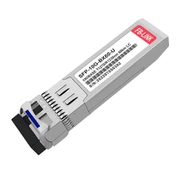
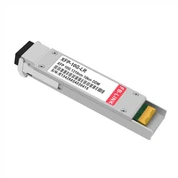
10G SFP+ LR
In most instances, optical transceivers are used in so many industries because they make it possible for a simple switch to support companies’ various types of wiring and transmission formats.

- Product Introduction
Honors & Certificates
Up to now, FB-LINK has obtained over 65 patents for invention, and more than 90 software copyrights. It has become a national high-tech enterprise. Additionally, it has obtained national innovation fund support in the field of internet security several times.


Factory & Service
FB-LINK has a technical team with strong engineering, installation, and project management capabilities that can handle end-to-end network deployments for TSPs, CSPs, Cable MSOs, and large enterprises. Professional technicians can provide one-stop solutions such as on-site deployment.


Optical transceivers have become the backbone of modern data transmission, enabling businesses and telecommunications providers to move information at lightning speeds across vast distances. These sophisticated devices bridge the gap between electrical and optical signals, making high-bandwidth communication possible in everything from local data centers to global fiber optic networks.
Understanding Optical Transceivers and Their Critical Role
At their core, optical transceivers serve as translators in the digital communication world. They convert electrical signals into light pulses that can travel through fiber optic cables, then reverse the process at the receiving end. This conversion happens at incredible speeds, supporting data rates from 1 Gigabit per second all the way up to 400 Gbps and beyond.
The beauty of these devices lies in their compact design and plug-and-play functionality. Modern optical transceivers are hot-swappable, meaning network administrators can replace or upgrade them without shutting down entire systems. This flexibility has made them indispensable in environments where downtime translates directly to lost revenue.
The Diversity of Optical Transceiver Technologies
The market offers various optical transceiver form factors, each optimized for specific network requirements. Small Form-Factor Pluggable (SFP) modules represent the most widely deployed option, supporting speeds up to 10 Gbps and offering compatibility with numerous cable types and protocols. Their smaller cousins, the SFP+ modules, push performance even higher while maintaining the same compact footprint.
For applications demanding greater bandwidth, Quad Small Form-Factor Pluggable (QSFP) optical transceivers deliver impressive throughput ranging from 40 Gbps to 400 Gbps. Data centers running high-performance computing workloads rely heavily on these higher-capacity modules to prevent network bottlenecks.
Legacy technologies like XFP and GBIC modules still exist in some networks, though most organizations have migrated to newer, more efficient optical transceiver designs. CFP modules occupy a middle ground, offering 100 Gbps capabilities for telecommunications and enterprise networks that require substantial bandwidth without jumping to the latest 400G technology.
How Optical Transceivers Enable High-Speed Communication
The internal workings of optical transceivers involve sophisticated optoelectronic components working in perfect harmony. On the transmission side, laser diodes or LEDs convert incoming electrical signals into precisely modulated light beams. These light sources operate at specific wavelengths-commonly 850nm for short-range multimode applications, or 1310nm and 1550nm for longer single-mode deployments.
The receiving portion of optical transceivers uses photodiodes to capture incoming light pulses and transform them back into electrical currents. These weak signals pass through transimpedance amplifiers that boost them to usable levels before digital signal processing recovers the original data stream. The entire conversion process happens in nanoseconds, ensuring minimal latency even at the highest data rates.
Temperature management plays a crucial role in optical transceiver performance. Commercial-grade modules typically operate within a 0°C to 70°C range, suitable for climate-controlled data centers. Industrial-grade optical transceivers, however, can withstand extreme conditions from -40°C to 85°C, making them ideal for outdoor telecommunications infrastructure.
Selecting the Right Optical Transceivers for Your Network
Choosing appropriate optical transceivers requires careful consideration of multiple factors. Network engineers must first identify their required data rate-whether 1G, 10G, 25G, 40G, 100G, or 400G-then select modules that match this specification exactly. Mixing different speed optical transceivers can create compatibility issues or limit performance to the slowest component.
Fiber type represents another critical decision point. Multimode fiber works well for shorter distances up to 300-550 meters, making it perfect for intra-building connectivity. Single-mode fiber, conversely, supports transmission distances extending to 40 kilometers, 80 kilometers, or even 120 kilometers with specialized optical transceivers. Using the wrong fiber type with your modules can result in severe signal loss or complete communication failure.
Wavelength compatibility ensures that paired optical transceivers can communicate effectively. A module transmitting at 1310nm must connect to a receiver expecting that same wavelength. Bidirectional (BiDi) optical transceivers offer an elegant solution by using two different wavelengths-typically 1310nm and 1550nm-to enable simultaneous transmission and reception over a single fiber strand, reducing cable infrastructure costs.
Real-World Applications Driving Optical Transceiver Adoption
Data centers represent the largest market for optical transceivers, where they interconnect servers, storage arrays, and network switches. The explosive growth of cloud computing has created insatiable demand for higher-capacity modules. Organizations routinely deploy 100G and 400G optical transceivers to handle the massive data flows between computing resources.
Telecommunications networks rely on optical transceivers to construct the backbone infrastructure carrying voice, video, and internet traffic worldwide. Long-haul networks use specialized modules with extended reach capabilities, while metropolitan area networks deploy medium-range optical transceivers to connect business districts and residential areas.
Wireless networks have also embraced optical transceiver technology for backhaul connections linking cell towers to core network facilities. As 5G deployments accelerate, the bandwidth demands on these backhaul links have increased dramatically, driving adoption of higher-speed optical transceivers throughout mobile networks.
Enterprise networks use optical transceivers to extend Ethernet connectivity beyond the limitations of copper cabling. Campus networks, manufacturing facilities, and large office complexes deploy fiber optic infrastructure with appropriately matched modules to provide reliable, high-speed connectivity across buildings and floors.
Advanced Technologies Expanding Optical Transceiver Capabilities
Dense Wavelength Division Multiplexing (DWDM) technology has revolutionized how optical transceivers utilize fiber capacity. DWDM-capable modules can transmit multiple data streams simultaneously over a single fiber by using different wavelengths, effectively multiplying available bandwidth without additional cable installation. This approach has proven particularly valuable in submarine cables and long-distance terrestrial networks where fiber resources are constrained.
Coarse Wavelength Division Multiplexing (CWDM) offers a cost-effective alternative for shorter distances and less demanding applications. CWDM optical transceivers provide excellent performance for metropolitan networks and campus environments while maintaining lower price points than their DWDM counterparts.
Signal modulation schemes continue evolving to extract more performance from existing fiber infrastructure. Traditional Non-Return-to-Zero (NRZ) encoding has given way to Pulse Amplitude Modulation (PAM4) in many next-generation optical transceivers, effectively doubling data rates without requiring new wavelengths or additional fibers. This technological advancement has been crucial in enabling the leap from 100G to 400G transmission speeds.
Best Practices for Optical Transceiver Deployment
Proper installation begins with verifying compatibility between optical transceivers and host equipment. Network administrators should confirm that switch ports support the specific form factor being installed-whether SFP, SFP+, QSFP, or another variant. Forcing incompatible modules into ports can cause physical damage and void equipment warranties.
Fiber cleanliness directly impacts optical transceiver performance and longevity. Even microscopic contamination on fiber endfaces can cause signal degradation, increased error rates, or complete link failure. Organizations should establish rigorous cleaning procedures using appropriate tools and inspection equipment before connecting any fiber to optical transceivers.
Operating parameters must remain within manufacturer specifications to ensure reliable performance. Excessive optical input power can damage sensitive photodiodes in receiving optical transceivers, while insufficient power results in poor signal quality and high bit error rates. Using optical attenuators when connecting long-range modules to short-range equipment prevents damage from overpowering.
Full-duplex versus half-duplex configuration requires careful attention during network design. Modern optical transceivers overwhelmingly operate in full-duplex mode, allowing simultaneous bidirectional communication. Connecting full-duplex modules to legacy half-duplex equipment creates conflicts that manifest as severe packet loss and degraded network performance.
Quality Assurance and Testing for Optical Transceivers
Manufacturers subject optical transceivers to rigorous testing regimes before shipping. Aging tests expose modules to extended periods at high and low temperatures, simulating years of operational stress to identify potential early failures. This process helps predict long-term reliability and ensures that optical transceivers can withstand real-world deployment conditions.
Compatibility verification represents a critical quality checkpoint, particularly for third-party optical transceivers designed to work with equipment from major vendors. Test engineers insert modules into various switch models to confirm proper recognition, parameter negotiation, and sustained communication. Successful compatibility testing ensures that optical transceivers will integrate seamlessly into existing network infrastructure.
Optical port inspection catches defects before they cause field failures. Magnified examination of transmitter and receiver ports identifies scratches, contamination, or manufacturing flaws that could compromise performance. High-quality optical transceivers undergo 100% inspection to maintain consistent quality standards.
Visual examination rounds out the testing process by identifying cosmetic issues that might indicate deeper problems. Housing integrity, connector finish, and label accuracy all receive scrutiny to ensure that optical transceivers meet both functional and presentation standards.
The Future of Optical Transceiver Technology
Innovation in optical transceiver design shows no signs of slowing. Research laboratories are developing modules capable of 800 Gbps and even 1.6 Tbps transmission rates to meet the growing demands of hyperscale data centers and next-generation networks. These ultra-high-speed optical transceivers will leverage advanced modulation formats and parallel optics to achieve unprecedented performance levels.
Energy efficiency has emerged as a key design criterion as power consumption becomes a significant operational expense in large facilities. Newer optical transceivers incorporate power-saving features and more efficient optical components to reduce heat generation and energy costs while maintaining performance standards.
Coherent optical transceivers, once limited to long-haul telecommunications applications, are migrating into data center environments. These sophisticated modules use advanced digital signal processing to maximize reach and capacity, enabling data center operators to extend connections between facilities without intermediate amplification.
Frequently Asked Questions About Optical Transceivers
What's the difference between multimode and single-mode optical transceivers?
Multimode optical transceivers are designed for short-distance transmission, typically up to 300-550 meters, using fiber with a larger core diameter. They commonly operate at 850nm wavelength and work well for connections within buildings or campus environments. Single-mode optical transceivers support much longer distances-from 2 kilometers to 120 kilometers or more-using fiber with a narrow core and operating at 1310nm or 1550nm wavelengths. The choice between them depends entirely on your transmission distance requirements.
Can I use optical transceivers from different manufacturers together?
Yes, optical transceivers follow industry standards that ensure interoperability between different manufacturers. As long as both modules match in terms of data rate, wavelength, fiber type, and transmission distance, they should communicate successfully. However, some network equipment may have vendor-specific coding that requires compatible modules. Third-party manufacturers often produce optical transceivers that work with major brand equipment while offering significant cost savings.
Why are some optical transceivers so much more expensive than others?
Several factors influence optical transceiver pricing. Transmission distance significantly impacts cost-long-range modules with sophisticated optics and higher-power lasers cost considerably more than short-range variants. Data rate also matters, with 100G and 400G optical transceivers commanding premium prices compared to 1G or 10G modules. Industrial-grade transceivers rated for extreme temperatures cost more than commercial versions. Additionally, DWDM optical transceivers with precise wavelength control carry higher price tags than standard modules.
How do I know if optical transceivers are compatible with my switch?
Check three key compatibility factors: First, verify the physical form factor matches your switch ports-SFP modules only fit SFP ports, QSFP modules need QSFP slots, and so forth. Second, confirm the switch supports your required data rate; inserting a 10G optical transceiver into a 1G port won't work. Third, review your switch's compatibility list if using third-party modules, as some vendors restrict which optical transceivers their equipment recognizes. Most modern switches support industry-standard modules without issues.
What does hot-swappable mean for optical transceivers?
Hot-swappable capability allows you to insert or remove optical transceivers from network equipment while it remains powered on and operational. This feature eliminates the need for system shutdowns during maintenance, upgrades, or troubleshooting. You can replace a failed module or upgrade to higher-speed optical transceivers without disrupting network services, making hot-swappability essential for maintaining high availability in critical network infrastructure.
Can bidirectional optical transceivers really reduce fiber costs?
Absolutely. Traditional optical transceivers require two fiber strands-one for transmitting and one for receiving. Bidirectional (BiDi) optical transceivers use two different wavelengths over a single fiber strand, with one wavelength carrying data in each direction. This approach cuts fiber requirements in half, which proves especially valuable when fiber resources are limited or expensive to install. BiDi optical transceivers typically use 1310nm and 1550nm wavelengths, or specific CWDM wavelengths for longer distances.
How often should optical transceivers be replaced?
Optical transceivers don't have a fixed replacement schedule like consumable parts. Quality modules can operate reliably for 10-15 years or more under proper conditions. Replace them when they fail, when upgrading to higher speeds, or when migrating to new network architectures. Regular monitoring of optical power levels and error rates helps identify degrading optical transceivers before they fail completely. Keeping spare modules on hand for critical links ensures minimal downtime when replacement becomes necessary.
What's the difference between SFP and SFP+ optical transceivers?
While physically identical, SFP and SFP+ optical transceivers support different maximum data rates. Standard SFP modules handle speeds up to 4.25 Gbps, suitable for Gigabit Ethernet and 4G Fibre Channel applications. SFP+ optical transceivers support 10 Gbps transmission, designed for 10 Gigabit Ethernet and 8G Fibre Channel networks. Most modern switches with SFP+ ports can accept both SFP and SFP+ modules, though the connection speed will be limited to the slower module's capability.
Do optical transceivers require special handling or storage?
Yes, optical transceivers contain sensitive optical components that require careful handling. Always leave protective dust caps installed when modules are not in use to prevent fiber endface contamination. Store optical transceivers in anti-static bags in climate-controlled environments, avoiding extreme temperatures and humidity. Never touch the optical ports with bare fingers, and avoid looking directly into transmitter ports, as even invisible infrared laser light can damage eyes. Use proper fiber cleaning tools and inspection equipment before installation.
What happens if I connect optical transceivers with mismatched wavelengths?
Connecting optical transceivers with different wavelengths will prevent communication entirely. A module transmitting at 850nm cannot properly communicate with a receiver expecting 1310nm-the photodiode simply isn't optimized for that wavelength. The link will either fail to establish or exhibit extremely high error rates. Always verify that both ends of a fiber connection use optical transceivers with matching wavelength specifications to ensure reliable data transmission.
Hot Tags: