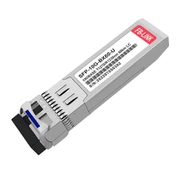
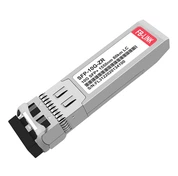
10G SFP+ SR COB
The 10G SFP+ SR is a 10G SR multi-mode SFP+ transceiver,using 850nm wavelength and reaching up to 300m distance.The module can be used for 10G Ethernet, SONET or SDH networks.

- Product Introduction
Item Spotlights
1. SFP+ package, dual-fiber LC interface
2.Single 3.3V power supply,ROHS compliant
3.Support DDM, with diagnostic capabilities
4.Operating temperature from 0°C to 70°C
Parameter
| Wavelength | Fiber Type | TX Power | Rvceiver Sensitivity | Distance |
| 850nm | MMF | -0.6~-1.0dbm | <-11.1dbm | 300m |

(a)Physical picture of BOX packaged optical module; (b) Physical picture of COB packaged optical module
Compatibility

DDM

Modern data transmission networks rely heavily on efficient optical transceivers to maintain seamless connectivity and high-speed data transfer. As bandwidth demands continue to escalate, the evolution of optical transceiver technology has become crucial for enterprises seeking reliable network infrastructure solutions.
Understanding COB Technology in Optical Transceivers
Chip-on-Board (COB) represents a revolutionary packaging methodology for optical transceivers that fundamentally differs from conventional assembly techniques. This innovative approach involves mounting semiconductor chips directly onto printed circuit boards using specialized adhesive bonding processes, eliminating the need for traditional TOSA (Transmitter Optical Sub-Assembly) and ROSA (Receiver Optical Sub-Assembly) soldering methods.
The manufacturing process incorporates wire bonding technology to establish electrical pathways between the bare chip and substrate, followed by protective resin encapsulation and thermal conditioning procedures to guarantee long-term operational stability.
Key Features of Next-Generation Optical Transceivers
Modern optical transceivers incorporating COB architecture deliver exceptional performance characteristics that address contemporary networking challenges:
Compact Form Factor Design: The SFP+ package configuration with dual-fiber LC connectivity provides versatile deployment options across various network architectures. This standardized interface ensures broad compatibility with existing infrastructure investments.
Power Efficiency: Operating on a single 3.3V power rail, these optical transceivers meet stringent RoHS environmental compliance standards while minimizing energy consumption in dense deployment scenarios.
Intelligent Monitoring: Digital Diagnostic Monitoring (DDM) capabilities enable real-time performance tracking, allowing network administrators to proactively identify potential issues before they impact operations.
Extended Operating Range: Designed for commercial temperature environments spanning 0°C to 70°C, these optical transceivers maintain consistent performance across typical data center and enterprise facility conditions.
Technical Advantages of COB-Based Optical Transceivers
Superior Signal Integrity
The direct chip-to-board bonding method employed in COB optical transceivers dramatically reduces impedance variations along the signal path. Gold wire interconnects create minimal discontinuities, ensuring exceptional high-frequency signal transmission from PCB traces to laser diode components. This translates to expanded eye diagram margins and enhanced receiver sensitivity metrics.
Space Optimization and Cost Efficiency
By eliminating intermediate packaging elements such as high-frequency ceramic carriers and flexible interconnect cables, COB optical transceivers achieve substantial footprint reduction. The recovered board area accommodates enhanced circuit designs, including additional decoupling capacitors and improved RF isolation layouts, ultimately boosting overall module performance while reducing manufacturing costs.
Application-Specific Reliability Engineering
Data center optical transceivers leverage non-hermetic COB assembly techniques optimized for controlled environment deployments. Unlike carrier-grade modules requiring hermetically sealed To-can or box packaging for harsh field conditions, data center optical transceivers operate within climate-controlled facilities with dedicated maintenance teams, allowing for streamlined reliability specifications without compromising performance.
Industry Evolution and Future Outlook
The optical transceivers market continues advancing toward higher density, increased transmission speeds, and improved cost-performance ratios. Current network architectures extensively utilize 100 Gigabit optical transceivers, while 400G modules have achieved widespread commercial deployment in hyperscale data centers globally. Emerging 800G optical transceivers are entering initial production phases as next-generation technologies.
Conventional packaging approaches face mounting challenges at these extreme data rates, including manufacturing complexity, yield-related cost pressures, and component bandwidth limitations. Consequently, breakthrough innovations such as silicon photonics integration and co-packaged optics (CPO) architectures represent promising evolutionary paths for optical transceivers technology.
Compatibility and Integration
These optical transceivers maintain full backward compatibility with industry-standard switching and routing platforms from major networking equipment manufacturers. The standardized electrical and optical interfaces ensure seamless integration into existing multi-vendor network environments, protecting infrastructure investments while enabling performance upgrades.
Frequently Asked Questions About Optical Transceivers
What distinguishes COB optical transceivers from traditional packaged modules?
COB optical transceivers utilize direct chip attachment to circuit boards, eliminating intermediate packaging layers found in conventional designs. This results in improved signal quality, reduced size, and lower manufacturing costs while maintaining excellent reliability for data center applications.
How do I verify optical transceivers are functioning correctly?
Most modern optical transceivers include DDM functionality that reports real-time operational parameters such as transmitted and received optical power, temperature, supply voltage, and laser bias current. Network management systems can poll these diagnostic values to assess module health and performance.
Can these optical transceivers operate in existing network infrastructure?
Yes, standard-compliant optical transceivers are designed for plug-and-play compatibility with established networking equipment. The SFP+ form factor and LC connector interface ensure interoperability across diverse vendor platforms following industry specifications.
What maintenance do optical transceivers require?
Optical transceivers are generally maintenance-free devices. However, keeping connector end-faces clean, ensuring adequate airflow for cooling, and monitoring diagnostic parameters helps maximize lifespan and performance consistency.
How long can I expect optical transceivers to remain operational?
Quality optical transceivers typically carry multi-year warranty coverage and are engineered for extended operational lifespans exceeding the warranty period when deployed within specified environmental parameters and proper handling procedures.
Are customized optical transceivers available for specific applications?
Many manufacturers offer customization services including modified labeling, specialized firmware configurations, extended temperature ranges, or unique form factors to address particular deployment requirements beyond standard catalog products.
What factors should influence optical transceivers selection?
Critical selection criteria include required data rate, transmission distance, fiber type compatibility (single-mode or multimode), operating temperature range, power budget, and specific protocol requirements. Application environment and future scalability considerations also guide appropriate optical transceivers choices.
Conclusion
Advanced optical transceivers incorporating COB packaging technology represent a significant step forward in network connectivity solutions. By combining compact design, enhanced signal integrity, and cost-effective manufacturing, these modules address the growing demands of modern data infrastructure. As networks continue evolving toward higher speeds and greater efficiency, optical transceivers will remain essential components enabling the digital transformation of enterprises worldwide.
Hot Tags: Optical Transceivers
You Might Also Like