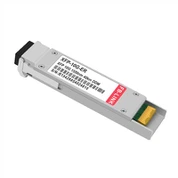
10G SFP+ ZR
10G SFP+ ZR is a 10G ZR single-mode SFP+ transceiver that uses 1550nm wavelength and has a transmission distance of up to 40km. The module can be used with 10G Ethernet, SONET or SDH networks.

- Product Introduction
Products Description
10G SFP+ ZR is a single-mode fiber port type with a wavelength of 1550nm. The transmission distance on standard single-mode fiber can reach 80KM. This module can be widely used in a series of fields that require high-speed transmission, such as data centers and communication networks.
Description
| Wavelength (nm) | 1550 |
| Type | SMF |
| Distance | 80KM |
| TX Power | 0~+4dBm |
| Receiver Sensitivity | <-24dBm |
| Commercial Temperature Range | 0 to 70°C (32 to 158°F) |
| DDM/DOM | Supported |
FEATURES AND APPLICATIONS
Single power supply 3.3V
SFP+ MSA package with duplex LC connector
Class 1 Laser Safety Certified Operating Temperature Options: - (Commercial) 0oC to +70oC
RoHS compliant
Link

When enterprise networks demand reliable connectivity across extended distances, choosing the right optical transceivers becomes critical for maintaining network performance and minimizing infrastructure costs. The 10G SFP+ ZR transceiver represents a sophisticated solution for organizations requiring high-speed data transmission over significant distances without signal degradation.
What Makes 10G SFP+ ZR Optical Transceivers Essential for Modern Networks
Optical transceivers serve as the bridge between electrical and optical signals in fiber optic networks, and the SFP+ ZR variant specifically addresses the challenge of long-distance transmission. Operating at 1550nm wavelength on single-mode fiber, these modules achieve impressive reach capabilities that traditional short-range transceivers cannot match. Network architects frequently select these components when designing backbone infrastructure that connects geographically dispersed facilities or data centers.
The extended range capabilities stem from sophisticated laser technology and optimized receiver sensitivity. By utilizing the 1550nm wavelength window, these optical transceivers minimize signal loss during transmission through fiber cables, allowing data to travel further without requiring expensive signal regeneration equipment.
Key Performance Characteristics
Single-mode fiber compatibility ensures these optical transceivers deliver consistent performance across various deployment scenarios. The duplex LC connector interface provides secure, reliable connections while maintaining compact form factors essential for high-density network environments. Power efficiency remains a priority, with operation supported on standard 3.3V supplies commonly available in networking equipment.
Temperature tolerance plays a crucial role in deployment flexibility. Commercial-grade variants operate reliably within standard environmental conditions, making them suitable for climate-controlled telecommunications rooms and data center environments. The integration of Digital Diagnostic Monitoring (DDM) capabilities allows network administrators to proactively monitor transceiver health, tracking parameters like optical power levels and temperature in real-time.
Application Scenarios for Long-Range Optical Transceivers
Metropolitan area networks frequently leverage these optical transceivers to interconnect campus buildings or connect remote branch offices to central data centers. The extended distance capabilities eliminate the need for intermediate optical amplification in many deployment scenarios, significantly reducing both capital expenditure and operational complexity.
Service providers deploy these modules in their backbone infrastructure, particularly for point-to-point links where fiber runs exceed the capabilities of standard 10G optical transceivers. The combination of high bandwidth and extended reach makes them ideal for enterprise WAN connections, disaster recovery links, and inter-data center connectivity.
Storage area networks also benefit from these optical transceivers when physical separation between storage arrays and compute resources exceeds local connectivity options. The low latency and high reliability ensure consistent performance for mission-critical storage traffic.
Integration and Compatibility Considerations
Modern optical transceivers must seamlessly integrate with existing network infrastructure. The SFP+ form factor ensures compatibility with a broad range of switches, routers, and media converters from various manufacturers. Hot-swappable design allows for maintenance and upgrades without network downtime, while the small footprint maximizes port density in space-constrained environments.
RoHS compliance ensures these optical transceivers meet environmental standards for electronic equipment, addressing both regulatory requirements and corporate sustainability initiatives. Class 1 laser safety certification provides peace of mind for installation and maintenance personnel.
Optimizing Network Design with Advanced Optical Transceivers
Strategic deployment of appropriate optical transceivers requires understanding the relationship between transmission distance, fiber quality, and link budget. Network planners must account for connector losses, splice losses, and fiber attenuation when calculating maximum achievable distances. The generous power budget of these modules provides margin for real-world impairments and future fiber degradation.
Link planning should also consider dispersion characteristics, particularly for older fiber installations. While single-mode fiber at 1550nm generally exhibits favorable dispersion properties, very long links may require dispersion compensation depending on specific fiber characteristics.
Frequently Asked Questions
Q: What is the primary advantage of 1550nm optical transceivers over other wavelengths?
A: The 1550nm wavelength operates in the fiber optic C-band where single-mode fiber exhibits minimal attenuation. This allows optical transceivers at this wavelength to achieve significantly longer transmission distances compared to 850nm or 1310nm alternatives, making them ideal for metropolitan and long-haul applications.
Q: Can these optical transceivers work with existing fiber infrastructure?
A: Yes, these optical transceivers are designed for standard single-mode fiber (SMF) installations. They work with OS2 fiber commonly deployed in enterprise and carrier networks. However, proper fiber cleaning and inspection are essential to achieve optimal performance and maximum distance.
Q: How does DDM functionality benefit network operations?
A: Digital Diagnostic Monitoring in optical transceivers provides real-time visibility into module performance metrics including transmit power, receive power, temperature, and voltage. This enables proactive identification of degrading links, simplifies troubleshooting, and helps prevent unexpected network outages.
Q: What factors limit the maximum transmission distance?
A: While optical transceivers may be rated for specific distances, actual achievable range depends on total link loss budget. Factors include fiber quality, number of connectors and splices, fiber age, and bending losses. Network designers should calculate link budgets considering all these variables to ensure reliable operation.
Q: Are these optical transceivers suitable for outdoor applications?
A: Standard commercial-grade optical transceivers operate within typical indoor temperature ranges. For outdoor deployments or harsh environments, consider industrial or extended-temperature variants specifically designed for wider operating conditions. Always verify temperature specifications match deployment environment requirements.
Q: How do I ensure compatibility with my existing network equipment?
A: Most modern networking equipment supports standard SFP+ optical transceivers following MSA specifications. Verify that your switches or routers have available SFP+ ports rated for 10G operation. While many vendors use proprietary coding, third-party optical transceivers often include compatibility modes for major equipment manufacturers.
Hot Tags: Optical Transceivers