





Why use transceivers in networking?
 Oct 29, 2025|
Transceivers in networking convert electrical signals to optical signals (and vice versa), enabling high-speed data transmission over fiber optic cables. They serve as the critical interface between electronic devices like switches and routers and the fiber infrastructure that carries data across networks.
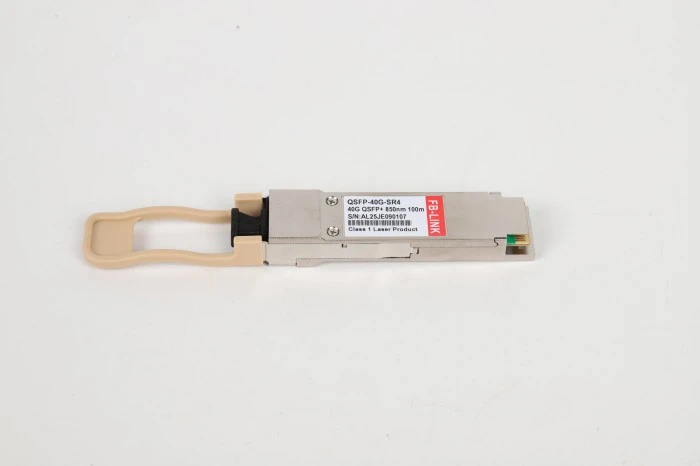
The Technical Necessity of Signal Conversion
Network equipment processes data electronically, but fiber optic cables transmit data as light. This fundamental mismatch creates an unavoidable conversion requirement. Transceivers bridge this gap through integrated transmitter and receiver components housed in a single module.
The transmitter section uses laser diodes or LEDs to convert incoming electrical signals into optical pulses. These light signals travel through fiber with minimal loss over distances that would be impossible with electrical transmission. At the receiving end, photodetectors convert the optical signals back into electrical form for processing by network hardware.
This electro-optical conversion isn't optional-it's physically required. Copper-based transmission degrades rapidly beyond 100 meters and cannot support speeds above 10Gbps for any meaningful distance. A 100G connection over 10 kilometers requires optical transmission, making transceivers in networking non-negotiable infrastructure.
Modern data centers process massive volumes of traffic that electrical connections cannot handle. A single rack of servers might require 3.2 terabits per second of aggregate bandwidth. Only optical transceivers can deliver these data rates while maintaining signal integrity across the necessary distances.
Distance and Speed Capabilities Beyond Electrical Limits
Electrical signals face fundamental physics constraints. As frequency increases, so does attenuation-the signal degrades exponentially with distance. At 10Gbps, copper cables struggle beyond 10 meters. At 100Gbps, copper becomes impractical for nearly any distance.
Optical transceivers eliminate these constraints. Single-mode transceivers routinely transmit 100Gbps over 40 kilometers without amplification. Long-reach (LR) and extended-reach (ER) variants push this to 80 kilometers or more. Dense wavelength division multiplexing (DWDM) transceivers can span hundreds of kilometers by using multiple wavelengths on a single fiber.
The speed advantage is equally dramatic. While copper maxes out practically at 10Gbps for short runs, optical transceivers now operate at 800Gbps, with 1.6 terabits per second variants in development. This performance gap continues widening as optical technology advances faster than electrical alternatives.
Data centers interconnecting across metropolitan areas rely entirely on optical transmission. A company linking facilities 20 kilometers apart cannot use copper-the physics simply don't work. They need optical transceivers to achieve both the distance and the bandwidth their operations require.
Real-world performance differences are stark. Copper DAC (Direct Attach Copper) cables work adequately for connecting adjacent racks within 7 meters. Beyond that distance or above 25Gbps speeds, optical transceivers become the only viable solution. For a 100G spine connection spanning 50 meters between distribution switches, optical modules are mandatory.
Modular Flexibility and Network Adaptability
Hot-swappable transceiver modules transform network infrastructure from fixed to flexible. Unlike permanently soldered components, transceivers plug into standardized ports on switches and routers. This modularity enables network operators to adapt their infrastructure without replacing entire devices.
A switch with QSFP28 ports can accept 100Gbps transceivers initially, then upgrade to 400Gbps QSFP-DD modules when bandwidth needs increase-using the same switch chassis. This forward compatibility protects capital investments while allowing incremental performance improvements.
Different network segments demand different transmission characteristics. Core connections might need 10-kilometer reach, while server-to-switch links only span 100 meters. The same switch model can accommodate both scenarios using appropriate transceiver variants: 100GBASE-LR4 for long-reach and 100GBASE-SR4 for short-reach multimode fiber.
This flexibility extends to fiber type compatibility. Network operators can deploy single-mode or multimode fiber based on their specific requirements, then select matching transceivers. A data center might use cost-effective multimode for intra-building links and single-mode for inter-building connections-all using the same model switches with different optical modules.
Vendor interoperability represents another modularity advantage. While OEM (original equipment manufacturer) transceivers from Cisco or Juniper cost premium prices, compatible third-party modules work identically in most deployments. Network engineers report cost savings of 50-90% using quality third-party optics. One logistics company saved $2.1 million upgrading seven facilities to 10Gbps using third-party transceivers instead of OEM modules.
Protocol diversity also benefits from transceiver modularity. Ethernet, Fibre Channel, InfiniBand, and other standards all use similar form factors but different signaling. Organizations can support multiple protocols on the same hardware platform by selecting appropriate transceivers for each application.
Scalability for Growing Bandwidth Demands
Network traffic grows exponentially. AI workloads have doubled data requirements every 3-4 months in recent studies. Cloud computing expansion, 5G deployment, and IoT proliferation create bandwidth demands that increase 30-40% annually. Understanding why transceivers in networking are essential becomes critical as organizations face these escalating capacity requirements.
Port density improvements let switches pack more connectivity into the same rack space. A modern switch with QSFP-DD ports can deliver 25.6 terabits of capacity in a single rack unit. This density would be impossible with fixed optics or copper connections.
Migration paths preserve investments while increasing capacity. Networks currently running 100Gbps can upgrade incrementally to 400Gbps or 800Gbps by replacing only the transceivers-not the entire switching infrastructure. This path reduces migration costs by 60-70% compared to forklift upgrades.
Hyperscale data centers demonstrate this scalability in practice. Companies like Amazon, Google, and Microsoft deploy 400Gbps transceivers extensively, with 800Gbps pilots already underway. As of 2024, the optical transceiver market reached $13.6 billion globally, projected to grow to $25 billion by 2029-a 13% compound annual growth rate driven primarily by data center expansion.
Breakout configurations multiply connectivity further. A single 400G transceiver port can break out into four 100G connections or eight 50G links. This flexibility lets network architects optimize port utilization based on actual traffic patterns rather than fixed configurations.
The Asia Pacific region leads 5G transceiver deployment, with China alone having over 1.2 billion 5G users by 2024. Each 5G cell site requires multiple optical transceivers for fronthaul, midhaul, and backhaul connections. This infrastructure build-out drives massive transceiver demand-the 5G optical transceiver market specifically is expected to reach $30.2 billion by 2034, growing at 28.87% annually.

Cost Efficiency at Scale
While individual transceivers carry upfront costs, they deliver better total cost of ownership (TCO) than alternatives. The economics of transceivers in networking become increasingly favorable at scale. Power consumption provides one clear advantage. A 400G optical transceiver might consume 12 watts versus hundreds of watts for comparable electrical regeneration equipment over distance.
Energy efficiency becomes crucial at scale. Data centers spend 40-50% of their operational budget on electricity. Modern 800Gbps transceivers using PAM4 modulation achieve higher bits per watt than previous generations, directly reducing operational expenses. A facility upgrading from 100G to 400G transceivers can quadruple bandwidth while only doubling power consumption.
Space utilization creates additional savings. High-density QSFP-DD and OSFP form factors allow 32 ports of 400G in a single rack unit. Equivalent electrical switching would require multiple racks of equipment, consuming valuable data center floor space that costs $200-400 per square foot annually in major markets.
Third-party transceiver markets have matured, offering quality alternatives to OEM pricing. While Cisco might charge $3,000-10,000 for a 100G transceiver, compatible third-party modules cost $200-800 with identical performance. Gartner Research specifically called out OEM optics as overpriced, noting the substantial markup above actual manufacturing costs.
One healthcare provider needed overnight transceiver shipments to activate a new site. After discovering mislabeled modules in inventory, they lost several hours troubleshooting before identifying the error. Proper transceiver management and labeling systems prevent these expensive delays. Organizations deploying hundreds or thousands of modules need rigorous inventory control.
Maintenance flexibility reduces downtime costs. When a transceiver fails, technicians can swap it in minutes without taking the entire switch offline. This hot-swap capability minimizes service interruptions. In contrast, fixed optics require replacing the entire line card or switch, meaning hours of downtime and significantly higher replacement costs.
Supporting Modern Network Architectures
Spine-leaf data center fabrics depend on optical transceivers. These non-blocking architectures connect every leaf switch to every spine switch, creating massive parallel bandwidth. A 32-leaf, 8-spine fabric requires 256 optical connections minimum-impossible to achieve with copper in modern data center layouts. The role of transceivers in networking becomes especially apparent in these high-density architectures where flexibility and performance converge.
Software-defined networking (SDN) and network function virtualization (NFV) assume flexible, programmable infrastructure. Optical transceivers enable this flexibility by decoupling the physical layer from network functions. Operators can reprogram network behavior in software while maintaining consistent hardware interfaces through standardized transceiver form factors.
Edge computing deployments push processing closer to data sources, requiring distributed optical connectivity. A content delivery network might operate hundreds of edge locations, each needing multi-gigabit connections back to regional hubs. Optical transceivers make these distributed architectures economically feasible by eliminating the need for expensive electrical regeneration equipment.
5G networks exemplify modern optical requirements. A single 5G core network serving a metropolitan area requires thousands of optical connections-from massive MIMO antennas to baseband units, through fronthaul and backhaul networks to the core. Each connection segment uses transceivers matched to its specific distance and bandwidth requirements.
Coherent optical technology, implemented in modern transceivers, enables metro and long-haul transmission without separate optical transport equipment. 400ZR and OpenZR+ transceivers can transmit 400Gbps over 80-120 kilometers directly from router ports, collapsing what previously required separate optical transport layers into the router itself. This architectural simplification reduces equipment count, power consumption, and management complexity.
Environmental and Physical Advantages
Fiber optic transmission via transceivers offers immunity to electromagnetic interference (EMI). Hospitals, industrial facilities, and environments with heavy electrical equipment can deploy fiber networks without signal degradation from nearby motors, generators, or power systems. Copper networks in these environments require extensive shielding and often still suffer reliability problems.
Galvanic isolation provided by optical transmission prevents ground loop issues that plague copper networks spanning multiple buildings. When electrical grounds differ between facilities, copper connections can experience destructive current flows. Fiber creates complete electrical isolation, eliminating this entire class of problems.
Temperature tolerance varies by transceiver grade. Industrial-rated transceivers operate from -40°C to +85°C, supporting deployments in harsh environments. Telecommunications companies deploy these ruggedized modules in outdoor cabinets and remote cell sites where standard electronics would fail.
Physical security benefits from fiber's tap-resistance. Unlike copper cables that can be compromised through electromagnetic coupling without physical contact, fiber optic cables require cutting or bending the fiber to tap signals-a detectable intrusion. Government and financial networks leverage this characteristic for secure communications.
Reduced physical bulk helps in congested cable pathways. A single fiber pair in a transceiver connection replaces dozens of copper conductor pairs for equivalent bandwidth. This difference becomes critical in cable trays, conduits, and submarine cables where physical space and weight directly impact costs and feasibility.
Frequently Asked Questions
Can I use the same transceiver for different switch vendors?
Most transceivers follow multi-source agreement (MSA) standards for physical form factors and electrical interfaces. However, many vendors implement proprietary coding that validates transceivers during bootup. Third-party manufacturers offer compatible transceivers pre-coded for specific vendors. A properly coded third-party module will work identically to OEM optics in Cisco, Arista, Juniper, or Dell switches. The key is ensuring vendor compatibility when purchasing.
How do I choose between single-mode and multimode transceivers?
Distance requirements determine this decision. Multimode fiber with SR (short-reach) transceivers works for up to 100-400 meters and costs less. Single-mode fiber with LR (long-reach) transceivers supports 10-40 kilometers. If your cable run exceeds 300 meters or you need future upgrade paths to higher speeds, single-mode becomes the better choice. One customer deployed multimode LRM optics on a 350-meter run and experienced packet loss-switching to single-mode LR transceivers resolved the issue immediately.
Why are OEM transceivers so expensive compared to third-party options?
OEM pricing includes substantial markup-often 300-900% above manufacturing cost. You're paying for brand recognition rather than technical superiority. Reputable third-party manufacturers use identical components and must meet the same MSA specifications. Quality third-party transceivers undergo the same testing and provide equivalent performance. The main difference is pricing flexibility and lack of vendor lock-in. Many organizations have standardized on third-party optics for 80-90% of their deployments without experiencing reliability differences.
What happens if a transceiver fails?
Transceiver failures manifest as link loss, high error rates, or complete port unavailability. Most failures occur within the first 90 days (infant mortality) or after several years of operation. When failure happens, hot-swap the module with a replacement without powering down the switch. Diagnostic tools using Digital Optical Monitoring (DOM) or Digital Diagnostics Monitoring (DDM) can predict failures by tracking temperature, optical power, and other parameters. Proactive monitoring prevents unexpected outages by identifying degrading modules before they fail completely.
The Strategic Imperative of Optical Transceivers
The question of why use transceivers in networking has a straightforward answer: they represent the connection point between electronic networking equipment and optical infrastructure-a role that cannot be eliminated through clever engineering or alternative technologies. The physics of light transmission through fiber requires electro-optical conversion at both ends.
Network evolution consistently trends toward higher speeds and longer distances, both of which favor optical over electrical transmission. Organizations planning 3-5 year infrastructure roadmaps can confidently invest in transceiver-based architectures, knowing that next-generation modules will provide upgrade paths without requiring forklift replacements.
The modular nature of transceiver deployment provides risk mitigation. Unlike fixed-optic switches that lock you into specific capabilities, transceiver-based platforms adapt as requirements change. This flexibility becomes particularly valuable given how rapidly traffic patterns, application demands, and network protocols evolve in modern IT environments.
Data Sources
Fortune Business Insights - Optical Transceiver Market Forecast 2025-2032
MarketsandMarkets - Global Optical Transceiver Market Report 2024-2029
Precedence Research - 5G Optical Transceiver Market Analysis 2025
Corning - Data Center Trends and Industry Predictions 2024
T1Nexus - Role of Optical Transceivers in AI-Driven Data Centers 2024
Versitron - Optical Transceivers in Data Centers: Challenges and Market Trends 2023
Edgeium - Optical Transceiver Types and Buying Tips 2025
LINK-PP - Common Optical Transceiver Failures and Solutions 2025
Precision OT - Adapting Data Center Interconnect for AI Data 2024
GigOptics - Optical Transceivers in IT Networks 2024