





Cisco optics improve network reliability
 Nov 04, 2025|
Cisco optics enhance network reliability through rigorous testing protocols, silicon photonics technology, and field-proven failure rates below 100 parts per million. These optical transceivers undergo stress testing across temperature, voltage, and signal variations that standard compliance testing doesn't cover, delivering the dependability critical for AI infrastructure and enterprise networks.
The Hidden Cost of Optical Component Failures
Network downtime carries staggering financial consequences. Over 90% of mid-size and large enterprises report hourly downtime costs exceeding $300,000, with 33% experiencing losses between $1 million and $5 million per hour. For AI workloads, the impact multiplies. Meta's analysis found that a single slow GPU link or failed network connection can reduce cluster performance by 40%, leaving expensive GPUs idle while training jobs restart from checkpoints.
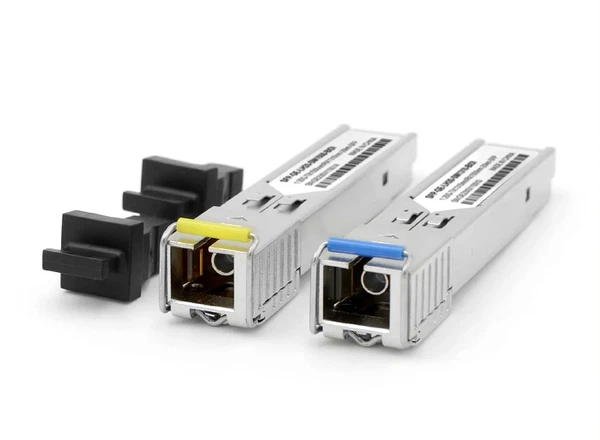
The optical transceiver sits at a critical junction. These cigarette-lighter-sized components convert electrical signals to optical and back, enabling high-speed transmission across fiber cables. When they fail, everything stops. Network failure ranks as the leading cause of unplanned outages, accounting for 35% of incidents over the past two years according to observability data.
Traditional approaches focus on meeting industry standards-IEEE specifications, MSA compliance, form factor requirements. Cisco discovered this isn't enough. In reliability testing that acquired 20 different optical modules from various suppliers, all technically compliant with 100G and 400G standards, none passed Cisco's stress environments. The modules worked under ideal conditions but failed when subjected to temperature fluctuations, voltage variations, or signal skew that real deployments encounter.
This gap between compliance and reliability becomes critical in AI infrastructure. Unlike traditional networks where TCP/IP handles error bursts through retransmission, AI systems operate with synchronized GPUs exchanging information in parallel. Link errors force the entire workload to stop, back up to a checkpoint, and restart. The performance penalty reaches 40% of cluster capacity.
Silicon Photonics Technology Reduces Failure Points
Cisco's silicon photonics approach integrates multiple optical functions onto a single chip, fundamentally changing reliability mathematics. Traditional discrete optical modules assemble separate components-lasers, modulators, multiplexers, detectors-each introducing potential failure points. Silicon photonics consolidates these functions into an integrated circuit manufactured using standard CMOS processes.
The reliability advantage comes from three factors. First, fewer components mean fewer failure points. A discrete 1.6T module using eight 200G channels requires four expensive EML lasers. Silicon photonics integrates everything so four channels share one common wavelength laser, reducing the count to two less-expensive CW lasers. These constant-wave lasers function like lightbulbs, shining steady light while the silicon photonics chip handles all high-speed modulation.
Second, wafer-scale manufacturing leverages mature silicon CMOS fabrication with 40 years and $400 billion of proven investment. Highly automated processes deliver consistent quality across millions of units. The technology enables testability and process repeatability impossible with hand-assembled discrete components. Manufacturing yield directly translates to field reliability.
Third, monolithic integration ensures precise alignment between components. When all optical elements exist on the same chip, fabricated together, signal loss decreases and performance improves. No precision placements or costly alignments required. The approach scales from laboratory to volume production without compromising reliability.
Cisco ships several million optical transceivers annually with field return rates below 100 ppm-less than 100 failures per million units. This metric reflects real-world performance across diverse customer environments, not laboratory conditions. For network engineers maintaining 99.99% availability requirements (52 minutes maximum annual downtime), component reliability at this level provides critical margin.
Comprehensive Testing Beyond Industry Standards
Industry standards provide necessary baselines but insufficient validation. Cisco implements design verification tests (xDVT) across optical, electrical, mechanical, and electromagnetic domains that exceed standard requirements. The testing methodology simulates failure modes standards don't address.
Optical Design Validation Testing (ODVT) ensures proper link performance as voltage and temperature vary across extended ranges. The tests measure wavelength accuracy, transmit power and signal integrity, and receiver sensitivity under conditions representing years of deployment. Temperature cycling-repeatedly powering systems on and off-accelerates aging to identify failure modes that emerge over time.
Electrical Design Validation Testing (EDVT) addresses signal integrity on high-speed data paths, logical interface consistency, and software compatibility. Transceivers interact with host platforms through both high-speed optical connections and low-speed management interfaces. Incompatibilities in EEPROM settings or firmware handshakes cause operational failures that compliance testing misses.
Mechanical Design Validation Testing (MDVT) subjects modules to vibration and shock on Z-axis shake tables. Data centers experience physical stress during installation, shipping, and seismic events. Mechanical failures-broken solder joints, unseated components, connector damage-represent common field issues that standard testing overlooks.
Electromagnetic Compatibility (EMC/EMI) testing guarantees the transceiver operates without interfering with neighboring equipment while maintaining immunity from external radiation. High data rates generate electromagnetic interference. Without proper shielding, packet losses occur. FCC Part 15 limits define acceptable levels, and Cisco testing ensures compliance with margin to spare.
The comprehensive approach validates interoperability across both Cisco and third-party platforms. Standards-based specifications don't ensure host-to-transceiver or transceiver-to-transceiver compatibility. Cisco completes full qualification using diverse host systems, discovering incompatibilities before deployment. This multivendor validation speeds customer integration and reduces field failures.
AI Networks Demand Higher Reliability Standards
AI infrastructure changes the reliability equation. GPU temperatures in AI racks hit 85°C, and systems generate 50-100 kW of power per rack. Transceivers in portside exhaust configurations experience higher temperatures than portside intake placements. Operating temperature directly affects failure rates, and inconsistent cooling airflow creates unpredictable failures.
High utilization exposes weaknesses. Traditional networks run with variable load-peaks and valleys of activity. AI training maintains continuous high utilization, stressing components without respite. Better link margin reduces correctable errors and prevents uncorrectable errors that crash jobs. Thermal management becomes critical as extended high temperatures accelerate component aging.
The financial implications favor premium optics. In a typical AI compute node, optical transceivers represent 3-5% of total cost. The bulk goes to GPUs, high-bandwidth memory, and cooling systems. A single AI server with eight GPUs exceeds $500,000, and individual GPUs cost upward of $30,000. Every minute of downtime wastes thousands in GPU idle time.
Low-quality optics may cost less initially but generate higher total ownership costs. Frequent replacements, troubleshooting, and maintenance drive expenses beyond component prices. GPU downtime from optical failures creates financial losses dwarfing the savings from cheaper transceivers. The premium paid for reliable optics represents smart investment given infrastructure scale.
Cisco provides integrated solutions tested across the complete stack-networking equipment, compute systems, storage, and the optics interconnecting everything. This end-to-end validation ensures compatibility and reliability in multivendor AI environments where servers, NICs, switches, and transceivers come from different manufacturers. Few vendors offer this comprehensive testing capability.

Routed Optical Networking Simplifies Architecture
Traditional metro and wide area optical networks require dedicated DWDM systems-expensive equipment demanding specialized skills. Routed Optical Networking leverages sophisticated pluggable coherent optics that integrate directly into IP routers, eliminating separate optical layers.
The architectural simplification delivers measurable benefits. Independent analysis shows 35% reduction in capital expenditures for specific network types, with operational expense savings exceeding 50% in some cases. The technology automates functions previously requiring human optical engineering, allowing teams to maintain expertise in their domains rather than cross-training IP and optical specialists.
Coherent pluggable optics have evolved faster than industry predictions. When Routed Optical Networking launched around 2020 with 400ZR standard, few expected 400ZR+ optics to reach beyond 1,000 km over brownfield networks. By 2024, 800ZR+ optics in QSFP-DD form factors perform even better. Pluggable coherent optics will account for half the total coherent market by 2027.
Power and space savings prove undeniable. Router-hosted coherent optics eliminate equipment racks, reduce cabling complexity, and lower facilities costs. Over 200 customers have deployed Routed Optical Networking, reporting increased capacity, reduced energy consumption, and lower network complexity and footprint. Bell Canada leveraged the technology in their network transformation to become the best network in the country while significantly reducing costs.
The approach extends from metro data center interconnects through regional and long-haul applications. 400G coherent wavelengths connect unamplified point-to-point links up to 45 km, while enhanced versions reach 120 km or enable long-haul transmission. The flexibility supports multiple deployment scenarios without dedicated optical transport equipment.
Global Supply Chain Strength Matters
Supply chain resilience determines equipment availability during critical deployments. Cisco maintains multisource optical component supply chains with global fulfillment infrastructure and same-day replacement capability. This diversity reduces disruption risk when individual suppliers face constraints.
As a network equipment manufacturer selling both networking gear and optics, Cisco understands how transceivers function within complete architectures. The company qualifies optical modules across the industry's largest portfolio of routers, switches, and servers. Customers can purchase Cisco optics for use in competitor equipment, ensuring compatibility and performance regardless of platform choice.
Support extends throughout the lifecycle. Technical assistance teams operate 24/7 across global service sites, minimizing network downtime when issues arise. Replacement modules ship same-day, reducing mean time to repair. The operational support infrastructure matters as much as product reliability for maintaining network uptime.
Portfolio breadth covers applications from 1G to 800G across campus, enterprise, data center, and service provider networks. Multiple form factors-SFP, QSFP28, QSFP-DD, OSFP-support different port types and reach requirements. Whether connecting servers within racks, linking data centers across kilometers, or building ultra-long-haul DWDM networks, matching optics exist.
The investment in optics technology exceeds $6 billion over the past decade through acquisitions including Lightwire, Luxtera, and Acacia. These investments in silicon, optics, and software enable accelerated innovation. Cisco's Acacia division builds optical components and ASICs, providing vertical integration from chip design through system software and management.
Performance Scaling for Future Demands
Network traffic growth drives continuous bandwidth increases. Back-end data center traffic expands 10x every two years, and adoption of 800G and 1.6T speeds accelerates. AI investments approach $5.2 trillion by 2030, creating insatiable demand for high-speed optical interconnects.
Cisco Silicon One provides the foundation for scaling. This networking silicon architecture delivers high performance, low power consumption, and flexibility across routing and switching applications. The latest P200 chip achieves 51.2 Tbps throughput, handling massive AI traffic volumes at over 20 billion packets per second. Deep buffer capabilities manage traffic bursts that characterize AI workloads.
Silicon photonics enables rapid progression to next-generation speeds. The technology that delivers 800G today will scale to 1.6T tomorrow through integrated photonics on silicon. Marvell demonstrated 6.4T 3D silicon photonics engines with 32 channels at 200G each, integrating hundreds of components including transimpedance amplifiers and drivers on the same device. This modular approach scales from 1.6T to 6.4T and beyond.
Co-packaged optics (CPO) represents the next evolution, integrating photonic integrated circuits directly with silicon. The approach promises higher reliability by reducing interconnect distances and eliminating pluggable interfaces. Challenges remain in manufacturing yield, particularly fiber attachment at scale. Thousand-plus optical connections per package demand extremely high yield to avoid field problems. The technology will mature over time, but caution is warranted during early deployment.
Linear-drive pluggable optics (LPO) offer an alternative path. By moving signal processing traditionally done in the transceiver into the switch ASIC, LPO reduces power consumption and cost while maintaining the replaceability advantage of pluggable modules. The "blast radius" of failures stays contained compared to CPO, where component issues affect entire switch subsystems.
Frequently Asked Questions
Why do Cisco optics cost more than third-party alternatives?
Cisco optics undergo comprehensive testing beyond industry standards-stress testing across temperature, voltage, and signal variations that generic modules skip. Field return rates below 100 ppm reflect this validation. In AI infrastructure where optical failures can cost $30,000 per idle GPU per minute, the premium for reliability becomes negligible compared to downtime costs. Third-party modules meeting MSA compliance may work under ideal conditions but fail in production environments experiencing thermal stress or electrical variations.
Can I use Cisco optics in non-Cisco equipment?
Yes. Cisco qualifies transceivers for both Cisco platforms and third-party switches and routers. The multivendor testing ensures compatibility across diverse equipment, reducing integration risk. Many customers purchase Cisco optics specifically for use in competitor networking gear to gain reliability advantages while maintaining vendor choice for switching and routing infrastructure.
How does silicon photonics improve reliability compared to discrete optics?
Silicon photonics integrates multiple optical functions-modulation, multiplexing, detection-onto a single chip, reducing component count and failure points. Wafer-scale CMOS manufacturing provides consistency impossible with hand-assembled discrete modules. Monolithic integration ensures precise component alignment, reducing signal loss. The approach leverages 40 years of silicon fabrication investment for manufacturing maturity that translates directly to field reliability.
What makes AI networks more demanding for optical components?
AI workloads maintain continuous high utilization rather than variable load patterns, stressing components without respite. GPU temperatures reach 85°C, accelerating optical component aging. Training jobs use synchronized GPUs where single link errors force entire clusters to stop and restart from checkpoints, creating 40% performance penalties. Unlike traditional networks where TCP/IP handles errors through retransmission, AI requires highest link integrity for continuous operation.
The Reliability Imperative
Network architecture increasingly starts with optics rather than treating transceivers as accessories. Data rates climbing from 10G through 800G make optical module selection critical for infrastructure upgrades, fiber reuse capability, and mission-critical connection reliability. Optics quickly become the largest capital investment in network builds as silicon advances make switch ports cheaper per bit faster than optical component cost curves.
Organizations require 99.99% availability-52 minutes maximum annual downtime per server. Some demand 99.999% uptime, allowing only 5.26 minutes of annual unplanned downtime. These targets leave no margin for component failures. When average hourly downtime costs exceed $300,000 and 98% of organizations report single-hour outages costing over $100,000, optical reliability becomes business-critical rather than technical minutiae.
The convergence of AI infrastructure demands, increasing bandwidth requirements, and zero-tolerance for downtime elevates optical component selection from purchasing decision to strategic choice. Testing rigor, silicon photonics integration, field-proven performance, and comprehensive support infrastructure determine which networks achieve reliability targets and which experience costly outages.