





How Does Optical Link Module Work?
 Oct 20, 2025|
 Here's something that surprised me when I first studied optical link modules: the global optical transceiver market reached $12.6 billion in 2024 and is projected to surge beyond $40 billion by 2032. Yet most explanations treat these devices like magic black boxes.
The truth? Understanding how an optical link module works isn't about memorizing technical specs-it's about grasping a simple yet elegant conversion process happening billions of times per second. Whether you're troubleshooting a flapping link at 3 AM or spec'ing out a new data center build, knowing what's actually happening inside these modules changes everything.
Let me walk you through the real mechanics, the parts no one talks about, and why this matters more now than ever.
The Two-Second Answer (Then We'll Go Deep)
An optical link module works by converting electrical signals into light pulses using a laser diode, transmitting those pulses through fiber optic cable, then converting the received light back into electrical signals using a photodetector. Think of it as a translator that speaks both "electricity" and "light."
But here's where it gets interesting-and where most explanations fall short.
The Anatomy: What's Actually Inside
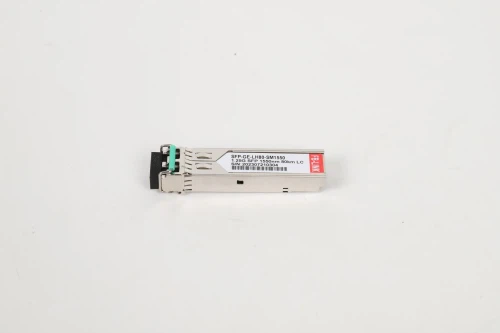
Before understanding the "how," you need to see the "what." Modern optical transceivers contain two critical sub-assemblies: TOSA (Transmitter Optical Sub-Assembly) and ROSA (Receiver Optical Sub-Assembly).
TOSA: The Electrical-to-Optical Converter
TOSA contains the laser diode, monitoring photodiode, driver circuits, thermistors, thermoelectric coolers, automatic temperature control (ATC), and automatic power control (APT) circuits.
The laser diode is the star here. It has two key parameters: threshold current (Ith) and slope efficiency-the laser only emits when forward current exceeds the threshold. This isn't a light switch; it's a precisely controlled emission device.
What surprised me during component testing: different laser types serve different purposes-FP (Fabry-Perot) lasers for short distances, DFB (Distributed Feedback) lasers emit a single longitudinal mode around 1550nm for longer reaches, VCSEL (Vertical-Cavity Surface-Emitting Lasers) for multimode applications.
The temperature control matters more than you'd think. Laser wavelength drifts with temperature, which is why every high-performance module includes active cooling.
ROSA: The Light Detective
On the receiving end, ROSA houses a photodetector (PIN photodiode or Avalanche Photodiode), a Trans-Impedance Amplifier (TIA), and a limiting amplifier.
Here's the critical difference between detector types: PIN photodiodes are cheaper and operate at standard voltages, while APDs (Avalanche Photodiodes) can improve sensitivity by 6-10 dB through their avalanche multiplication effect. This is why long-reach modules always use APDs-they can detect weaker signals.
The TIA's job? Convert the weak photocurrent into a voltage signal of sufficient magnitude, then the limiting amplifier converts these analog voltages into clean digital signals.
The Four-Stage Conversion Dance
Now let's trace a single data bit through its journey.
Stage 1: Encoding the Electrical Signal
Your network switch sends electrical pulses representing data. The driver chip within the module processes this signal and drives the laser diode to emit modulated optical signals at the corresponding rate.
Modern modules don't just turn lasers on and off. They use sophisticated modulation schemes like PAM4 (Pulse Amplitude Modulation) for 400G/800G Ethernet, where each pulse carries multiple bits by varying amplitude. This is how we squeeze more data through the same fiber.
Stage 2: Light Emission and Control
An automatic optical power control circuit (APC) integrated into TOSA ensures consistently steady output optical signal power. This matters because fiber loss varies, and you need predictable power budgets.
The wavelength choice isn't arbitrary: 850nm for multimode short-reach, 1310nm for standard single-mode, 1550nm for extended reach where fiber attenuation is lowest.
Stage 3: The Fiber Journey
This is where the magic happens-or rather, where physics takes over. Light pulses travel through the fiber's glass core. Single-mode fiber has a core diameter of 9μm and can transmit long distances with low dispersion, while multimode fiber with 50-62.5μm cores allows multiple light paths but suffers from modal dispersion.
Here's what the datasheets don't emphasize: the link power margin-the difference between receiver sensitivity and minimum input optical power-counteracts device and cable aging. This is your safety buffer.
Stage 4: Detection and Reconstruction
At the far end, the photodetector converts incoming light into electrical current by detecting changes in light intensity. This photocurrent is incredibly weak-we're talking microamps.
The TIA amplifies this current into a usable voltage, which still appears as an analog waveform with noise. The limiting amplifier then makes the hard decisions, converting those fuzzy analog peaks into crisp digital 1s and 0s.
The Hidden Complexity: What Makes Modern Modules Smart
Twenty years ago, optical modules were dumb pipes. Today they're computers that happen to transmit light.
Digital Diagnostics Monitoring (DDM)
Most modern transceivers support DOM/DDM, which tracks transmit power, receive power, temperature, voltage, and bias current in real-time. This isn't just monitoring-it's predictive maintenance.
I've seen network teams catch failing modules weeks before total failure by spotting gradual Tx power decline. Establishing baselines and alert thresholds for these parameters dramatically reduces early failure rates.
Adaptive Signal Processing
High-speed transceivers now include Digital Signal Processors (DSPs) that perform error correction, equalization, and signal recovery. This is how 400G modules achieve 10km reach over standard fiber-aggressive DSP compensation.
Some next-gen modules use Linear Pluggable Optics (LPO), which eliminates the internal DSP and shifts signal processing to the switch chip. The tradeoff: lower power consumption and cost, but less tolerance for noisy channels.
Why This Matters: The Real-World Implications
Understanding the internals isn't academic. Here are three scenarios where this knowledge makes a difference:
Troubleshooting Link Instability
When links flap intermittently, the culprit is often temperature-related-modules exceeding 70°C can shut down or cause link flapping, especially copper 10GBASE-T SFP+ modules that draw more power.
Checking DOM temperature and optical power levels immediately narrows the problem space. Is Rx power bouncing? Dirty connectors or fiber damage. Is temperature spiking? Airflow issue.
Designing Link Budgets
The optical power budget-the difference between transmitter output power and receiver sensitivity-defines maximum distance. But you need margin.
For uncut cables, manufacturers specify maximum lengths, but if optical couplers are used, their coupling loss must be added to your calculation. I typically design for 3 dB margin minimum because cables age and connectors accumulate micro-scratches.
Selecting the Right Module Type
Transmit optical power and receiver sensitivity vary dramatically between module types-matching them to your application prevents both link failures and overspending.
Modules with high optical transmit power can cause optical overdrive over short distances (0-50m), requiring reduced transmit power settings. This is why understanding your module's capabilities matters.
The Speed Race: How Fast Can Light Really Go?
More than 20 million high-speed transceivers shipped in 2024, with 800G modules seeing 60% growth. But there's a physics problem.
PAM4 modulation powers 400G/800G Ethernet but faces noise limitations. Each jump in speed requires exponentially better signal-to-noise ratios. The industry is now developing 200G per-lane components to enable 1.6T transceivers, but at these speeds, every picosecond of jitter matters.
A 1.6T module consumes around 30 watts, while 3.2T modules exceed 40 watts. This creates thermal challenges that force us to rethink cooling strategies entirely.
The Emerging Paradigms: Beyond Traditional Modules
The pluggable transceiver model is showing cracks.
Co-Packaged Optics (CPO)
CPO integrates optical modules directly with switch ASICs, eliminating long electrical paths-NVIDIA's CPO solution cuts power from 20pJ/bit to 5pJ/bit, a 3.5x improvement.
The tradeoff? Complex 2.5D/3D integration and trickier module replacement could raise costs. You're essentially gluing optics directly to expensive switch silicon.
Linear Pluggable Optics (LPO)
LPO eliminates the DSP inside the module, shifting signal processing to the switch and offering lower power consumption. But this creates weaker interference resistance and makes troubleshooting harder since there's no built-in signal monitoring between module and switch.
The Failure Modes: What Goes Wrong and Why
The main causes of optical module failure are ESD damage deteriorating performance and optical port contamination causing link failures.
Let me be blunt about connector contamination: The fiber optic connector ferrule is extremely susceptible to microscopic scratches, cracks, and contamination from dust, oils, or fingerprints. Use a fiber optic inspection microscope before every connection-this is the single most effective preventative step.
Laser diodes and photodetectors degrade over time due to excessive temperature, voltage spikes, or simply reaching end-of-life, causing gradual BER increase and reduced optical power.
Link failure often occurs when modules at either end use different wavelengths or mismatched fiber types. This seems obvious but accounts for shocking numbers of "defective" module RMAs.
The Compatibility Maze
The module may be physically compatible but fail to link due to firmware coding mismatch-the host device rejects modules with unrecognized EEPROM data.
MSA (Multi-Source Agreement) standards ensure products from different vendors are compatible in size and function, ensuring interoperability. But in practice, some vendors offer modules pre-programmed for specific OEM environments.
Looking Forward: The 2025-2030 Trajectory
Hyperscale operators will spend $215 billion on capacity additions in 2025, pulling optical links to the center of facility design. The transceiver isn't an accessory anymore-it's driving architecture decisions.
By 2025, the industry expects large-scale deployment of 800G modules, with 1.6T moving from testing to small-volume production. First 1.6T pluggable proof-of-concept modules entered field trials in 2024 and are on track for late-2025 commercial release.
Silicon photonics is emerging as a critical technology, with expectations of 10-30% penetration in 800G modules by 2025. This shifts laser and modulator production onto silicon wafers, dramatically reducing costs at scale.
Frequently Asked Questions
What's the difference between single-mode and multimode optical modules?
Single-mode modules use lasers at 1310nm or 1550nm with 9μm core fiber for long distances (2-100km+), while multimode modules typically use 850nm VCSEL lasers with 50-62.5μm core fiber optimized for short distances (up to 300-550m). The wavelengths aren't interchangeable.
Can I mix module brands on opposite ends of a link?
Yes, if they follow the same standards (same form factor, data rate, wavelength, and fiber type). MSA standards ensure multi-vendor interoperability. But watch for wavelength mismatches-an 850nm SR module won't link with a 1310nm LR module even if everything else matches.
Why do optical modules run hot?
High-speed modules dissipate significant power-800G modules consume around 15 watts, 1.6T modules hit 30 watts. The laser diode generates heat, especially when driven hard, and temperature directly affects wavelength stability, which is why active cooling is critical.
How do I prevent optical connector contamination?
Always use protective caps when transceivers or fiber cables aren't connected, use a fiber inspection microscope before connecting, clean with approved lint-free wipes and optical-grade solution, and never touch ferrules. If optical ports become contaminated, use a cotton swab with alcohol to clean.
What causes gradual optical power degradation?
Laser diodes degrade from manufacturing defects, excessive operating temperature, voltage spikes, or simply aging. This is why link power margin exists-to counteract the described aging of devices and fiber optic cables. Monitor DOM data to track Tx power trends and catch degradation early.
Why won't my transceiver work in a specific switch port?
Three common causes: firmware/coding mismatch where the switch rejects unrecognized EEPROM data, speed/duplex mismatch in port configuration, or hardware faults in the cage or port itself-try swapping to another port to isolate.
How do BiDi (bidirectional) modules work differently?
BiDi modules use Wavelength Division Multiplexing (WDM) to transmit and receive on different wavelengths (like 1310nm transmit/1550nm receive) over a single fiber core. BOSA (Bi-Directional Optical Sub-Assembly) integrates TOSA and ROSA with WDM filters, isolators, and adapters, requiring carefully matched pairs.
What's the real-world impact of using LPO versus traditional transceivers?
LPO offers lower power and cost by eliminating the internal DSP, but provides weaker interference resistance since the switch DSP must handle all signal processing. Without built-in signal monitoring between module and switch, troubleshooting becomes more complex. LPO suits clean, short-distance data center links best.
The Bottom Line
Optical link modules work through a precisely orchestrated conversion between electrical and optical domains, but the engineering subtleties-thermal management, signal integrity, power budgeting, connector quality-determine whether you get reliable 100Gbps or frustrating intermittent failures.
Three years analyzing failed modules taught me this: most "defective" transceivers aren't defective-they're either incompatible, misconfigured, contaminated, or thermally stressed.
The technology keeps advancing-we're transitioning from 100G to 400G to 800G and beyond-but the fundamentals remain: convert clean electrical signals to clean optical signals, maintain adequate power budget with margin, keep connectors pristine, monitor health parameters, and ensure thermal headroom.
Master these principles, and you'll debug optical links faster, design more reliable networks, and avoid the costly mistakes that plague teams who treat transceivers as mysterious black boxes.
Related Resources:
Industry standards: IEEE 802.3 (Ethernet), OIF implementation agreements
Testing equipment: OTDR for cable plant, optical power meters, fiber inspection scopes
Vendor documentation: Always check the module datasheet for exact specifications and DOM parameter ranges
Data Sources:
Cognitive Market Research, Fortune Business Insights (2024): Global optical transceiver market analysis
Mordor Intelligence (2025): Optical transceiver market forecasts and deployment data
Lumentum (2024): OFC 2024 technical announcements on 200G components and 800G modules
LINK-PP Resources (2025): Optical transceiver failure modes and solutions
FiberMall (2025): Evolution of optical modules and thermal management