Differences between Wireless Base Stations and Repeaters
 Dec 04, 2025|

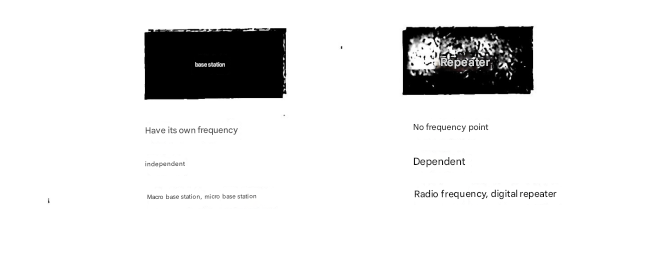
A wireless base station (or simply "base station") is an interface device in a mobile communication network that provides wireless coverage for mobile devices and enables them to access the Internet. A repeater (also known as a signal amplifier/relay station) is essentially a radio frequency signal amplifier, mainly used to receive and amplify the downlink signal from the base station to improve coverage blind spots or weak areas. It does not have the complete signal processing and network access functions of a base station itself.
1
Wireless base station signals will always have areas that are not covered. There are two options:
Rebuild base stations

2
What is a repeater? Also called a relay station, it's used to amplify the signal in areas where the base station's signal is weak. Essentially, it's a radio frequency signal amplifier or power amplifier that amplifies the base station's signal, allowing you to make phone calls.

3
When discussing base stations, macrocells (also known as macro base stations) can fill coverage gaps by using microcells or repeaters. The biggest advantage of repeaters is that they are cost-effective.

4
Building a base station is like building a house, while a repeater station is like setting up a tent. A repeater station is somewhat like a temporary housing after a disaster, cheaper than building a new house and still habitable.A repeater includes a coupler, and has a remote unit and a local unit. The signal is transmitted to the local unit, processed, and then sent to the user.

5
The digital fiber optic repeater shown in the image above differs from the digital modules used in RRUs and BBUs.
A digital fiber optic repeater uses an analog-to-digital converter (A/D) to convert analog radio frequency signals, sampling and converting the analog signal into a digital signal before transmission. The receiver performs a digital-to-analog conversion, then restores the received digital signal to its analog form.

In summary, base stations and repeaters: