





SFP transceivers are manufactured globally
 Nov 29, 2025|
The fiber optic transceiver market is, frankly, enormous. We're talking billions of dollars annually, and that number keeps climbing. But here's what most people don't realize: these tiny modules-small enough to fit in your palm-come from manufacturing facilities scattered across three continents. Asia dominates, obviously. But the picture is more complicated than that.
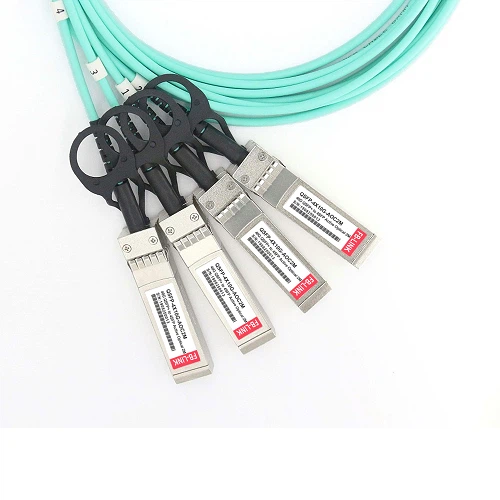
Where the Magic Actually Happens
China produces somewhere around 60-70% of the world's SFP modules. Shenzhen alone has dozens of facilities churning these out. Taiwan handles a significant chunk too-their expertise in semiconductor packaging translates well into transceiver assembly. Malaysia and Thailand have become increasingly important players, especially for manufacturers looking to diversify their supply chains after, well, you know what happened in 2020.
The U.S. still manufactures some modules domestically. Finisar (now part of II-VI, which recently rebranded to Coherent-try keeping up with these mergers) maintains facilities in Texas. Lumentum operates plants in California. These tend to focus on higher-end products: 100G modules, coherent transceivers, stuff that requires tighter quality control or serves government contracts with domestic sourcing requirements.
The Component Supply Chain
Laser diodes come from Japan. Mostly. Some from the U.S.
The photodetectors, driver ICs, transimpedance amplifiers-these components get sourced from multiple countries before final assembly. A single 1G SFP might contain parts manufactured in five different nations before it reaches your switch. Nobody really advertises this, but it's the reality.
MSA Compliance and What It Actually Means
The Multi-Source Agreement is supposed to guarantee interoperability. In theory, any MSA-compliant SFP should work in any MSA-compliant port. In practice? Results vary. A lot.
Major network equipment vendors-Cisco, Juniper, HPE, Arista-implement vendor-locking through EEPROM encoding. The transceiver itself is physically identical to a third-party unit. Same laser, same photodetector, same circuit board. But the firmware identification makes the host device reject it, or worse, display those annoying warning messages about "unsupported" or "uncertified" hardware.
Third-party manufacturers have gotten clever about this. They program their EEPROMs to mimic OEM codes. Is this legal? Mostly yes, actually. The MSA itself doesn't require exclusive coding. Courts have generally sided with third-party suppliers on this issue, though Cisco fought it hard for years. The service unsupported-transceiver command exists in IOS for a reason
.

Understanding the Technical Specifications
Transmit power ranges matter more than most buyers realize. A module rated at -9.5 to -3 dBm transmit power will behave very differently than one rated -8 to -0.5 dBm, even if both technically support the same distance specification. The latter gives you margin. Margin means reliability over time as components age, connectors get dirty, or someone bends a cable a bit too sharply.
Receive sensitivity is equally critical. Most 1000BASE-LX modules specify around -20 dBm minimum sensitivity. Better units hit -24 dBm. That 4 dB difference translates to real-world link budget you can actually use.
Quick note on wavelengths: 850nm for multimode (short haul), 1310nm for intermediate single-mode, 1550nm for long distances. CWDM uses multiple wavelengths from 1470-1610nm. That's really all you need to know for most deployments.
The Industrial Temperature Question
Standard SFPs operate from 0°C to 70°C. Industrial-rated modules extend that to -40°C to 85°C. The price difference? Sometimes 2x or more.
Here's where I get a bit opinionated: most installations don't actually need industrial temp ratings. Your climate-controlled data center stays at 22°C year-round. The wiring closet might hit 35°C on a bad day. Standard modules handle this fine. But outdoor deployments, roadside cabinets, industrial plants, oil rigs-those genuinely need extended temperature range. Don't let anyone upsell you on industrial SFPs for a typical enterprise installation. Save that budget for spare modules instead.
Digital Optical Monitoring (DOM)
Also called Digital Diagnostic Monitoring (DDM) or DMI. SFF-8472 defines the standard. Almost every modern SFP includes it, though cheaper modules sometimes cut corners on calibration accuracy.
What DOM gives you:
Real-time transmit power readings
Received optical power (incredibly useful for troubleshooting)
Module temperature
Supply voltage
Laser bias current
The bias current trend is particularly valuable. A laser requiring increasing bias current to maintain output power is a laser approaching end-of-life. Proactive replacement beats emergency troubleshooting at 3 AM. Always.

Single-Fiber Bidirectional: Clever Engineering
BiDi transceivers use WDM technology to transmit and receive on a single fiber strand. One end uses 1310nm transmit with 1550nm receive; the paired unit flips this (1550nm TX, 1310nm RX). The internal diplexer separates the wavelengths.
These cost more per unit than standard duplex modules. But they cut your fiber count in half. For long cable runs where fiber installation dominates the budget, BiDi often wins economically. For short runs in buildings with plenty of fiber capacity, duplex modules make more sense. Context matters.
Quality Variations and What to Watch For
Not all SFPs are created equal. A reputable third-party manufacturer tests every unit, burns them in at elevated temperatures, and validates DOM calibration. The cheapest suppliers on Alibaba might skip half of these steps. The modules work initially. Failure rates at month 18 tell a different story.
What separates good manufacturers from bad ones:
Laser sourcing. Top-tier suppliers like Mitsubishi, Lumentum, or II-VI. Budget suppliers use unbranded Chinese lasers that may or may not meet stated specifications.
Burn-in testing. 24-48 hours at 85°C reveals infant mortality failures before shipment. Skipping this step pushes those failures into your production network.
Optical alignment precision. The laser-to-fiber coupling requires micron-level accuracy. Sloppy assembly means higher insertion loss and reduced margin. You won't see this on a datasheet; it shows up as inconsistent performance across units.
CWDM: When You Need More Bandwidth
Coarse Wavelength Division Multiplexing puts 8-16 channels on a single fiber pair. Each channel operates at a different wavelength (typically 20nm spacing from 1470nm to 1610nm). ITU-T G.694.2 standardizes the grid. You need passive mux/demux units at each end, but no active amplification for distances under 80km or so. Cost-effective capacity expansion when laying new fiber isn't an option.

Final Thoughts
The global SFP transceiver industry operates on razor-thin margins with cutthroat competition. That's good for buyers-prices have dropped consistently over the past decade. A 1G-LX module that cost $300 in 2008 runs about $15-25 today from a quality third-party supplier.
10G modules followed a similar trajectory. 25G and 100G are still expensive but falling. 400G remains firmly in "if you have to ask the price" territory for now.
Buy from established suppliers who actually test their products. Keep spares on hand-SFPs fail more often than switches. Match your specifications to actual requirements rather than theoretical maximums. And maybe don't pay the OEM markup unless compliance requirements truly demand it. Your network will work just fine either way.