





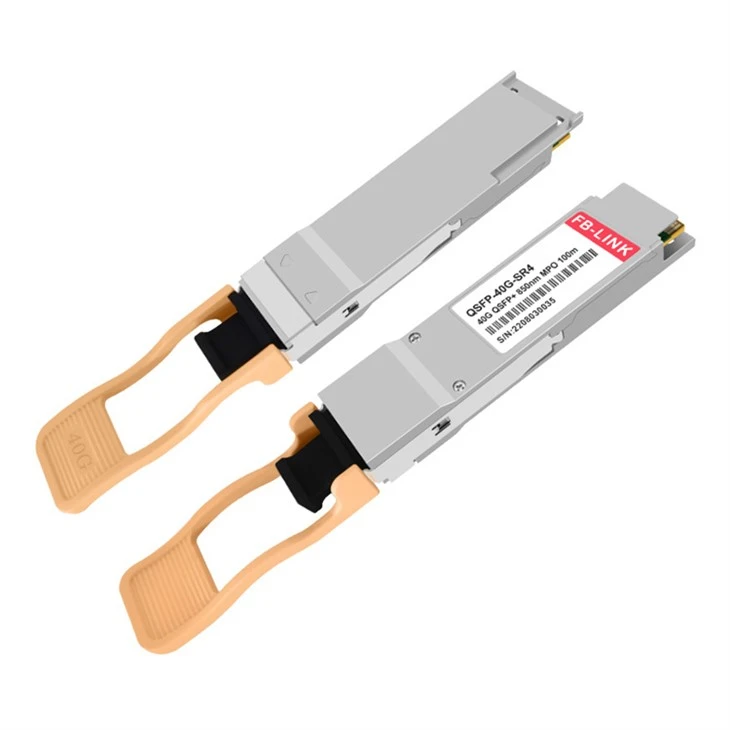


40G QSFP+ SR4 100M
The 40G QSFP+ SR4 100M optical transceiver enables fast and reliable data transmission over optical fiber at speeds of up to 40 Gbps with relatively low power consumption, making it ideal for high-bandwidth applications such as data center interconnect and high-performance computing.

- Product Introduction
Products Description
| Part Number | QSFP-40G-SR4 | TX Power | -7.6~+2.4dBm |
| Rate | 40Gb/s | Receiver Sensitivity | <-11.1 dBm |
| Connector | MPO | Operating Voltage | 3.3V |
| Wavelength | 850nm | DDM | Yes |
| Distance | 100m | Operating Temperature | 0~70℃ |
Compatible

Certificates


Understanding 40G QSFP-SR4 Optical Transceivers: A Complete Guide
Optical transceivers have become the backbone of modern data center connectivity, enabling high-speed data transmission across fiber optic networks. Among the various solutions available, the 40 Gigabit QSFP Short Range 4 module stands out as a reliable choice for short-distance applications requiring exceptional bandwidth.
What Makes 40G Short-Range Solutions Essential
High-performance optical transceivers designed for 40 Gigabit Ethernet networks address the growing demand for faster data transmission in enterprise environments. These modules utilize multi-mode fiber technology operating at the 850-nanometer wavelength, making them ideal for spine-leaf architectures and server-to-switch connections within the same facility.
The quad small form-factor pluggable design enables hot-swappable functionality, allowing network administrators to replace or upgrade components without system downtime. This feature proves invaluable in mission-critical environments where continuous operation is non-negotiable.
Key Performance Characteristics
Modern optical transceivers in the 40G category deliver impressive specifications that meet demanding networking requirements. These modules typically support transmission distances up to 100 meters over OM3 multi-mode fiber, with extended reach possible on OM4 cabling infrastructure.
Power efficiency remains a critical consideration for data center operators. Contemporary modules operate within standard voltage parameters while maintaining transmit power levels that ensure signal integrity across the entire link budget. The receive sensitivity specifications guarantee reliable detection even under challenging conditions.
The MPO/MTP connector interface has become the industry standard for parallel optical transceivers, providing 12-fiber connectivity in a compact footprint. This design choice maximizes port density while simplifying cable management in high-density rack environments.
Digital Diagnostics and Management
Digital Diagnostic Monitoring capabilities have transformed how network engineers maintain optical infrastructure. Advanced optical transceivers provide real-time access to operating parameters including temperature, supply voltage, transmit power, and receive power levels. This visibility enables proactive maintenance strategies and rapid troubleshooting when issues arise.
Integration with network management systems allows automated monitoring and alerting, reducing the risk of unexpected failures. Threshold-based warnings help identify degrading components before they impact network performance.
Environmental Considerations
Commercial-grade optical transceivers are engineered to function across a wide temperature range, typically from zero to 70 degrees Celsius. This specification ensures reliable operation in standard data center environments as well as telecommunications equipment rooms with varying thermal conditions.
The robust design accounts for factors like airflow patterns, adjacent heat sources, and seasonal temperature fluctuations. Proper thermal management extends component lifespan and maintains consistent performance throughout the operational lifecycle.
Deployment Best Practices
Successful implementation of optical transceivers requires attention to several critical factors. Cable plant quality directly impacts performance – using the appropriate fiber grade ensures you achieve the specified reach and bit error rate. Regular inspection and cleaning of connector end-faces prevents contamination-related signal degradation.
Compatibility verification with host equipment prevents integration issues. While most modern switches and routers support industry-standard modules, confirming compatibility before deployment saves time and prevents costly mistakes.
Frequently Asked Questions
What is the difference between SR4 and other optical transceiver types?
SR4 designates Short Range 4-channel parallel optics technology. Unlike serial transmission methods, SR4 optical transceivers split the 40G signal across four 10G channels, each utilizing separate fiber pairs. This approach achieves higher bandwidth while maintaining compatibility with existing multi-mode fiber infrastructure. Alternative types like LR4 (Long Range) and ER4 (Extended Range) use different wavelengths and single-mode fiber for greater distances.
Can I use 40G optical transceivers with 10G equipment?
Direct compatibility between 40G and 10G is not possible due to different signaling rates and protocols. However, breakout cables allow 40G optical transceivers to connect with four separate 10G ports, providing a migration path for mixed-speed environments. This configuration requires appropriate cabling and switch port configuration to function correctly.
How do I know when an optical transceiver needs replacement?
Several indicators suggest replacement is necessary. Increasing error rates, power level degradation shown through diagnostic monitoring, or physical damage to the module housing all warrant replacement. Monitoring systems typically alert administrators when operating parameters drift outside acceptable ranges, allowing for scheduled maintenance rather than emergency repairs.
What causes optical transceiver failures?
Common failure modes include thermal stress from inadequate cooling, electrical overstress from power surges, contamination on optical interfaces, and simple component aging. Optical transceivers contain laser diodes and photodetectors that gradually degrade over time. Proper handling, regular cleaning, and maintaining recommended operating conditions significantly extend service life.
Are all 40G QSFP modules interchangeable?
While most 40G QSFP optical transceivers follow MSA (Multi-Source Agreement) standards ensuring physical compatibility, performance specifications vary between models. SR4 modules work exclusively with multi-mode fiber, while LR4 requires single-mode fiber. Always verify that the module specifications match your application requirements and cable plant characteristics before deployment.
How does wavelength affect performance?
The 850nm wavelength used in short-range optical transceivers offers optimal performance with multi-mode fiber due to favorable propagation characteristics and cost-effective VCSEL laser technology. This wavelength choice provides the right balance between manufacturing cost, power efficiency, and transmission performance for data center applications.
Future-Proofing Your Network Infrastructure
As bandwidth demands continue growing, today's optical transceivers serve as stepping stones toward higher-speed solutions. The migration path from 40G to 100G and beyond often reuses existing fiber infrastructure, protecting your cable plant investment. Selecting quality components now ensures smoother transitions to next-generation technologies.
Understanding the technical capabilities and limitations of your optical layer empowers better planning decisions. Whether expanding existing networks or designing new installations, choosing the right optical transceivers significantly impacts overall system performance, reliability, and total cost of ownership.
Hot Tags:
You Might Also Like


