





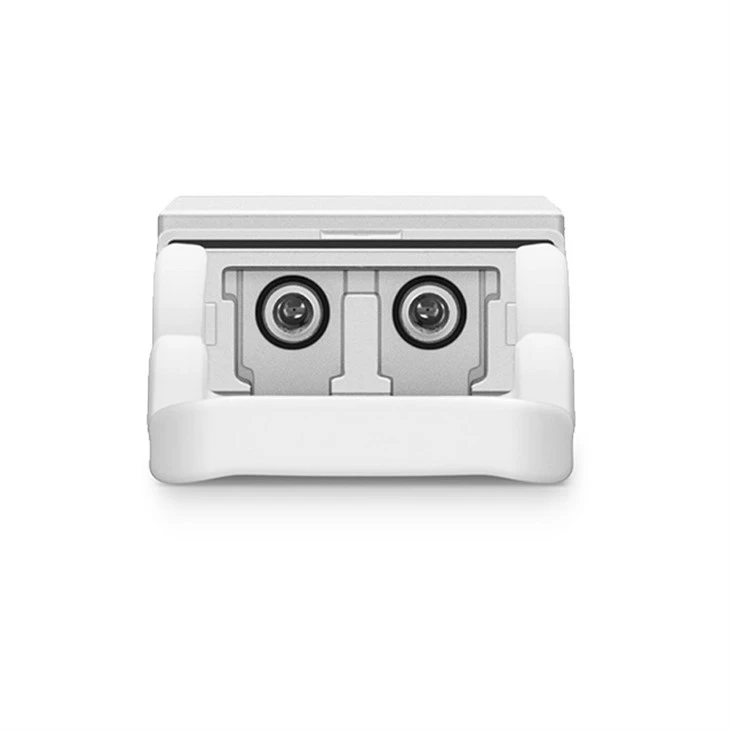


40G QSFP 80KM ZR4
This product is a 40Gb/s transceiver module designed for optical communication applications compliant to Ethernet 40GBASE standard. The module converts 4 input channels of 10.3125Gb/s electrical data to 4 channels of LAN WDM optical signals and then multiplexes them into a single channel for 40Gb/s optical transmission.

- Product Introduction
Description
| Part Number | QSFP 40G 80KM | Product type | QSFP+ |
| Rate | 40Gb/s | Connector | Duplex LC |
| Wavelength | LWDM | Distance | 80KM |
| Tx Power | 0~6dBm | Receiver Sensitivity | <24dBm |
| DDM | Supported | Temperature Range | 0~70℃ |
Transceiver Block Diagram

Mechanical Dimensions

Application

About us

When network infrastructure demands exceed traditional limitations, advanced optical transceivers become the cornerstone of reliable, high-speed connectivity. For enterprises and service providers managing extensive metropolitan and regional networks, selecting the right transceiver module can mean the difference between seamless operations and costly downtime.
Why Long-Reach Optical Transceivers Matter for Modern Networks
Modern data centers and telecommunication networks face unprecedented bandwidth demands. Optical transceivers designed for extended reach applications solve critical connectivity challenges by enabling high-speed data transmission across substantial distances without signal degradation. These modules serve as essential components in building robust network infrastructures that can support growing data traffic while maintaining exceptional performance standards.
The evolution of optical transceivers has revolutionized how organizations approach network design. Unlike conventional short-range modules, long-distance variants employ sophisticated technology to maintain signal integrity across metropolitan areas, connecting distributed facilities, data centers, and network nodes with remarkable efficiency.
Key Advantages of QSFP+ Technology in Optical Transceivers
QSFP+ (Quad Small Form-factor Pluggable Plus) represents a significant advancement in transceiver technology. These compact modules deliver impressive throughput capabilities while maintaining a small footprint, making them ideal for high-density networking environments where space comes at a premium.
Operating at forty gigabits per second, these optical transceivers provide the bandwidth necessary for demanding applications including cloud computing, video streaming, storage area networks, and enterprise backbone connections. The hot-swappable nature of QSFP+ modules ensures minimal network disruption during maintenance or upgrades, a critical feature for mission-critical operations.
LWDM Technology: Maximizing Fiber Infrastructure
Coarse and Long Wavelength Division Multiplexing (LWDM) technology embedded in advanced optical transceivers optimizes existing fiber infrastructure. By utilizing specific wavelength channels, these modules enable efficient data transmission over extended distances without requiring expensive fiber replacements or infrastructure overhauls.
This wavelength optimization proves particularly valuable for organizations looking to maximize their return on existing fiber investments while preparing for future bandwidth expansion. The technology ensures compatibility with standard single-mode fiber infrastructure, streamlining deployment and reducing total cost of ownership.
Digital Diagnostics: Proactive Network Management
Modern optical transceivers equipped with Digital Diagnostic Monitoring (DDM) provide real-time visibility into critical operational parameters. Network administrators can monitor transmit power, receive power, temperature, and other vital metrics without specialized equipment or service interruptions.
This diagnostic capability transforms network management from reactive troubleshooting to proactive maintenance. By identifying potential issues before they impact performance, organizations can schedule maintenance during optimal windows, minimize unplanned downtime, and extend the operational lifespan of their network infrastructure.
Temperature Performance for Diverse Environments
Commercial-grade optical transceivers designed for standard operating conditions deliver reliable performance across typical indoor environments. With operational stability spanning from zero to seventy degrees Celsius, these modules accommodate most enterprise data center and telecommunication facility requirements without additional environmental controls.
This temperature tolerance ensures consistent performance across varying seasonal conditions and facility types, from climate-controlled data centers to telecommunications cabinets in less regulated environments. The robust design philosophy behind quality optical transceivers prioritizes reliability under real-world operating conditions.
Applications Across Industries
Financial institutions leverage high-performance optical transceivers to maintain low-latency connections between trading floors and data centers. Healthcare organizations use them to link distributed medical facilities, enabling rapid access to critical patient data and imaging systems. Educational institutions deploy these modules to connect campus buildings, supporting bandwidth-intensive research and collaborative learning environments.
Service providers rely on optical transceivers to build and expand their metropolitan area networks, delivering high-speed internet and cloud services to business customers. The versatility of these modules makes them indispensable across virtually every sector requiring reliable, high-capacity data transmission.
Installation and Compatibility Considerations
Successful deployment of optical transceivers requires attention to several factors. Fiber cleanliness remains paramount-contaminated connectors represent the leading cause of transceiver performance issues. Using proper duplex LC connector cleaning procedures ensures optimal signal quality and long-term reliability.
Compatibility verification with existing network equipment prevents integration challenges. While optical transceivers follow industry standards, confirming compatibility with specific switch and router models ensures seamless integration and optimal performance. Many manufacturers provide compatibility matrices to simplify this verification process.
Frequently Asked Questions
What makes 80km optical transceivers different from shorter-reach modules?
Extended-reach optical transceivers utilize higher transmit power and enhanced receiver sensitivity to maintain signal quality over substantially longer distances. They employ specialized optical components and sophisticated signal processing to overcome fiber attenuation and dispersion effects that would degrade signals in shorter-reach modules. This enables direct connections across metropolitan areas without intermediate signal regeneration equipment.
How do I know if my network needs long-distance optical transceivers?
If your infrastructure requires connections spanning more than ten kilometers, particularly between buildings in different parts of a city or connecting to remote facilities, long-distance optical transceivers provide the most cost-effective solution. They eliminate the need for expensive intermediate equipment while delivering reliable, high-bandwidth connectivity. Organizations with distributed campuses, multiple data centers, or metropolitan area network requirements benefit significantly from these modules.
Can these optical transceivers work with my existing fiber infrastructure?
Most long-reach optical transceivers are designed for standard single-mode fiber, which is widely deployed in enterprise and service provider networks. The LWDM technology optimizes wavelength usage to work efficiently with existing fiber plants. However, verifying fiber type, condition, and cleanliness is essential-damaged or dirty fiber will degrade performance regardless of transceiver quality.
What does DDM support mean for network operations?
Digital Diagnostic Monitoring in optical transceivers provides real-time access to operational parameters including optical power levels, temperature, and voltage. This enables proactive monitoring through network management systems, allowing administrators to identify degrading components before they fail. DDM significantly reduces troubleshooting time and helps optimize network performance through data-driven maintenance decisions.
How do I ensure optimal performance from my optical transceivers?
Maintaining clean fiber connections, operating within specified temperature ranges, and monitoring diagnostic data regularly are key to optimal performance. Proper installation following manufacturer guidelines, using quality patch cables, and ensuring adequate airflow in equipment racks all contribute to long-term reliability. Regular firmware updates on network equipment and periodic performance verification help maintain peak operational efficiency.
Are 40G optical transceivers still relevant with 100G technology available?
Absolutely. Forty-gigabit optical transceivers remain highly relevant for many applications where they provide optimal cost-performance balance. Not all network segments require 100G bandwidth, and 40G modules offer an economical solution for trunk connections, storage networks, and aggregation layers. Many organizations deploy mixed-speed networks, using 40G and 100G strategically based on specific segment requirements.
Hot Tags: Optical Transceivers
You Might Also Like


