





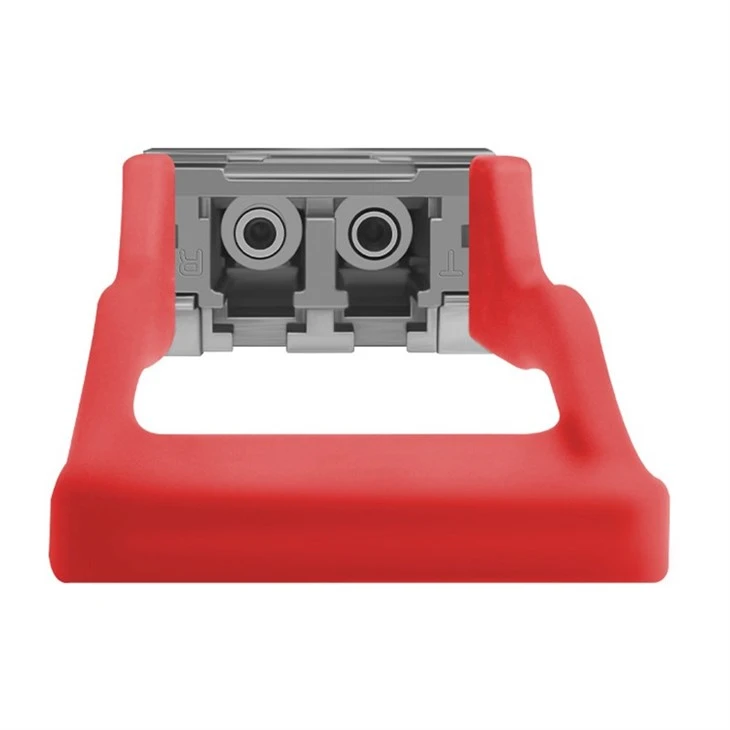
QSFP 40G Optical Transceivers ER4 40KM
QSFP 40G ER4 Optical Transceivers Module The QSFP 40G ER4 module is designed for use in 40GBASE Ethernet throughput up to 40km over single mode fiber (SMF) using a wavelength of 1310nm via duplex LC connectors. This transceiver is compliant with QSFP+ MSA, IEEE 802.3bm 40GBASE ER4 and OTU3...

- Product Introduction
Mechanical Dimensions

Transceiver Block Diagram

Applications
40G Ethernet
Data Center
Back to Back
InfiniBand QDR
Description
| Part Number | QSFP-40G-ER4 | Product type | QSFP+ |
| Rate | 40Gb/s | Connector | Duplex Lc |
| Wavelength | 1310nm | Distance | 40km |
| TX Power | -2.7~-4.5dBm | Receiver Sensitivity | <-21.2dBm |
| DDM | Supported | Temperature Range | 0~70℃ |
fully compatible

specificities

Shipping

In today's rapidly evolving digital landscape, optical transceivers have become the backbone of high-speed network infrastructure. As enterprises and data centers demand greater bandwidth and longer transmission distances, selecting the right connectivity solution is critical. The QSFP-40G-ER4 module represents a breakthrough in extended-reach networking, delivering exceptional performance for mission-critical applications.
Understanding Next-Generation Optical Transceivers
Optical transceivers are sophisticated devices that convert electrical signals into optical signals for fiber-optic transmission, enabling high-speed data communication across vast distances. The QSFP-40G-ER4 stands out as a premium choice for organizations requiring reliable, high-capacity connections between geographically dispersed facilities.
This advanced module leverages QSFP+ form factor technology, providing quad-channel architecture that optimizes bandwidth utilization. By operating at forty gigabits per second, it meets the demanding requirements of modern cloud computing, storage area networks, and enterprise backbone infrastructures.
Key Features and Technical Excellence
Extended Reach Capabilities
The defining characteristic of this solution is its impressive extended-reach performance. While standard optical transceivers typically support shorter distances, this module excels at maintaining signal integrity across metro and regional networks. Its single-mode fiber compatibility makes it ideal for campus interconnections, metropolitan area networks, and disaster recovery sites that require separation between primary and backup facilities.
Precision Wavelength Technology
Operating at the optimal wavelength for long-distance transmission, this transceiver utilizes advanced laser technology to minimize chromatic dispersion and attenuation. The single-wavelength architecture ensures consistent performance while simplifying network design and troubleshooting procedures.
Intelligent Monitoring Capabilities
Modern optical transceivers must provide visibility into network health. This module incorporates comprehensive digital diagnostic monitoring, allowing network administrators to proactively track critical parameters including temperature, voltage, transmit power, receive power, and laser bias current. This real-time visibility enables predictive maintenance and reduces unexpected downtime.
Professional-Grade Reliability
Engineered for commercial deployment, the module operates reliably across standard temperature ranges found in controlled data center environments. Its robust design ensures consistent performance in professional networking applications where reliability is non-negotiable.
Application Scenarios
Data Center Interconnection
Organizations operating multiple data center facilities benefit immensely from high-capacity optical transceivers that bridge significant distances. This module enables seamless connectivity between facilities separated by extensive metropolitan areas, supporting real-time data replication, distributed computing, and business continuity strategies.
Enterprise Campus Networks
Large corporate campuses with buildings spread across considerable distances require robust connectivity solutions. The extended reach capability eliminates the need for intermediate signal regeneration equipment, reducing complexity and total cost of ownership.
Telecommunications Infrastructure
Service providers building out fiber networks rely on versatile optical transceivers to deliver high-bandwidth services to business customers. This module's performance characteristics make it suitable for carrier-grade deployments requiring guaranteed uptime and service quality.
Storage Area Networks
High-performance storage environments demand ultra-reliable connectivity with minimal latency. The module's high-speed capabilities support demanding storage protocols while maintaining the distance needed for off-site backup and disaster recovery architectures.
Installation and Deployment Advantages
The hot-pluggable design allows for seamless installation and replacement without disrupting network operations. Its duplex LC connector interface aligns with industry standards, ensuring compatibility with existing fiber infrastructure. Network engineers appreciate the straightforward deployment process that minimizes installation time and reduces labor costs.
Performance Optimization Tips
To maximize the performance of your optical transceivers, ensure fiber infrastructure meets cleanliness standards and specifications. Regular inspection and cleaning of fiber connectors prevents signal degradation. Proper cable management prevents excessive bending that could impact optical performance. Additionally, leveraging the built-in diagnostic monitoring features helps identify potential issues before they impact network operations.
Frequently Asked Questions
Q: What makes QSFP-40G-ER4 optical transceivers different from standard modules?
A: ER4 modules are specifically engineered for extended-reach applications, supporting transmission across significantly longer distances than standard LR4 or SR4 variants. This makes them ideal for metropolitan area networks and campus interconnections where facilities are separated by substantial distances.
Q: Can this module work with existing network equipment?
A: Yes, these optical transceivers follow industry-standard QSFP+ specifications and are designed for multi-vendor compatibility. They work with switches and routers from major networking equipment manufacturers that support the QSFP+ form factor and appropriate protocols.
Q: How does digital diagnostic monitoring benefit network operations?
A: The monitoring capability provides real-time visibility into module health and performance metrics. This allows administrators to identify degrading connections before they fail, track historical trends, verify proper operation after installation, and troubleshoot connectivity issues more efficiently.
Q: What type of fiber optic cable is required?
A: These modules require single-mode fiber optic cable with duplex LC connectors. Single-mode fiber is essential for achieving the extended transmission distances these transceivers support.
Q: Are there any special considerations for deployment in existing networks?
A: Ensure your network switches support the power requirements and data rates of forty-gigabit optical transceivers. Verify that your fiber infrastructure is properly tested and meets loss budget requirements for extended-reach applications. Clean fiber connections are critical for optimal performance.
Q: How do I verify the module is operating correctly after installation?
A: Use the digital diagnostic monitoring interface to check transmit and receive power levels, temperature, and error rates. Most network operating systems provide commands to display this information. Comparing measured values against specifications confirms proper operation.
Q: What is the expected lifespan of these optical transceivers?
A: When deployed within specified operating conditions and properly maintained, quality optical transceivers typically provide many years of reliable service. The lack of moving parts contributes to excellent longevity. Regular monitoring helps ensure continued optimal performance throughout the product lifecycle.
Conclusion
The QSFP-40G-ER4 module exemplifies how advanced optical transceivers enable modern network architectures to meet growing bandwidth demands while spanning substantial distances. Its combination of high-speed performance, extended reach capabilities, and intelligent monitoring features makes it an excellent choice for organizations building resilient, future-ready network infrastructure. Whether connecting data centers, supporting enterprise campus networks, or building telecommunications infrastructure, this module delivers the reliability and performance that critical applications demand.
Hot Tags: Optical Transceivers
You Might Also Like


