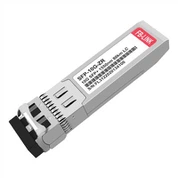
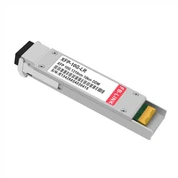
40G QSFP+ DAC Cable
The 40G QSFP+ DAC passive cable assemblies are high performance,cost effective I/O solutions for 40G LAN, HPC and SAN applications.
Item Spotlights
● High-Density QSFP 38-PIN Connector
● Hybrid cable conforms to the Small Form Factor SFF-8436
● Maximum aggregate data rate: 41.25Gbps (4 x10.3125Gbit/s)
● Copper link length up to x (x=0.5~7m)
● Power Supply :+3.3V
● Low power consumption: 0.02 W (typ.)
● Temperature Range: 0~70°C

- Product Introduction

Description
|
Compatible |
40G QSFP+ DAC |
Vendor Name |
FB-LINK |
|
Connector Type |
QSFP+ to QSFP+ |
Max Data Rate |
40Gbps |
|
Minimum Bend Radius |
28mm |
Wire AWG |
30AWG |
|
Cable Length |
1~7m |
Jacket Material |
PVC(OFNR) |
|
Media |
Copper |
Cable Type |
Passive Twinax |
|
Power Consumption |
≤0.1W |
Temperature |
0 to 70°C (32 to 158°F) |
|
Protocols |
SFF-8636, SFF-8472 |
Warranty |
3 Years |
When building modern network infrastructures, selecting the right connectivity solutions is critical to ensuring stable data transmission and cost efficiency. Among the key components that support high-speed network operations, Optical Transceivers play a foundational role, acting as the bridge between different network devices and enabling seamless signal conversion. For businesses and IT teams looking to optimize 40G network links, the choice between connectivity options often centers on balancing performance, distance, and budget-and the 40G QSFP+ Passive Direct Attach Copper Twinax Cable (40G QSFP+ DAC) emerges as a standout solution for specific use cases, especially when paired with compatible Optical Transceivers ecosystems.
Optical Transceivers are designed to handle various data rates and transmission distances, making them versatile for diverse network environments, from data centers to enterprise LANs. However, not all connectivity solutions work equally well with every type of Optical Transceivers. The 40G QSFP+ DAC, for instance, is engineered to complement certain Optical Transceivers configurations, particularly those focused on short-reach, high-bandwidth applications. Unlike other cables that may require additional power or signal conditioning, this passive twinax cable integrates smoothly with Optical Transceivers setups that prioritize low power consumption and straightforward deployment-ideal for scenarios where space and energy efficiency are top priorities.
One of the key advantages of the 40G QSFP+ DAC is its ability to work in tandem with Optical Transceivers to simplify network upgrades. Many organizations today are transitioning from 10G to 40G networks to meet growing data demands, and this cable serves as a cost-effective link that aligns with existing Optical Transceivers infrastructure. By eliminating the need for complex signal amplification or external power sources, it reduces the overall complexity of the network, allowing IT teams to focus on optimizing Optical Transceivers performance rather than troubleshooting connectivity issues. This synergy between the 40G QSFP+ DAC and Optical Transceivers is especially valuable in high-performance computing (HPC) environments and storage area networks (SANs), where consistent data flow and minimal latency are non-negotiable.
Another factor that makes the 40G QSFP+ DAC a preferred choice for many is its compatibility with industry-standard protocols that govern Optical Transceivers operations. This compliance ensures that the cable can seamlessly integrate with a wide range of network devices-from switches to network interface cards (NICs)-that rely on Optical Transceivers for signal transmission. Whether deploying a new 40G network or expanding an existing one, this compatibility reduces the risk of compatibility issues, saving time and resources that would otherwise be spent on testing and troubleshooting.
To address common questions that IT professionals and decision-makers have about the 40G QSFP+ DAC and its relationship with Optical Transceivers, we've compiled the following FAQs:
FAQ 1: How does the 40G QSFP+ DAC interact with Optical Transceivers in a 40G network setup?The 40G QSFP+ DAC serves as the physical link between devices equipped with compatible Optical Transceivers. While Optical Transceivers handle signal conversion (e.g., from electrical to optical, or vice versa) within the devices, the DAC transmits the electrical signals directly between these transceivers over short distances. This collaboration ensures that data moves efficiently without the need for additional signal conditioning, making it a streamlined solution for short-reach 40G networks.
FAQ 2: Can the 40G QSFP+ DAC be used with all types of Optical Transceivers designed for 40G networks?The 40G QSFP+ DAC is engineered to work with Optical Transceivers that adhere to industry-standard form factors and protocols relevant to 40G connectivity. It is most compatible with transceivers that support short-reach applications, as the DAC's design is optimized for these scenarios. Before deployment, it's recommended to check the manufacturer's specifications to ensure alignment between the DAC and your specific Optical Transceivers model, but in most cases, it will integrate smoothly with standard 40G QSFP+ Optical Transceivers.
FAQ 3: Why should I choose the 40G QSFP+ DAC over other cables when using Optical Transceivers for 40G links?When paired with Optical Transceivers, the 40G QSFP+ DAC offers several key benefits: it has lower power consumption compared to active cables, reducing overall energy costs for the network. It also eliminates the need for external power sources or driver chips, simplifying installation and reducing the risk of points of failure. Additionally, its cost-effectiveness makes it an ideal choice for short-reach links, allowing organizations to allocate more budget toward upgrading or expanding their Optical Transceivers infrastructure where it matters most.
FAQ 4: Does the 40G QSFP+ DAC affect the performance of Optical Transceivers in any way?No-when used within its intended distance range, the 40G QSFP+ DAC does not negatively impact the performance of Optical Transceivers. In fact, its passive design ensures that signals are transmitted without unnecessary interference or delay, allowing Optical Transceivers to operate at their optimal capacity. This ensures consistent data rates and low latency, which are critical for applications like HPC and SANs where performance reliability is essential.
FAQ 5: How does the 40G QSFP+ DAC support future upgrades to Optical Transceivers or network speeds?As organizations grow, they may need to upgrade their Optical Transceivers to support higher speeds (e.g., 100G) or longer distances. The 40G QSFP+ DAC is designed to be a flexible component that can coexist with these future upgrades. For short-reach 40G links, it will continue to function effectively, while longer-reach or higher-speed segments can be supported by adding compatible Optical Transceivers and cables (such as AOCs or fiber jumpers) as needed. This scalability ensures that the initial investment in the 40G QSFP+ DAC remains valuable even as the network evolves.
In conclusion, the 40G QSFP+ Passive Direct Attach Copper Twinax Cable is a critical component for organizations looking to optimize their 40G networks-especially when paired with the right Optical Transceivers. Its low power consumption, cost efficiency, and seamless compatibility with industry-standard Optical Transceivers make it a reliable choice for short-reach applications, from data centers to enterprise LANs. By understanding how this cable interacts with Optical Transceivers and addressing key questions about deployment and performance, IT teams can make informed decisions that support long-term network stability and growth.
Hot Tags:
You Might Also Like