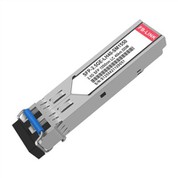
10G SFP+ AOC Cable
The 10G SFP+ Active Optical Cables are direct-attach fiber assemblies with SFP+ connectors and operate over Multi-Mode Fiber (MMF).
Item Spotlights
● Max. Power Consumption 1W
● Tested in Targeted Switches for Superior Performance, Quality, and Reliability
● Minimum Bend Radius 7.5mm for Flexible Routing
● Simplifies the Patching and Offers a Cost-effective Way for Short Links
● BOX - Support Real-time Configuration
● Hot Pluggable SFP+ MSA Compliant
● Class 1 FDA Laser Safety and RoHS Compliant

- Product Introduction

Features
Anti-electromagnetic interference capability: 10G SFP+ AOC cable contains optical fiber, a non-conductive dielectric. Therefore, AOC high-speed cable is not subject to electromagnetic interference and can be used in most situations.
Ambient temperature: 10G SFP+ AOC cable high-speed cables have a limited operating temperature range compared to DAC high-speed cables, but may aid in airflow cooling due to their greater bending.
Transmission distance: 10G SFP+ AOC cable high-speed cable uses optical fiber technology, and its maximum transmission distance is 100m. In short, AOC high-speed cable is suitable for long-distance networking.
Description
|
Compatible |
10G SFP+ AOC |
Vendor Name |
FB-LINK |
|
Connector Type |
SFP+ to SFP+ |
Max Data Rate |
10Gbps |
|
Minimum Bend Radius |
7.5mm |
Jacket Material |
OFNR |
|
Cable Length |
1~30m |
Temperature |
0 to 70°C (32 to 158°F) |
|
Power Consumption |
≤0.5W |
Warranty |
3 Years |
|
Protocols |
10G Gigabit Ethernet or 1x InfiniBand QDR, DDR, SDR, Fibre Channel |
||
When businesses need reliable, high-speed connections within their data centers, optical transceivers and active optical cable solutions have become the go-to technology. Among these innovations, 10Gbps SFP+ Active Optical Cables stand out as a game-changing solution that bridges the gap between traditional copper cabling and discrete optical transceiver systems.
Understanding Active Optical Cable Technology
Active Optical Cables represent a revolutionary approach to data center connectivity. Unlike passive solutions, these cables incorporate built-in optical transceivers at both ends, eliminating the need for separate transceiver modules. The technology works by converting electrical signals to optical signals at one end, transmitting them through multi-mode fiber, and converting them back to electrical signals at the receiving end.
This integrated design offers significant advantages over traditional approaches. The cable assembly is lighter, more flexible, and immune to electromagnetic interference-critical factors in modern data center environments where space and airflow management are paramount.
Why Choose 10G SFP+ AOC Over Traditional Copper Solutions?
The transition from copper to fiber-based solutions isn't just a trend-it's a necessity driven by performance requirements. Standard copper direct-attach cables face serious limitations when transmission distances exceed a few meters. Signal degradation, electromagnetic interference, and excessive weight make copper increasingly impractical for contemporary data center architectures.
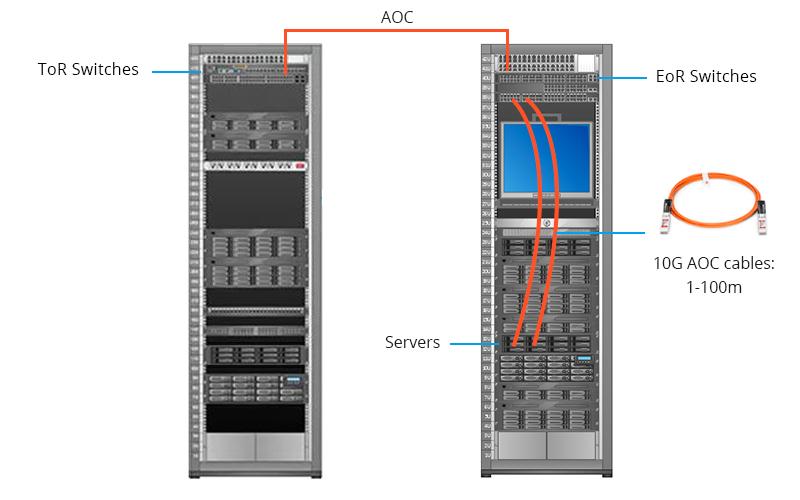
10G SFP+ Active Optical Cables solve these challenges elegantly. With transmission capabilities extending up to 100 meters, these cables support Top-of-Rack, End-of-Rack, and Middle-of-Rack architectures without compromising signal integrity. The optical fiber core ensures clean signal transmission regardless of the electromagnetic environment.
Key Performance Characteristics
Modern data centers demand equipment that can handle intensive workloads while maintaining efficiency. These fiber assemblies deliver 10Gbps throughput consistently, supporting various protocols including 10G Gigabit Ethernet, InfiniBand QDR/DDR/SDR, and Fibre Channel.
The physical design emphasizes flexibility with a minimum bend radius of just 7.5 millimeters, allowing installers to route cables through tight spaces without risking damage. Power consumption remains remarkably low at 0.5 watts or less per cable, contributing to reduced operating costs and heat generation within server racks.
Deployment Scenarios in Modern Infrastructure
Data center architects have multiple options for structuring their networks. In Top-of-Rack configurations, switches mount at the top of equipment racks with direct connections to servers below. This approach minimizes horizontal cabling but requires more switching equipment.
End-of-Rack designs place switches at the ends of rows, consolidating connections from multiple server cabinets. While cable management becomes more complex, centralized maintenance proves more convenient. Active optical cables excel in this environment, easily spanning the distances between racks while maintaining signal quality.
Middle-of-Rack architectures position switches centrally, balancing cable lengths and simplifying overall management. Regardless of the chosen topology, optical transceivers integrated into these cable assemblies ensure reliable connectivity without the bulk and interference problems of copper alternatives.
Technical Advantages That Matter
Electromagnetic interference poses real challenges in densely packed equipment environments. Traditional copper cables can act as antennas, picking up noise from power supplies, motors, and other electrical equipment. Since optical fiber transmits data as light pulses through a non-conductive medium, electromagnetic fields have zero impact on signal quality.
Temperature management is another critical consideration. While these cables operate within a defined temperature range, their slim profile and superior bend characteristics actually improve airflow compared to bulky copper bundles. Better airflow means more efficient cooling and potentially lower HVAC costs.
The bit error rate performance of 10^-12 or better ensures data integrity even in mission-critical applications. This level of reliability is essential for storage systems, database servers, and applications where data corruption cannot be tolerated.
Integration with Existing Infrastructure
Compatibility concerns often arise when considering infrastructure upgrades. These cable assemblies follow SFF-8431 MSA standards, ensuring interoperability with equipment from multiple vendors. The SFP+ form factor is widely supported across switches, servers, and storage systems from major manufacturers.
Installation is straightforward-simply connect the SFP+ connectors to compatible ports and the link comes up automatically. No separate optical transceivers need to be purchased, inventoried, or installed. This simplification reduces both initial costs and ongoing operational complexity.
Frequently Asked Questions
What makes Active Optical Cables "active" compared to passive cables?
Active Optical Cables contain integrated electronic components that perform signal conversion. When electrical signals enter one end, internal circuits convert them to optical signals for transmission through the fiber. At the receiving end, the process reverses. This conversion requires external power, which is drawn from the connected equipment through the SFP+ interface. Passive cables, by contrast, simply carry signals without any conversion or amplification.
Can these cables work with 1G or 25G equipment?
These cables are specifically designed for 10Gbps operation. While some equipment may auto-negotiate to lower speeds, optimal performance occurs at the designed data rate. For 25G applications, you would need appropriate 25G SFP28 active optical cables. Always verify compatibility with your specific equipment before deployment.
How does cable length affect performance and cost?
Active optical cables maintain consistent performance across their entire rated length, typically available from 1 to 30 meters. Unlike copper cables where signal quality degrades noticeably with distance, optical transmission remains clean throughout the specified range. Longer cables do cost more due to additional fiber and materials, but performance remains unchanged whether you're using a 3-meter or 30-meter cable.
What maintenance do these cables require?
Maintenance requirements are minimal. The primary concern is keeping the connector end-faces clean and free from dust or debris. When disconnected, use dust caps to protect the connectors. Avoid exceeding the minimum bend radius during installation or reconfiguration. Regular visual inspections for physical damage are recommended, but the cables themselves require no calibration or adjustment.
Are there environmental limitations to consider?
Operating temperature ranges typically span 0 to 70°C, covering most data center environments. The cables use OFNR-rated jackets suitable for riser applications. If your facility has unusual environmental conditions-extreme temperatures, high humidity, or outdoor exposure-verify that the specific cable rating matches your requirements.
How do I troubleshoot connectivity issues?
Start by verifying that both ends are fully seated in their respective ports. Check link lights on the connected equipment-most switches and servers provide visual indicators of link status. Inspect the cable for obvious physical damage, particularly kinks that exceed the minimum bend radius. Try the cable in different ports to isolate whether the issue is with the cable or the equipment. If problems persist, most manufacturers offer comprehensive warranty support.
Can these replace my existing 10G copper DAC cables?
In most cases, yes. The primary considerations are distance requirements and environmental factors. If your current copper cables are struggling with electromagnetic interference or you need to extend beyond the typical 7-meter limit of copper, active optical cables are ideal replacements. The installation process is identical, and most equipment won't distinguish between copper and optical connections at the data link layer.
What's the expected lifespan of these cables?
With proper handling and installation, these cables typically last many years. The absence of moving parts and the robust nature of optical fiber contribute to longevity. Most manufacturers offer three-year warranties, but actual service life often extends well beyond this period. The main risks are physical damage from improper handling or exceeding bend radius specifications during moves or reconfigurations.
Making the Investment Decision
Cost considerations extend beyond initial purchase price. While active optical cables may have a higher upfront cost than short copper cables, the total cost of ownership tells a different story. Factor in the ability to use longer cable runs without repeaters, reduced power consumption, elimination of electromagnetic interference issues, and simplified inventory management.
For data centers planning expansion or dealing with challenging electromagnetic environments, the investment in optical transceivers and integrated cable solutions pays dividends through improved reliability and operational flexibility. The three-year warranty typically provided offers additional peace of mind for budget planning.
Future-Proofing Your Infrastructure
As bandwidth demands continue escalating, infrastructure choices made today impact capabilities for years to come. While 10Gbps meets current needs for many applications, the modular nature of data center cabling means that fiber-based solutions offer an easier upgrade path. The same cable management infrastructure that supports 10G active optical cables can later accommodate 25G, 40G, or even 100G solutions as technology evolves.
Optical transceivers continue advancing, offering higher speeds and greater efficiency with each generation. By standardizing on fiber-based connectivity now, organizations position themselves to take advantage of these improvements without complete infrastructure overhauls.
Conclusion
10Gbps SFP+ Active Optical Cables represent a mature, reliable technology that addresses real challenges in data center connectivity. The combination of extended reach, immunity to electromagnetic interference, reduced weight and volume, and simplified deployment makes them an compelling choice for modern infrastructure.
Whether you're building a new data center, expanding existing facilities, or troubleshooting persistent connectivity issues, these integrated optical transceiver solutions deserve serious consideration. The technology has proven itself across countless installations, and the benefits extend from initial deployment through years of reliable operation.
Hot Tags:
You Might Also Like