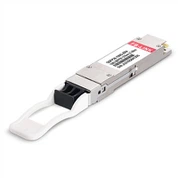
SOA Optical Amplifier
SOA amplification module is designed to amplify the O-band optical signals 1230nm~1360nm, it works with 100G/40G/10G data traffice.

- Product Introduction
SOA Optical Amplifier
The SOA (Semiconductor Optical Amplifier) amplification module amplifies O-band optical signals in the 1230nm-1360nm wavelength range and supports 100G/40G/10G data traffic. Each module can amplify up to 4 service signal channels and is suitable for information systems and data transmission applications.
Item Spotlights
● Optical amplification of O-band signals.
● Applicable to 100G/40G/10G data rates.
● Max saturated output +10dB, minimum input -20dB.
● Unified SNMP network management platform,CLI,Web,NetRiver.
● It can monitor:PUMP drive current,PUMP power output,PUMP switch,PUMP temperature,input power,output power,module temperature.
● It can configure PUMP switch,APC mode.
Description
|
Description |
Specification |
|
|
Wavelength range |
1230nm~1360nm |
|
|
Input range |
-20dBm~+3dBm |
|
|
Saturated output |
+10dBm |
|
|
Gain per channel |
12dB~20dB |
|
|
Noise index |
7.5dB~8dB |
|
|
Gain flatness |
2.0dB |
|
|
Uniformity |
1.0dB |
|
|
Stability |
0.5dB |
|
|
Bias current |
300mA |
|
|
Polarization-dependent gain |
2.0dB |
|
|
Network management |
CLI,NetRiver,Web |
|
|
Dimension |
177 (W)× 20(H)× 225(D)(mm) |
|
|
Ambient |
Operating case temperature |
-10℃ ~ 70℃ |
|
Storage temperature |
-40℃ ~ 80℃ |
|
|
Relative humidity |
5% ~ 95% non frost |
|
|
Safety and EMC |
Compliant with FCC,UL,CE,TUV,CSA |
|
|
Power consumption |
<24W |
|
The evolution of data transmission technology has brought semiconductor optical amplifiers to the forefront of modern telecommunications infrastructure. As network demands continue to surge, SOA optical solutions have emerged as critical components for maintaining signal integrity across increasingly complex fiber optic systems.
What Makes SOA Optical Technology Essential?
Semiconductor optical amplifiers represent a sophisticated approach to signal boosting within the O-band wavelength spectrum. Unlike traditional amplification methods, SOA optical devices leverage semiconductor gain media to enhance optical signals directly, eliminating the need for optical-electrical-optical conversion processes that can introduce latency and compromise data integrity.
The technology excels in scenarios where multiple channels require simultaneous amplification within compact form factors. This capability has positioned SOA optical amplifiers as indispensable tools for data centers, metropolitan area networks, and enterprise communication systems operating at various transmission rates.
Key Advantages of Modern SOA Optical Solutions
Versatility Across Data Rates
Modern SOA optical platforms accommodate diverse traffic requirements, seamlessly handling everything from legacy systems to cutting-edge high-speed deployments. This flexibility ensures network operators can standardize their amplification infrastructure while supporting heterogeneous equipment portfolios.
Compact Architecture
Space constraints in equipment racks and telecommunications facilities demand efficient designs. Contemporary SOA optical modules deliver powerful amplification capabilities within minimal footprints, enabling higher port densities without sacrificing performance characteristics.
Intelligent Monitoring Capabilities
Advanced SOA optical systems integrate comprehensive diagnostic features that provide real-time visibility into operational parameters. Network administrators can track critical metrics including pump laser performance, temperature profiles, and power levels through standardized management interfaces.
Applications Driving SOA Optical Adoption
Data Center Interconnects
As hyperscale data centers expand their geographic footprints, SOA optical amplifiers enable cost-effective signal regeneration across campus environments and between adjacent facilities. The technology bridges distances that exceed passive optical budgets while maintaining the low-latency characteristics essential for modern applications.
Enterprise Networks
Organizations with distributed campuses benefit from SOA optical solutions that extend reach without requiring expensive active equipment at intermediate locations. This approach simplifies network architecture while reducing total cost of ownership.
Access Network Enhancement
Service providers deploying fiber-to-the-premise architectures leverage SOA optical technology to maximize the number of subscribers served from central office locations, improving economics while maintaining service quality commitments.
Technical Considerations for SOA Optical Implementation
Successful deployment requires attention to several critical factors. Input power levels must remain within specified ranges to prevent amplifier saturation or insufficient gain. The wavelength-dependent nature of semiconductor gain means careful planning ensures uniform performance across all channels.
Thermal management represents another crucial consideration, as SOA optical components generate heat during operation. Proper ventilation and temperature control preserve long-term reliability while maintaining consistent amplification characteristics.
Integration with Network Management Platforms
Contemporary SOA optical amplifiers support multiple management protocols, enabling seamless integration with existing network operations centers. Command-line interfaces provide granular control for advanced users, while web-based dashboards offer intuitive access for routine monitoring tasks. Compatibility with comprehensive network management systems ensures these devices fit naturally within established operational workflows.
Performance Metrics That Matter
When evaluating SOA optical solutions, several specifications deserve particular attention. Gain figures indicate the amplification magnitude achievable, while noise characteristics determine the impact on overall system signal-to-noise ratios. Polarization sensitivity affects system design flexibility, and gain flatness ensures consistent performance across the supported wavelength range.
Future Outlook for SOA Optical Technology
The trajectory of semiconductor optical amplification points toward continued innovation. Emerging applications in quantum communications, coherent detection systems, and ultra-high-capacity networks will drive development of even more capable SOA optical platforms. Integration with silicon photonics and advanced packaging techniques promises further reductions in size and power consumption.
Frequently Asked Questions
What is the primary difference between SOA optical amplifiers and EDFA technology?
SOA optical amplifiers use semiconductor materials to provide gain across the O-band spectrum (approximately 1260-1360nm), while Erbium-Doped Fiber Amplifiers work in the C-band and L-band ranges. SOAs offer faster response times, more compact designs, and operation at wavelengths not accessible to EDFAs, making them ideal for specific network segments where O-band transmission is required.
How many channels can a typical SOA optical module support?
Most commercial SOA optical amplifiers can handle multiple channels simultaneously, with configurations supporting up to four independent wavelength channels. This multi-channel capability allows efficient infrastructure utilization and reduces equipment requirements in space-constrained environments.
What input power range do SOA optical amplifiers typically require?
SOA optical systems generally operate effectively with input signals ranging from very weak levels up to moderate strengths. The specific range varies by model, but most commercial units handle input powers from approximately -20dBm to +3dBm, providing flexibility for various network topologies and span losses.
Can SOA optical amplifiers work with different data rate formats?
Yes, semiconductor optical amplifiers are typically data-rate transparent, meaning they can amplify signals regardless of the modulation format or transmission speed. This makes them compatible with 10G, 40G, 100G, and even higher-rate systems, providing investment protection as networks evolve.
What are the main monitoring parameters for SOA optical equipment?
Critical monitoring points include pump laser drive current and output power, optical input and output signal levels, device temperatures, and alarm conditions. Advanced systems provide this telemetry through standard network management protocols, enabling proactive maintenance and rapid troubleshooting.
How does temperature affect SOA optical amplifier performance?
Temperature significantly influences semiconductor optical amplifier characteristics. Operating outside specified temperature ranges can degrade gain, increase noise figures, and reduce device lifespan. Quality SOA optical modules include thermal monitoring and often incorporate temperature compensation mechanisms to maintain stable performance across varying environmental conditions.
What is the typical power consumption of SOA optical amplifiers?
Modern SOA optical devices are designed for energy efficiency, with most units consuming well under 25 watts. This modest power requirement makes them suitable for deployment in locations with limited cooling capacity or power availability, contributing to overall network sustainability goals.
Are SOA optical amplifiers suitable for outdoor deployments?
While SOA optical technology itself is robust, deployment environments must meet specifications for temperature, humidity, and physical protection. Many amplifiers are designed for controlled indoor environments, though ruggedized versions exist for more challenging conditions. Proper enclosures and environmental controls ensure reliable operation in diverse settings.
Hot Tags: SOA optical