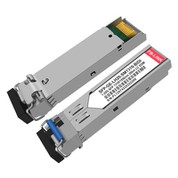
1.25G SFP BIDI 120km
1000BASE BIDI Single fiber bidirectional SFP series optical transceiver include 155Mb /s, 1.25Gb/s and other speed, the product supports a variety of transmission distance from 500m to 120km, the series of products use a single LC or SC optical interface, with low power consumption, small size, high reliability, wide temperature range and other characteristics. It is mainly used in Ethernet/SDH/SONET transmission environment.

- Product Introduction
Products Description
|
Compatible |
1.25G SFP BIDI |
Vendor Name |
FB-LINK |
|
Form Factor |
SFP |
Max Data Rate |
1.25G |
|
Wavelength |
1490/1550nm |
Max Cable Distance |
120km |
|
Connector |
Single LC |
Media |
SMF |
|
TX Power |
0~5.0dBm |
Receiver Sensitivity |
<-32.0dBm |
|
Power Consumption |
≤1W |
Extinction Ratio |
>3.5dB |
|
DOM Support |
Yes |
Commercial Temperature Range |
0 to 70°C (32 to 158°F) |
|
Protocols |
Fast Ethernet, Gigabit Fibre Channel, MSA Compliant |
Warranty |
3 Years |
Module Block Diagram

DDM

Application
applicationapplicationapplicationapplication
Production Process

Shipping

Packages

Certificate


The rapid growth of data-intensive applications has pushed network infrastructure to evolve beyond traditional limitations. Optical transceivers have become the backbone of modern telecommunications, enabling businesses to transmit data across vast distances with exceptional reliability. Among these critical components, bidirectional single-fiber solutions stand out for their cost-effectiveness and efficiency in fiber network deployments.
Understanding Bidirectional Single-Fiber Technology
Bidirectional optical transceivers represent a significant advancement in fiber optic communication. Unlike conventional transceivers that require separate fibers for transmission and reception, BIDI technology utilizes wavelength division multiplexing to send and receive data over a single fiber strand. This innovative approach reduces fiber infrastructure costs while maintaining high performance standards that modern networks demand.
The technology operates by assigning different wavelengths for upstream and downstream traffic. One transceiver transmits at a specific wavelength while receiving at another, with its paired counterpart performing the opposite function. This elegant solution effectively doubles the capacity of existing fiber infrastructure without requiring additional cable installations.
Key Advantages of Single-Fiber Optical Transceivers
Single-mode fiber optical transceivers deliver exceptional value across multiple dimensions. The reduction in fiber usage directly translates to lower material costs and simplified cable management in data centers and telecommunications facilities. Network administrators appreciate the streamlined approach to fiber routing, which becomes particularly valuable in congested cable pathways.
Extended reach capabilities make these optical transceivers ideal for metropolitan area networks and campus interconnections. Organizations can connect facilities separated by considerable distances without requiring signal regeneration equipment. This extended range capability eliminates intermediate active components, reducing both capital expenditure and ongoing maintenance requirements.
Hot-swappable form factors ensure network administrators can replace or upgrade optical transceivers without disrupting adjacent ports or shutting down entire systems. This feature proves invaluable in production environments where uptime requirements leave little room for extended maintenance windows.
Technical Considerations for Deployment
Successful implementation of optical transceivers requires attention to several critical factors. Fiber optic infrastructure must meet cleanliness standards to prevent signal degradation. Even microscopic contamination on connector end faces can introduce insertion loss that compromises link performance. Regular inspection and cleaning protocols should be established as part of routine maintenance procedures.
Link budget calculations ensure reliable operation across the intended transmission distance. Network engineers must account for fiber attenuation, connector losses, and splice losses when designing fiber optic links. Digital diagnostic monitoring capabilities in modern optical transceivers simplify troubleshooting by providing real-time visibility into transmit power, receive power, temperature, and voltage parameters.
Wavelength pairing requires careful attention during installation. Optical transceivers must be deployed in matched pairs, with each end using complementary transmit and receive wavelengths. Incorrect pairing results in communication failure, making proper labeling and documentation essential for efficient network operations.
Applications Across Network Architectures
Enterprise networks leverage optical transceivers to interconnect buildings across corporate campuses. The single-fiber architecture reduces the fiber count required in underground conduits, simplifying installations and reducing costs. Organizations expanding their networks can often utilize existing single-fiber infrastructure that would otherwise remain underutilized.
Service providers deploy these optical transceivers in access networks where fiber resources are limited. The technology enables cost-effective fiber-to-the-premises deployments by reducing the fiber count required to serve each customer location. This efficiency becomes particularly valuable in urban environments where conduit space commands premium pricing.
Data center operators use optical transceivers to connect distributed facilities within metropolitan areas. The extended reach eliminates the need for intermediate optical amplification equipment, simplifying network architecture while reducing power consumption and potential failure points.
Performance Optimization Strategies
Maximizing the performance of optical transceivers begins with proper fiber selection. Single-mode fiber provides the low attenuation characteristics necessary for extended reach applications. While initial installation costs may exceed multimode alternatives, the extended distance capabilities and future-proof nature justify the investment for long-term deployments.
Environmental controls contribute to optimal transceiver performance and longevity. Operating temperatures should remain within specified ranges to prevent premature component failure. Adequate ventilation around installed optical transceivers prevents heat accumulation that could degrade performance or trigger thermal shutdown protection mechanisms.
Regular monitoring of digital diagnostics provides early warning of potential issues. Gradual degradation in receive power may indicate dirty connectors or developing fiber problems. Proactive maintenance based on diagnostic data prevents unexpected outages and extends the service life of optical transceivers.
Standards Compliance and Interoperability
Multi-source agreement compliance ensures optical transceivers work seamlessly with equipment from various manufacturers. This standardization protects network investments by eliminating vendor lock-in and enabling competitive procurement strategies. Organizations can select transceivers based on performance and cost rather than being constrained by proprietary interfaces.
Protocol support across multiple standards enhances deployment flexibility. Modern optical transceivers accommodate various signaling rates and encoding schemes, allowing organizations to standardize on a single transceiver type across different network segments. This standardization simplifies inventory management and reduces the risk of deployment errors.
Cost-Benefit Analysis
The economic advantages of single-fiber optical transceivers extend beyond initial hardware costs. Reduced fiber count directly impacts cable procurement expenses, which become substantial in large-scale deployments. Installation labor costs decrease proportionally with fewer fibers to terminate and test.
Ongoing operational costs benefit from simplified infrastructure. With fewer fibers to maintain and monitor, organizations reduce the resources required for network management. The hot-swappable nature of optical transceivers minimizes downtime costs associated with equipment replacement or upgrades.
Long-term scalability considerations favor single-fiber architectures. As bandwidth requirements grow, organizations can upgrade optical transceivers to higher speed variants without modifying fiber infrastructure. This upgrade path protects the substantial investment in physical fiber plant installation.
Frequently Asked Questions
What is the maximum distance achievable with single-fiber BIDI transceivers?
Extended reach implementations can span over one hundred kilometers on single-mode fiber, making them suitable for metropolitan area networks and long-distance point-to-point links. The actual achievable distance depends on fiber quality, number of connectors, and splice losses in the link.
Can I mix optical transceivers from different manufacturers?
As long as both transceivers comply with multi-source agreement standards and use compatible wavelength pairs, they should interoperate successfully. However, digital diagnostic monitoring features may vary between manufacturers, so verification of full functionality is recommended during initial testing.
How do I determine which transceiver goes on each end of the link?
Optical transceivers are designated as either "A" side or "B" side based on their transmit and receive wavelengths. One end uses a transceiver that transmits at the wavelength the other end receives, and vice versa. Proper documentation and labeling prevent incorrect installations.
What maintenance do optical transceivers require?
Regular connector cleaning represents the primary maintenance requirement. Inspect and clean all optical connections during installation and whenever cables are disconnected. Monitor digital diagnostic parameters regularly to identify potential issues before they cause service disruptions.
Are BIDI transceivers compatible with existing network switches?
Yes, these optical transceivers use standard small form-factor pluggable interfaces that work with any compatible switch or router port. The hot-swappable design allows installation without powering down equipment, maintaining network availability during installations or upgrades.
What causes power budget failures in fiber optic links?
Excessive fiber attenuation, dirty or damaged connectors, incorrect fiber type, or exceeding specified distance limitations can cause insufficient optical power at the receiver. Calculate link budgets carefully during design and verify actual power levels using diagnostic monitoring capabilities after installation.
How does temperature affect transceiver performance?
Operating outside specified temperature ranges can cause performance degradation or complete failure. Ensure adequate ventilation in equipment rooms and avoid installing transceivers in direct sunlight or near heat sources. Most optical transceivers include thermal protection that shuts down the transceiver if safe temperatures are exceeded.
Can I use single-fiber transceivers for redundant links?
Absolutely. Single-fiber optical transceivers work excellently in redundant configurations, with each redundant path using its own fiber strand. This approach maintains the fiber-saving benefits while providing the redundancy required for mission-critical applications.
Hot Tags: Optical Transceivers
You Might Also Like