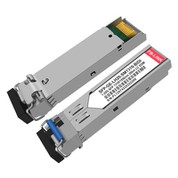
1.25G SFP BIDI 80km
1000BASE BIDI Single fiber bidirectional SFP series optical transceiver include 155Mb /s, 1.25Gb/s and other speed, the product supports a variety of transmission distance from 500m to 120km, the series of products use a single LC or SC optical interface, with low power consumption, small size, high reliability, wide temperature range and other characteristics. It is mainly used in Ethernet/SDH/SONET transmission environment.

- Product Introduction
Products Description
|
Compatible |
1.25G SFP BIDI |
Vendor Name |
FB-LINK |
|
Form Factor |
SFP |
Max Data Rate |
1.25G |
|
Wavelength |
1490/1550nm |
Max Cable Distance |
80km |
|
Connector |
Single LC |
Media |
SMF |
|
TX Power |
0~5.0dBm |
Receiver Sensitivity |
<-24.0dBm |
|
Power Consumption |
≤1W |
Extinction Ratio |
>3.5dB |
|
DOM Support |
Yes |
Commercial Temperature Range |
0 to 70°C (32 to 158°F) |
|
Protocols |
Fast Ethernet, Gigabit Fibre Channel, MSA Compliant |
Warranty |
3 Years |
DDM

Application
applicationapplicationapplicationapplication
Production Process

Shipping

Packages

Certificate


Network connectivity demands have evolved dramatically, pushing businesses and data centers to seek more efficient, cost-effective solutions for data transmission. Optical transceivers have emerged as the cornerstone technology enabling high-speed communication across vast distances, transforming how we build and maintain network infrastructure.
What Makes Optical Transceivers Essential for Your Network?
Optical transceivers are sophisticated devices that convert electrical signals into optical signals for transmission over fiber optic cables, then convert them back at the receiving end. These compact modules serve as the critical interface between networking equipment and fiber optic cabling infrastructure, enabling seamless data transfer at impressive speeds.
The beauty of modern optical transceivers lies in their versatility. From short-range connections within data centers to long-haul transmissions spanning dozens of kilometers, these devices adapt to diverse networking requirements while maintaining signal integrity and reliability.
BIDI Technology: Revolutionizing Single-Fiber Communication
Bidirectional (BIDI) optical transceivers represent a breakthrough in fiber optic technology. Unlike traditional transceivers that require two fiber strands-one for transmitting and one for receiving-BIDI transceivers accomplish both functions over a single fiber strand. This innovation leverages wavelength division multiplexing (WDM), where different wavelengths carry data in opposite directions simultaneously.
The 1490/1550nm wavelength pairing commonly found in BIDI optical transceivers creates a perfect balance for long-distance communication. This dual-wavelength approach ensures minimal interference while maximizing bandwidth efficiency, making it ideal for applications where fiber resources are limited or infrastructure costs need optimization.
Key Advantages of Implementing Optical Transceivers
Cost Efficiency and Resource Optimization
Deploying optical transceivers, particularly BIDI variants, significantly reduces infrastructure expenses. With single-fiber operation, you'll cut fiber cable requirements in half, reducing both initial installation costs and ongoing maintenance expenses. This efficiency extends to conduit space utilization, especially valuable in congested cable pathways.
Extended Reach Capabilities
Modern optical transceivers push distance boundaries that copper-based solutions cannot approach. Single-mode fiber (SMF) transceivers routinely achieve transmission distances of 80 kilometers or more without signal regeneration. This extended reach proves invaluable for metropolitan area networks (MANs), campus connectivity, and service provider applications.
Flexibility and Scalability
The hot-swappable nature of SFP-format optical transceivers provides unprecedented flexibility in network design. As bandwidth requirements grow, you can upgrade individual ports without replacing entire switches or routers. This modular approach future-proofs your infrastructure while controlling capital expenditure.
Reliable Performance Under Demanding Conditions
Quality optical transceivers maintain consistent performance across commercial temperature ranges, ensuring reliable operation in various environments. With DOM (Digital Optical Monitoring) support, network administrators gain real-time visibility into transceiver health, enabling proactive maintenance and troubleshooting.
Applications Transforming Industries
Optical transceivers power countless applications across diverse sectors. Telecommunications providers depend on these devices for backbone infrastructure and last-mile connectivity. Enterprise data centers utilize them for server-to-switch connections and inter-building links. Financial institutions rely on optical transceivers for high-frequency trading networks where microseconds matter. Broadcasting companies leverage them for real-time video transmission, while healthcare facilities use them to connect imaging equipment and maintain electronic health record systems.
Technical Considerations for Optimal Performance
Understanding Power Budgets
When deploying optical transceivers, calculating your link power budget ensures reliable communication. The transmitted optical power must exceed the receiver sensitivity threshold even after accounting for fiber attenuation, connector losses, and system margin. Quality transceivers provide sufficient power output and sensitivity margins to accommodate real-world installations.
Protocol Compatibility
Modern optical transceivers support multiple protocols, ensuring compatibility across diverse networking equipment. Whether you're running Fast Ethernet, Gigabit Ethernet, or Fibre Channel, protocol-agnostic transceivers simplify inventory management while providing deployment flexibility.
Quality and Compliance Standards
MSA (Multi-Source Agreement) compliance ensures optical transceivers maintain interoperability across different vendors' equipment. This standardization eliminates vendor lock-in concerns and provides confidence in product compatibility, regardless of your existing network infrastructure.
Frequently Asked Questions About Optical Transceivers
Q: What's the difference between BIDI and duplex optical transceivers?
A: BIDI optical transceivers use a single fiber strand for bidirectional communication by transmitting and receiving on different wavelengths simultaneously. Duplex transceivers require two fiber strands-one dedicated to transmission and another to reception. BIDI technology reduces fiber infrastructure costs by 50% while maintaining equivalent performance levels.
Q: How do I know if optical transceivers are compatible with my existing equipment?
A: Check three key factors: form factor (SFP, SFP+, QSFP, etc.), data rate requirements, and protocol support. Most optical transceivers follow MSA standards, ensuring broad compatibility. However, always verify your switch or router specifications support the transceiver's form factor and speed. DOM support compatibility should also be confirmed if you plan to use monitoring features.
Q: Can I mix different brands of optical transceivers in the same network?
A: Yes, MSA-compliant optical transceivers from different manufacturers typically work together seamlessly. The standardization ensures interoperability, allowing you to select transceivers based on performance, warranty, and price rather than brand matching. However, for critical applications, testing before full deployment is recommended.
Q: What does DOM support mean and why is it important?
A: DOM (Digital Optical Monitoring) enables optical transceivers to report real-time diagnostic information including temperature, voltage, transmit power, receive power, and laser bias current. This capability allows proactive network management, early fault detection, and simplified troubleshooting, significantly reducing downtime and maintenance costs.
Q: How far can optical transceivers transmit data?
A: Transmission distance varies based on transceiver type, wavelength, and fiber quality. Single-mode optical transceivers can reach 80-120 kilometers for standard applications, with some specialized long-haul models exceeding 200 kilometers. Multi-mode transceivers typically cover shorter distances (300 meters to 2 kilometers) but offer advantages in cost and installation simplicity for shorter runs.
Q: What's the typical lifespan of optical transceivers?
A: Quality optical transceivers typically operate reliably for 5-10 years or longer under normal conditions. Factors affecting lifespan include operating temperature, power cycling frequency, and environmental conditions. Products with comprehensive warranties (such as 3-year coverage) indicate manufacturer confidence in longevity and reliability.
Q: Do optical transceivers require special handling or maintenance?
A: Optical transceivers are relatively maintenance-free but require care during installation. Always use dust caps when transceivers aren't connected, clean fiber connectors before mating, and avoid looking into active fiber ports. Regular monitoring through DOM features helps identify degradation before failure occurs, but physical maintenance needs are minimal.
Making the Right Choice for Your Infrastructure
Selecting appropriate optical transceivers requires balancing technical specifications, budget constraints, and future scalability needs. Consider your maximum transmission distance requirements, current and projected bandwidth demands, and environmental conditions where transceivers will operate.
For extended-reach applications, single-mode BIDI optical transceivers offer exceptional value by combining long-distance capability with reduced fiber infrastructure costs. Their wavelength-division approach maximizes existing fiber plant investment while delivering the performance modern networks demand.
Quality matters significantly in optical transceivers. While cost considerations are important, reliable transceivers from reputable manufacturers reduce network downtime, simplify troubleshooting, and provide peace of mind through comprehensive warranty coverage.
Building Future-Ready Networks
As network demands continue escalating, optical transceivers remain central to infrastructure evolution. Their combination of high performance, flexibility, and cost-effectiveness positions them as the preferred choice for organizations seeking reliable, scalable connectivity solutions.
Whether you're upgrading existing infrastructure, designing new network segments, or planning for future growth, understanding optical transceivers capabilities helps you make informed decisions that balance immediate needs with long-term strategic goals. The right transceiver selection today creates a foundation for tomorrow's networking demands, ensuring your infrastructure remains competitive in an increasingly connected world.
Hot Tags: Optical Transceivers