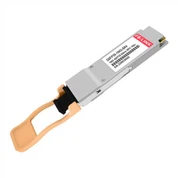
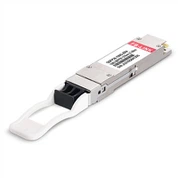
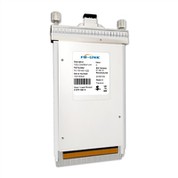
100GBASE LR
This product is a 100Gb/s transceiver module designed for optical communication applications compliant to 100GBASE-LR4 of the IEEE P802.3ba standard.

- Product Introduction
Item Spotlights:
-
Hot-swap QSFP28 MSA form factor
-
Compliant with IEEE 802.3ba 100GBASE-LR4
-
Transmission distance of 10 km in single-mode fiber
-
Commercial grade temperature: 0~70℃
-
TX: Cooled 4x25Gb/s LAN WDM TOSA (1295.56, 1300.05, 1304.58, 1309.14nm)
-
RX: 4x25Gb/s PIN ROSA
-
4x28G Electrical Serial Interface (CEI-28G-VSR)
-
Power consumption does not exceed 3.5W
-
Dual-core LC interface
-
RoHS-6 Compliant

Description
| Compatible | 100GBASE LR | Vendor Name | FB-LINK |
| Form Factor | QSFP28 | Max Data Rate | 103.125gbps |
| Wavelength | 1310nm | Max Cable Distance | 10km |
| Connector | Duplex LC | Media | SMF |
| Transmitter Type | 4xLAN WDM DML(DFB) | Receiver Type | PIN |
| TX Power | -4.3~4.5dBm | Receiver Sensitivity | <-10.6dBm |
| Powerbudget | 6.3dB | Receiver Overload | 4.5dBm |
| Power Consumption | ≤3.5W | Extinction Ratio | >4dB |
| DDM/DOM | Supported | Commercial Temperature Range | 0 to 70°C (32 to 158°F) |
| Protocols | IEEE 802.3ba 100GBASE LR4, IEEE 802.3bm, QSFP28 MSA, SFF-8665, SFF-8636 | Warranty | 3 Years |
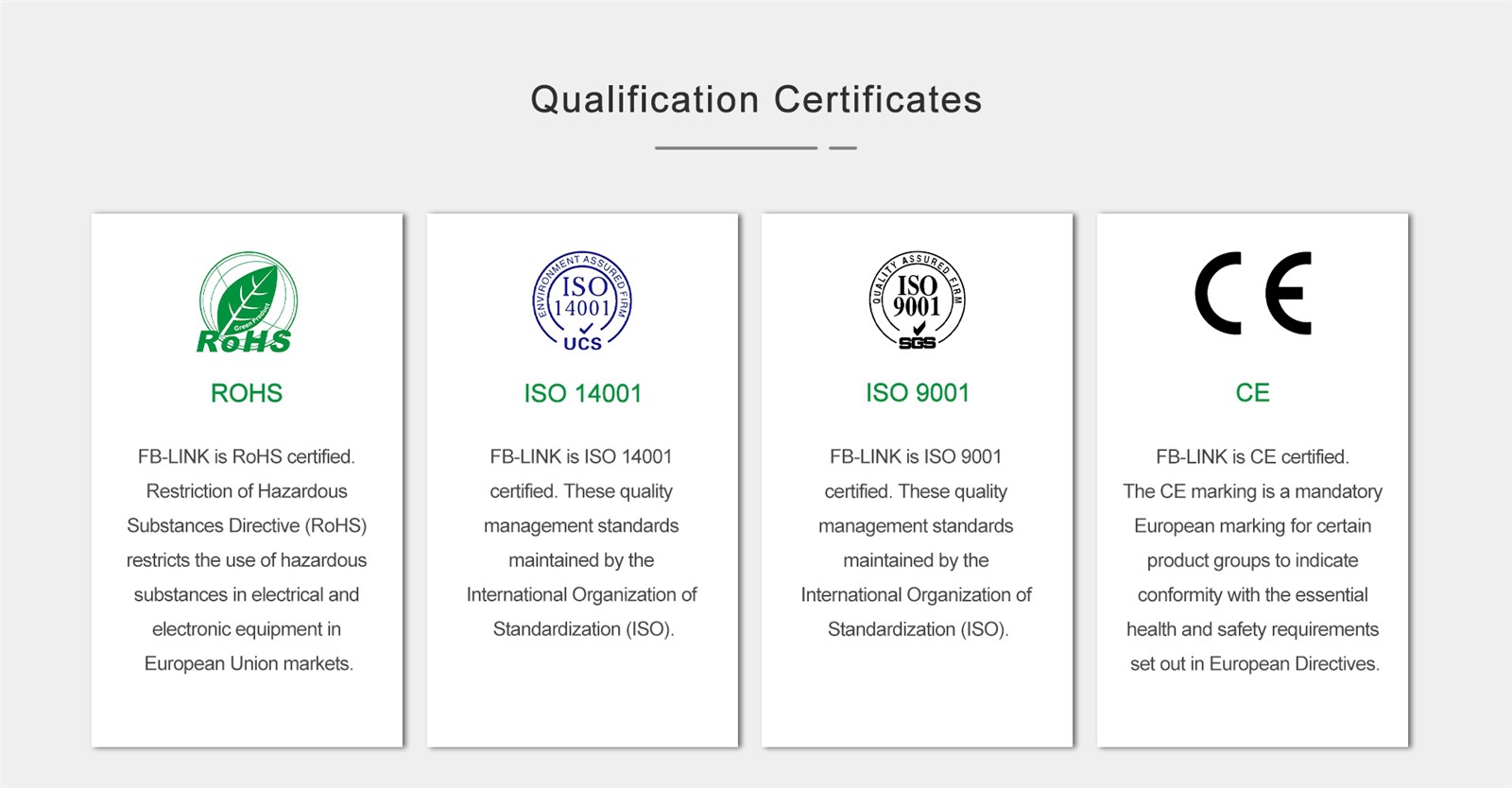
FB-LINK Company Qualifications

workshop

workshop
workshop
workshop
The demand for faster, more reliable network infrastructure continues to surge as businesses worldwide embrace digital transformation. At the heart of this evolution are optical transceivers-sophisticated devices that enable seamless data transmission across vast distances. Among these critical components, the 100GBASE LR4 QSFP28 stands out as a game-changing solution for enterprises seeking to upgrade their network capabilities.
Understanding Optical Transceivers in Modern Networks
Optical transceivers serve as the bridge between electrical and optical signals in fiber optic networks. These compact modules play an essential role in data centers, telecommunications infrastructure, and enterprise networks by converting electrical data into light pulses for transmission over fiber optic cables. As network speeds increase and bandwidth requirements grow, selecting the right optical transceivers becomes crucial for maintaining optimal performance.
The evolution from legacy 10G and 40G systems to 100G infrastructure represents a significant leap forward. Organizations that deploy advanced optical transceivers can achieve unprecedented data transfer rates while maintaining cost efficiency and reducing physical footprint requirements.
Why 100G Technology Matters for Your Infrastructure
Businesses face mounting pressure to handle exponential data growth driven by cloud computing, artificial intelligence, video streaming, and IoT applications. Traditional network architectures struggle to keep pace with these demands, leading to bottlenecks, latency issues, and compromised user experiences.
Upgrading to 100G technology through quality optical transceivers addresses these challenges head-on. The increased bandwidth enables organizations to consolidate network traffic, reduce the number of required ports, and lower overall power consumption. This translates directly into reduced operational expenses and improved total cost of ownership.
Technical Architecture and Design Excellence
The LR4 variant utilizes wavelength division multiplexing (WDM) technology to achieve its impressive performance characteristics. By transmitting four parallel 25Gbps data streams across distinct wavelengths, these optical transceivers deliver aggregate throughput of 100Gbps over a single fiber pair.
This multiplexing approach offers several advantages over alternative designs. The use of standardized wavelengths ensures broad compatibility across vendor ecosystems, while the efficient optical design maximizes signal quality over extended distances. Single-mode fiber deployment enables reach capabilities up to 10 kilometers, making these modules ideal for campus networks and metropolitan area connections.
Deployment Scenarios and Use Cases
Data centers represent the primary application environment for high-performance optical transceivers. Within these facilities, 100G modules provide the backbone connectivity between core switches, aggregation layers, and storage arrays. The extended reach capability proves particularly valuable in large-scale data center campuses where equipment may be distributed across multiple buildings.
Enterprise networks benefit equally from 100G optical transceivers. Organizations with distributed office locations can leverage these modules to establish high-capacity inter-site links, supporting unified communications, disaster recovery replication, and centralized data services. The technology also enables service providers to deliver premium connectivity offerings to business customers demanding guaranteed bandwidth and low latency.
Financial institutions, healthcare providers, research facilities, and media production companies all represent sectors where advanced optical transceivers deliver measurable value. Any organization dealing with large-scale data movement, real-time analytics, or high-resolution video workflows will find 100G connectivity transformative.
Integration and Compatibility Considerations
Modern optical transceivers adhere to industry-standard form factors and protocols, ensuring seamless integration with equipment from leading manufacturers. The QSFP28 (Quad Small Form-factor Pluggable 28) interface has become the de facto standard for 100G connectivity, supported by virtually all major networking vendors.
Hot-swappable design allows network administrators to install or replace modules without powering down equipment, minimizing service disruptions during maintenance activities. Digital diagnostic monitoring capabilities provide real-time visibility into optical power levels, temperature, and other critical parameters, enabling proactive maintenance and troubleshooting.
When selecting optical transceivers, compatibility verification remains essential. While standards compliance ensures basic interoperability, testing modules with specific switch and router models prevents deployment surprises. Reputable manufacturers provide comprehensive compatibility matrices and offer technical support to guide implementation planning.
Performance Optimization and Best Practices
Maximizing the value of optical transceivers requires attention to several key factors. Fiber optic infrastructure must meet cleanliness standards to prevent signal degradation from contamination. Regular inspection and cleaning of connector end-faces should be part of routine maintenance procedures.
Proper cable management prevents excessive bend radius that can introduce signal loss. Single-mode fiber installations demand particular care, as the small core diameter makes these cables more sensitive to physical stress. Following manufacturer guidelines for minimum bend radius and avoiding compression or kinking ensures optimal optical performance.
Environmental factors also impact transceiver operation. While commercial-grade optical transceivers typically support operating temperatures from 0 to 70 degrees Celsius, maintaining adequate airflow and avoiding hot spots within equipment racks helps ensure reliability and longevity. Monitoring digital diagnostics data helps identify thermal issues before they impact service quality.
Power Efficiency and Sustainability
As data centers face increasing scrutiny regarding energy consumption, the efficiency of network infrastructure components takes on greater importance. Modern 100G optical transceivers achieve remarkable power efficiency, with typical consumption under 3.5 watts per module. This represents significant improvement compared to earlier generations of high-speed optics.
The consolidation enabled by 100G technology amplifies these efficiency gains. By delivering the equivalent bandwidth of ten 10G connections or 2.5 40G connections through a single port, organizations reduce the total number of active optical transceivers, line cards, and switch ports required. This reduction cascades through cooling requirements, rack space utilization, and overall facility power draw.
Future-Proofing Network Investments
Technology lifecycles in networking equipment typically span five to seven years. When planning infrastructure upgrades, selecting optical transceivers that support emerging standards and applications helps protect investment value. The 100G platform has demonstrated remarkable longevity, with continued relevance even as 400G technology enters the market.
Many organizations adopt a hybrid approach, deploying 400G connectivity in the network core while utilizing 100G optical transceivers for distribution and access layers. This tiered strategy balances performance requirements against budget constraints while maintaining clear upgrade paths as traffic patterns evolve.
The flexibility of the QSFP28 platform extends its useful life through support for multiple protocols and applications. Beyond native Ethernet, these optical transceivers can support Fibre Channel storage networking and other specialized protocols, providing deployment versatility that adapts to changing business requirements.
Quality Assurance and Reliability
Not all optical transceivers deliver equivalent performance and reliability. Manufacturing quality, component selection, and testing rigor vary significantly across suppliers. Organizations should prioritize modules that undergo comprehensive validation testing, including thermal cycling, vibration resistance, and extended burn-in procedures.
Warranty terms provide insight into manufacturer confidence in product quality. Standard three-year warranties have become typical for quality optical transceivers, while budget alternatives often carry significantly shorter coverage periods. The total cost of ownership calculation should account for failure rates and replacement logistics, not merely initial purchase price.
Certified compatibility with major networking vendors offers additional assurance. While third-party optical transceivers provide cost advantages compared to OEM modules, selecting suppliers with proven track records and robust testing protocols minimizes integration risks and support complications.
Troubleshooting Common Issues
Even with proper installation and maintenance, optical transceivers may occasionally exhibit connectivity problems. Systematic troubleshooting methodology helps quickly identify and resolve issues. Begin by verifying link status indicators and reviewing digital diagnostic data for anomalies in optical power levels.
Physical layer problems frequently stem from dirty or damaged fiber connectors. Inspecting and cleaning connections often resolves intermittent link flapping or high error rates. If cleaning doesn't resolve symptoms, test with known-good fiber patch cables to isolate whether the issue resides with the optical transceivers or cabling infrastructure.
Configuration mismatches represent another common problem category. Ensure that both ends of a link utilize compatible modules-mixing LR4 with SR4 variants, for example, will prevent proper operation. Verify that switch configuration matches the actual installed module type, as auto-negotiation capabilities vary across platforms and software versions.
Frequently Asked Questions
What is the maximum transmission distance for 100GBASE LR4 optical transceivers?
These modules are designed to support transmission distances up to 10 kilometers over single-mode fiber. Actual achievable distance depends on fiber quality, the number of connections in the optical path, and environmental factors. For critical links, conducting optical loss budget calculations ensures adequate margin for reliable operation.
Can I mix different brands of optical transceivers in the same network?
Yes, standards-compliant modules from different manufacturers should interoperate correctly. The IEEE 802.3ba specification ensures baseline compatibility for 100GBASE LR4 implementations. However, certain advanced features like digital diagnostics formatting may vary slightly between vendors. Testing mixed-vendor configurations before production deployment is recommended.
How do 100G optical transceivers compare to 40G in terms of cost per gigabit?
The cost per gigabit for 100G optical transceivers has improved dramatically, now typically lower than 40G on a normalized basis. Additionally, 100G deployments reduce the number of required ports, cables, and patch panels, creating further cost advantages. For new deployments, 100G generally represents the more economical choice.
What maintenance do optical transceivers require?
Primary maintenance involves periodic connector cleaning and monitoring of digital diagnostic data. Modern optical transceivers are solid-state devices with no moving parts, requiring minimal intervention under normal conditions. Keeping equipment within specified temperature ranges and ensuring adequate ventilation protects long-term reliability.
Are 100GBASE LR4 modules suitable for data center interconnect applications?
Absolutely. The 10-kilometer reach capability makes these optical transceivers ideal for connecting data centers within metropolitan areas. Many organizations use LR4 modules for disaster recovery site connections, providing high-bandwidth replication links between primary and backup facilities.
How does wavelength division multiplexing work in these modules?
WDM technology assigns each of the four 25Gbps channels to a specific optical wavelength. An integrated multiplexer combines these wavelengths onto a single fiber strand for transmission. At the receiving end, a demultiplexer separates the wavelengths back into individual channels. This approach efficiently utilizes fiber infrastructure while maintaining signal integrity.
What should I look for when selecting optical transceivers for my network?
Key considerations include verified compatibility with your specific switch models, quality of manufacturing and components, warranty terms, digital diagnostic capabilities, and vendor technical support. Evaluating total cost of ownership rather than simply initial price ensures the best long-term value.
Can these modules support lower speed connections if needed?
While designed for 100G operation, many switches with QSFP28 ports can also accept QSFP+ 40G modules using appropriate adapters or configuration settings. However, optical transceivers themselves are speed-specific-a 100G module cannot operate at 40G or other rates. Check switch documentation for supported module types and configurations.
Hot Tags:
You Might Also Like