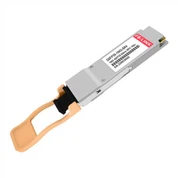
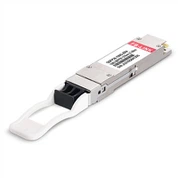
100GBASE CFP DWDM
Item Spotlights
● DP-DQPSK modulation mode
● Full C-Band 50GHz ITU-T transmitter
● Built in client and line OTN processing
● OTU4 and 100GE compatible
● OTL4.10 and CAUI compatible
● CFP MSA compliant
● Operating temperature: 0℃ to + 70°C
● Ultra low power consumption: 24W
● Operating optical data rate up to 128Gbps
● Low delay H-FEC/SD-FEC
● Optimized DSP algorithm
● The transmission distance can reach 1200km
● Support ZR/MR/LH (optional)
● Conforms to ieee802.3ba MAC standard
● Rohs-6 compliant (lead free)

- Product Introduction

Products Description
|
Parameter |
CFP-DCO ZR |
CFP-DCO MR |
CFP-DCO LH |
|
Rate |
100GE/OTU4 |
100GE/OTU4 |
100GE/OTU4 |
|
Application |
P2P DWDM ZR |
Metro DWDM |
Long-Haul DWDM |
|
Dispersion free compensation tolerance |
120km |
600km |
1200km |
|
10g/40g hybrid transmission |
√ |
√ |
√ |
|
Low delay SD-FEC |
√ |
√ |
√ |
|
C-Band 96 wave (50GHz) adjustable |
√ |
√ |
√ |
|
CAUI is used for 100GE host interface |
√ |
√ |
√ |
|
OTL4.10 is used for OTU4 host interface |
√ |
√ |
√ |
|
Built in OTN processing |
√ |
√ |
√ |
|
And G.709 FEC interoperability |
√ |
√ |
√ |
|
PRBS generation and detection of line and host interface |
√ |
√ |
√ |
|
CFP MSA compliant |
√ |
√ |
√ |
The explosive growth of data traffic and the rapid adoption of cloud services have fundamentally transformed network requirements. Optical transceivers have become the backbone of modern communication systems, enabling high-speed data transmission across metropolitan, long-haul, and data center networks. As networks migrate from 10G to 100G and beyond, understanding the capabilities and applications of advanced optical transceivers is essential for network architects and telecommunications professionals.
The Evolution of Coherent Optical Technology
Traditional direct-detection optical transceivers face significant limitations when dealing with long-distance, high-capacity transmission. Coherent optical transceivers represent a paradigm shift in how networks handle data transmission challenges. By combining advanced modulation techniques with digital signal processing (DSP), these modules overcome the physical limitations that once constrained network expansion.
The integration of coherent detection technology with DSP algorithms allows optical transceivers to compensate for various transmission impairments directly in the electrical domain. This approach eliminates the need for complex optical compensation equipment, simplifying network architecture while simultaneously improving performance. Dispersion, polarization mode dispersion, and phase noise-once significant barriers to long-distance transmission-can now be addressed through sophisticated digital processing.
Key Advantages of Advanced Optical Transceivers
Superior Sensitivity and Extended Reach
Modern coherent optical transceivers deliver approximately 20dB improvement in receiver sensitivity compared to conventional modules. This dramatic enhancement translates directly into extended transmission distances without requiring intermediate amplification or regeneration. For network operators, this means reduced infrastructure costs and simplified network topology.
Spectral Efficiency and Capacity
High-order modulation formats, including DP-QPSK and DP-16QAM, enable optical transceivers to achieve exceptional spectral efficiency. By transmitting more bits per symbol, these modules maximize the utilization of available C-band spectrum. This efficiency becomes critical as wavelength resources in DWDM systems approach full capacity.
Flexibility and Compatibility
Premium optical transceivers support tunable wavelength operation across the entire C-band, typically with 50GHz or 100GHz channel spacing. This tunability provides network operators with unprecedented flexibility in network planning and wavelength management. The same transceiver can be deployed across diverse applications simply by adjusting its operating wavelength.
Strategic Applications Across Network Segments
Metropolitan Area Networks
Metro networks benefit significantly from coherent optical transceivers in the 80-600km range. These modules provide excellent OSNR performance and dispersion tolerance, making them ideal for connecting network nodes across urban and regional areas. The ability to support both 100GE and OTU4 interfaces ensures compatibility with existing infrastructure.
Data Center Interconnection
As hyperscale data centers proliferate, the demand for high-capacity DCI solutions intensifies. Optical transceivers with coherent technology bridge the gap between short-reach client optics and traditional long-haul equipment, offering cost-effective solutions for the 40-80km sweet spot. This distance range typically connects data centers within the same metropolitan region or nearby cities.
Long-Haul Networks
Backbone networks transporting data across hundreds or thousands of kilometers rely on ultra-long-haul optical transceivers. These modules incorporate powerful forward error correction (FEC) and advanced DSP algorithms to maintain signal integrity over extended distances. Support for dispersion compensation beyond 1200km enables coast-to-coast or international transmission without regeneration.
5G Network Infrastructure
The rollout of 5G networks creates new demands for fronthaul, midhaul, and backhaul connectivity. Optical transceivers supporting 100G and 200G speeds provide the bandwidth necessary for aggregating traffic from distributed radio units and connecting them to centralized baseband processing facilities.
Selecting the Right Optical Transceivers for Your Network
Transmission Distance Requirements
Distance remains the primary factor when specifying optical transceivers. Short-reach applications (up to 120km) can utilize modules optimized for metro environments, while long-haul deployments require enhanced FEC and dispersion tolerance. Understanding your maximum uncompensated span length guides module selection.
Interface Compatibility
Ensure your optical transceivers support the appropriate electrical interfaces for your equipment. Standard interfaces include CAUI for 100GE applications and OTL4.10 for OTU4 integration. Compatibility with existing switching and routing platforms avoids costly infrastructure upgrades.
Form Factor Considerations
The CFP form factor offers robust performance for 100G applications, while newer form factors like CFP2 and QSFP-DD provide higher density for next-generation networks. Your chassis specifications and port density requirements influence the optimal choice of optical transceivers.
Power Budget and OSNR
Calculate the required power budget based on fiber losses, connector losses, and any inline components. Optical transceivers must maintain adequate OSNR at the receiver to ensure error-free operation. Consider future network growth when evaluating margin requirements.
The Future of Optical Transceivers
Network capacity demands continue their exponential growth, driven by bandwidth-intensive applications including 8K video streaming, virtual reality, and artificial intelligence. While 100G and 200G optical transceivers currently dominate deployment, 400G and 800G technologies are rapidly maturing. These next-generation modules promise to deliver even greater capacity within the same physical infrastructure.
The economics of coherent technology continue improving as volumes increase and manufacturing processes mature. This cost reduction accelerates the adoption of coherent optical transceivers in applications previously served by direct-detection modules. The boundary between client-side and line-side optics continues to blur as coherent technology becomes economically viable for shorter reaches.
Frequently Asked Questions About Optical Transceivers
Q: What is the difference between coherent and non-coherent optical transceivers?
A: Non-coherent (direct-detection) optical transceivers detect only the intensity of the optical signal, limiting their performance over distance and their ability to use advanced modulation. Coherent optical transceivers detect both amplitude and phase information, enabling sophisticated modulation formats, improved sensitivity, and digital compensation of transmission impairments. This results in longer reach, higher capacity, and better spectral efficiency.
Q: Can optical transceivers operate on existing fiber infrastructure?
A: Yes, modern optical transceivers are designed to work with standard single-mode fiber types including G.652D and G.655. The DSP capabilities in coherent modules compensate for chromatic dispersion and polarization effects that accumulate in installed fiber. This means you can upgrade network capacity without replacing fiber plant.
Q: How do I determine the appropriate reach category for my application?
A: Reach categories for optical transceivers generally fall into short-reach (up to 120km), metro-reach (up to 600km), and long-haul (beyond 600km). Measure the physical distance between sites, account for fiber routing overhead (typically 20-30% longer than straight-line distance), and add margin for future reconfiguration. Choose a module rated for at least 20% beyond your maximum expected distance.
Q: What maintenance do optical transceivers require?
A: Optical transceivers require minimal routine maintenance but benefit from periodic monitoring. Track key parameters including transmit power, receive power, and pre-FEC bit error rate through your network management system. Keep optical connectors clean using proper cleaning techniques and inspect them regularly. Monitor module temperatures to ensure adequate cooling in high-density installations.
Q: Are optical transceivers compatible across different vendors' equipment?
A: Optical transceivers adhering to industry standards like CFP MSA should provide electrical interface compatibility across vendors. However, optical layer interoperability depends on both ends supporting the same modulation format, FEC type, and DWDM channel plan. For multi-vendor deployments, verify that the specific models support interoperable standards like G.709 FEC or OpenROADM specifications.
Q: How does wavelength tunability benefit network operations?
A: Tunable optical transceivers eliminate the need to stock multiple fixed-wavelength modules for different channels. A single tunable module can operate on any C-band wavelength, simplifying inventory management and reducing spare parts costs. Tunability also enables rapid service provisioning and simplifies network reconfiguration when traffic patterns change.
Q: What role does forward error correction play in optical transceivers?
A: FEC is essential for enabling long-distance transmission with optical transceivers. By adding redundant information to the transmitted signal, FEC algorithms can detect and correct errors that occur during transmission. Modern soft-decision FEC (SD-FEC) provides several decibels of additional coding gain compared to hard-decision FEC, directly translating to extended reach or improved margin.
Q: Can 100G optical transceivers coexist with 10G and 40G traffic?
A: Yes, properly designed DWDM systems allow optical transceivers operating at different bit rates to share the same fiber infrastructure. Each wavelength operates independently, so 100G channels can coexist with 10G and 40G channels on different wavelengths within the C-band. Ensure your DWDM multiplexer/demultiplexer and amplifiers support the wavelength plan and power levels for all traffic types.
Hot Tags:
You Might Also Like