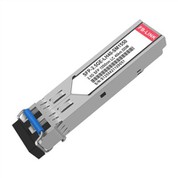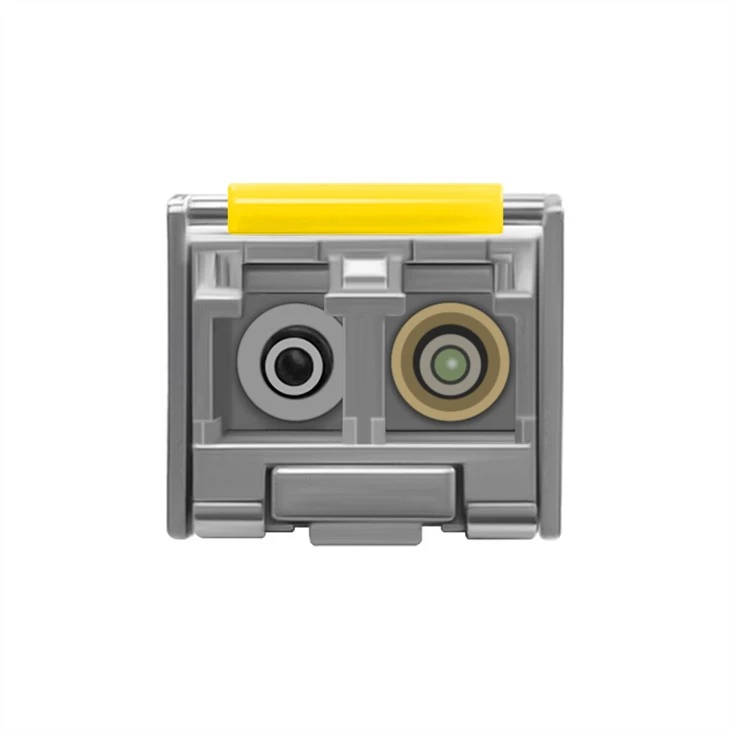
2.5GBASE CWDM SFP
2.5GBASE CWDM SFP Transceiver products provide optical networking equipment manufacturers with a timely and cost effective tool in supporting the unceasing demand for higher bandwidth equipment build-outs in the enterprise access and metropolitan area networks.

- Product Introduction
Item Spotlights
● Up to 2.5Gb/s data links
● DFB laser transmitter and APD receiver
● Up to 80km on 9/125µm SMF
● Hot-pluggable SFP footprint
● Duplex LC/UPC type pluggable optical interface
● Low power dissipation
● Metal enclosure, for lower EMI
● RoHS compliant and lead-free
● Single +3.3V power supply
● Support Digital Diagnostic Monitoring interface
● Compliant with SFF-8472
● Case operating Temperature: 0°C to +70°C
Description
|
Compatible |
2.5GBASE CWDM SFP |
Vendor Name |
FB-LINK |
|
Form Factor |
SFP |
Max Data Rate |
2.5Gbps |
|
Wavelength |
1270-1610nm |
Max Cable Distance |
80km |
|
Connector |
Duplex LC |
Media |
SMF |
|
Transmitter Type |
DFB |
Receiver Type |
APD |
|
TX Power |
0~5dBm |
Receiver Sensitivity |
<-28dBm |
|
Power Consumption |
≤1W |
Extinction Ratio |
>8.2dB |
|
DDM/DOM |
Supported |
Commercial Temperature Range |
0 to 70°C (32 to 158°F) |
|
Hysteresis |
2.0dBm |
Warranty |
3 Years |
Network infrastructure demands continue to escalate as businesses expand their digital operations and data consumption grows exponentially. Meeting these bandwidth requirements while maintaining cost-efficiency has become a critical challenge for network architects and IT professionals. CWDM technology paired with high-performance optical transceivers offers a compelling solution that addresses both capacity and budget constraints.
Understanding CWDM Technology in Modern Optical Transceivers
Coarse Wavelength Division Multiplexing (CWDM) represents a breakthrough approach in fiber optic communications. Unlike traditional point-to-point connections, CWDM optical transceivers enable multiple data channels to traverse a single fiber strand simultaneously. This multiplexing capability dramatically increases network capacity without requiring additional fiber installation-a significant advantage in both metropolitan and enterprise environments.
The beauty of CWDM lies in its wider channel spacing, which permits uncooled laser operation. This design choice reduces manufacturing complexity, lowers production costs, and enhances reliability. For organizations investing in scalable network infrastructure, these optical transceivers deliver exceptional value through their combination of performance and affordability.
Key Applications Driving Optical Transceivers Adoption
Modern businesses rely on optical transceivers across diverse networking scenarios. Enterprise campus networks leverage these modules to interconnect buildings and data centers, supporting bandwidth-intensive applications like video conferencing, cloud services, and real-time collaboration tools. The extended reach capabilities-supporting distances up to 80 kilometers-make them ideal for metropolitan area networks where physical separation between network nodes is substantial.
Service providers particularly benefit from deploying CWDM optical transceivers in access networks and backhaul applications. The technology enables efficient aggregation of traffic from multiple locations while minimizing infrastructure investment. Storage area networks (SANs) also utilize these modules extensively, where high-speed, low-latency connections are essential for data center operations.
Technical Advantages That Set These Optical Transceivers Apart
Hot-swappable design ensures network administrators can replace or upgrade modules without system downtime-a crucial feature for mission-critical environments. The small form-factor pluggable (SFP) interface has become an industry standard, offering compatibility across numerous switching and routing platforms from various manufacturers.
Digital diagnostic monitoring functionality embedded within these optical transceivers provides real-time visibility into operational parameters. Network teams can proactively monitor signal quality, temperature, and power levels, enabling predictive maintenance and reducing unexpected failures. This intelligent monitoring capability transforms network management from reactive troubleshooting to proactive optimization.
Energy efficiency represents another compelling advantage. With power consumption remaining at or below one watt, these optical transceivers contribute to reduced operational expenses and support corporate sustainability initiatives. The metal enclosure design minimizes electromagnetic interference, ensuring signal integrity even in electrically noisy environments.
Wavelength Flexibility for Network Design Freedom
The availability of eighteen distinct wavelength channels provides network designers with unprecedented flexibility. This wavelength diversity allows for incremental network expansion-organizations can start with a few channels and add capacity as requirements grow, without forklift upgrades. Each channel operates independently, enabling mixed-service delivery over shared fiber infrastructure.
This modular approach to capacity planning proves particularly valuable for growing businesses. Rather than overprovisioning bandwidth upfront (incurring unnecessary capital expense), network planners can deploy optical transceivers strategically and expand systematically as demand materializes.
Why Choose Advanced SFP Optical Transceivers for Your Network
Compatibility testing across major networking equipment brands ensures seamless integration into existing infrastructure. Organizations avoid vendor lock-in while maintaining flexibility in their equipment procurement strategies. The widespread support for industry standards means these optical transceivers work reliably with switches, routers, media converters, and network interface cards from multiple manufacturers.
Extended temperature range operation (0°C to 70°C) accommodates deployment in various environmental conditions, including telecommunications facilities, data centers, and outdoor cabinets with climate control. This operational resilience reduces installation constraints and expands deployment options.
The three-year warranty coverage reflects manufacturer confidence in product reliability and provides peace of mind for network operators. Combined with the inherent durability of solid-state components, these optical transceivers deliver dependable long-term service with minimal maintenance requirements.
Frequently Asked Questions
What makes CWDM optical transceivers different from standard transceivers?
CWDM optical transceivers utilize specific wavelengths that allow multiple signals to travel simultaneously over a single fiber strand. Unlike standard transceivers that use one wavelength per fiber, CWDM technology multiplies fiber capacity by supporting up to eighteen separate channels. This multiplexing approach significantly reduces fiber infrastructure costs while increasing overall network bandwidth.
Can these optical transceivers work with equipment from different manufacturers?
Yes, these modules are designed for broad compatibility. They conform to industry standards like SFF-8472 and utilize the universal SFP form factor. This standards compliance ensures optical transceivers function correctly with networking equipment from various vendors, including switches, routers, and other connectivity devices that feature SFP ports.
How far can signals travel using these optical transceivers?
Distance capability depends on several factors including fiber quality, wavelength, and acceptable signal loss. These particular optical transceivers support extended reach applications up to 80 kilometers on standard single-mode fiber. This range makes them suitable for metropolitan area networks, campus backbones, and inter-facility connections where significant physical separation exists between network nodes.
What is digital diagnostic monitoring and why does it matter?
Digital diagnostic monitoring (DDM), also called Digital Optical Monitoring (DOM), enables real-time access to operational parameters within optical transceivers. Network administrators can remotely check transmit power, receive power, temperature, laser bias current, and supply voltage. This visibility facilitates proactive maintenance, rapid troubleshooting, and performance optimization without physical inspection of individual modules.
Are special tools required to install optical transceivers?
No specialized tools are necessary. These modules feature hot-pluggable design, meaning they can be installed or removed while equipment remains powered on. Simply insert the optical transceiver into an available SFP port until it clicks into place, then connect fiber optic cables to the duplex LC connectors. Removal typically involves releasing a small latch or bail mechanism and gently pulling the module free.
What precautions should be taken when handling optical transceivers?
Optical transceivers contain sensitive components that require careful handling. Always avoid touching optical connector end-faces, as contamination can severely degrade signal quality. Use protective caps when modules are not connected, and clean connectors properly before installation. Avoid exposing optical transceivers to electrostatic discharge-use proper ESD precautions. Store unused modules in protective packaging within recommended temperature ranges.
How does wavelength selection impact network design?
Each CWDM wavelength operates on a specific channel, and proper wavelength pairing is essential at both ends of a fiber link. Network designers must ensure matching wavelengths on communicating optical transceivers while avoiding wavelength conflicts when multiple channels share common fiber infrastructure. Thoughtful wavelength allocation enables efficient network expansion and facilitates future capacity additions without disrupting existing services.
Hot Tags: Optical Transceivers
You Might Also Like