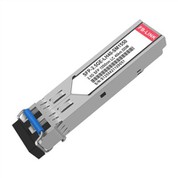
2.5GBASE DWDM SFP
2.5GBASE DWDM SFP Transceiver is a high performance, cost effective module which have a duplex LC optics interface.

- Product Introduction
Item Spotlights
● Transceiver unit with independent
DWDM DFB Laser diode transmitter
APD photodiode receiver
● Compliant with DWDM SFP MSA
● Up to 2.7Gbp/s data links
● SFF-8472 with duplex LC receptacle
● Power dissipation < 1.2W
● Metal enclosure for lower EMI
● 3.3V Single power supply
● 100GHz ITU Grid, C Band
● Wavelength controlled within ± 0.1nm over life and temperature
● Digital diagnostic monitoring
● 80 km with 9/125 µm single mode fiber (SMF) of maximum interconnect distances
● Case operating temperature:0°C to +70°C
Description
|
Compatible |
2.5GBASE DWDM SFP |
Vendor Name |
FB-LINK |
|
Form Factor |
SFP |
Max Data Rate |
2.5Gbps |
|
Wavelength |
C17-C61 |
Max Cable Distance |
80km |
|
Connector |
Duplex LC |
Media |
SMF |
|
Transmitter Type |
DFB |
Receiver Type |
APD |
|
TX Power |
0~5dBm |
Receiver Sensitivity |
<-28dBm |
|
Power Consumption |
≤1W |
Extinction Ratio |
>8.2dB |
|
DDM/DOM |
Supported |
Commercial Temperature Range |
0 to 70°C (32 to 158°F) |
|
Supply Current |
300mA |
Warranty |
3 Years |
Dense Wavelength Division Multiplexing (DWDM) technology has revolutionized how enterprises and service providers approach bandwidth scalability. Among the various optical transceivers available in the market, the 2.5Gbps single-mode DWDM SFP transceiver stands out as a critical component for organizations seeking reliable, long-distance data transmission without compromising performance.
What Makes DWDM SFP Transceivers Essential for Modern Networks
Optical transceivers serve as the bridge between electrical signals and optical signals, enabling data to travel across fiber optic cables. The DWDM variant takes this functionality further by allowing multiple wavelengths to coexist on a single fiber strand, dramatically increasing network capacity without additional cabling infrastructure.
This particular class of optical transceivers operates at speeds up to 2.7Gbps, making them ideal for SONET OC-48 and SDH STM-16 applications. The integration of advanced components-including DFB laser technology in the transmitter and APD photodiode in the receiver-ensures signal integrity across extended distances.
Breaking Down the Technical Advantages
Superior Link Budget Performance
One of the most impressive characteristics of these optical transceivers is their robust link budget capability. With support for distances reaching 80 kilometers over standard single-mode fiber, organizations can establish long-haul connections without requiring signal regeneration equipment. This extended reach comes from the combination of high transmitter power and exceptional receiver sensitivity, creating a reliable communication channel even in challenging deployment scenarios.
Wavelength Precision and Stability
The 100GHz ITU Grid compliance ensures these optical transceivers can coexist with other DWDM channels without interference. Wavelength stability remains within tight tolerances throughout the operational lifespan, regardless of temperature fluctuations. This precision is crucial for maintaining channel integrity in metropolitan and regional networks where multiple wavelengths share the same fiber infrastructure.
Intelligent Monitoring Capabilities
Modern optical transceivers incorporate digital diagnostic monitoring, providing real-time visibility into critical performance parameters. Network administrators can track optical power levels, temperature, voltage, and other metrics without service interruption. This proactive monitoring capability enables predictive maintenance strategies, reducing unplanned downtime and extending equipment longevity.
Real-World Applications and Use Cases
Telecommunications Infrastructure
Service providers rely on these optical transceivers to deliver high-bandwidth services across metro and regional networks. The DWDM capability allows carriers to maximize existing fiber investments while scaling capacity to meet growing subscriber demands.
Enterprise Data Centers
Organizations with geographically distributed data centers benefit from the extended reach these optical transceivers provide. Whether connecting facilities within a campus environment or linking locations across a metropolitan area, the 80-kilometer transmission capability eliminates the need for intermediate amplification sites.
Financial Services Networks
Trading firms and financial institutions require ultra-reliable, low-latency connections between data centers and trading venues. These optical transceivers deliver the performance consistency necessary for time-sensitive applications where microseconds matter.
Healthcare Systems
Hospital networks spanning multiple buildings or campuses utilize these optical transceivers to transmit medical imaging data, electronic health records, and other bandwidth-intensive applications across secure, dedicated fiber links.
Why Choose SFP Form Factor Optical Transceivers
The Small Form-Factor Pluggable (SFP) design offers several advantages over fixed-interface alternatives. Hot-swappable functionality means these optical transceivers can be replaced or upgraded without powering down network equipment, minimizing service disruption. The compact footprint enables high port density, allowing network architects to maximize switch and router capacity within limited rack space.
Energy efficiency represents another compelling benefit. With power consumption well under typical thresholds, these optical transceivers contribute to reduced operational expenses and support sustainability initiatives. The single 3.3V power supply requirement simplifies installation and ensures broad compatibility with existing network infrastructure.
Ensuring Long-Term Reliability
Quality optical transceivers distinguish themselves through rigorous testing and robust construction. Metal enclosures provide electromagnetic interference (EMI) shielding, protecting sensitive optical components from environmental factors that could degrade performance. Wide operating temperature ranges ensure consistent functionality across diverse deployment environments, from climate-controlled data centers to less controlled telecom facilities.
Frequently Asked Questions
Q: What's the difference between regular SFP and DWDM SFP optical transceivers?
A: While standard SFP modules use conventional wavelengths (typically 1310nm or 1550nm), DWDM versions operate on specific ITU Grid wavelengths, allowing multiple transceivers to transmit simultaneously over the same fiber without interference. This multiplexing capability significantly increases network capacity.
Q: Can these optical transceivers work with equipment from different manufacturers?
A: Yes, when designed to MSA (Multi-Source Agreement) standards, these optical transceivers offer broad interoperability. However, some switch vendors implement proprietary protocols, so verification of compatibility is recommended before deployment.
Q: How do I know which wavelength channel to select?
A: Channel selection depends on your network's DWDM architecture. The C-band spectrum (approximately 1530-1565nm) contains multiple channels spaced at 100GHz intervals. Your network design will dictate which specific channels (C17 through C61) to deploy at each location.
Q: What maintenance do optical transceivers require?
A: These modules are largely maintenance-free. However, keeping fiber connectors clean is essential for optimal performance. Regular monitoring of diagnostic data helps identify potential issues before they impact service. Periodic inspection of physical connections and proper cable management also extend transceiver lifespan.
Q: How does the APD receiver improve performance compared to standard PIN diodes?
A: Avalanche Photodiode (APD) receivers offer superior sensitivity compared to PIN diodes, enabling detection of weaker optical signals. This enhanced sensitivity directly translates to extended transmission distances and greater link margin, making APD-based optical transceivers ideal for long-haul applications.
Q: What happens if the operating temperature exceeds specifications?
A: Operating outside the specified temperature range can degrade performance and potentially damage components. The commercial temperature range (0°C to 70°C) covers most standard deployments. For harsh environments, industrial-grade variants with extended temperature ranges are available.
Q: Are firmware updates possible for these optical transceivers?
A: Most SFP optical transceivers contain fixed firmware that cannot be field-updated. However, the digital diagnostic features provide comprehensive monitoring capabilities, and the standardized design ensures long-term availability of compatible modules.
Making the Right Choice for Your Network
Selecting appropriate optical transceivers involves evaluating multiple factors: transmission distance requirements, existing infrastructure, budget constraints, and future scalability needs. DWDM technology offers compelling advantages for organizations anticipating bandwidth growth, as additional channels can be activated on existing fiber without disruptive construction projects.
The combination of extended reach, wavelength precision, and intelligent monitoring makes these optical transceivers a strategic investment for forward-thinking network architectures. As data demands continue accelerating across industries, having infrastructure components that deliver consistent performance while supporting future expansion becomes increasingly valuable.
Whether upgrading legacy systems or building new networks from the ground up, understanding the capabilities and applications of advanced optical transceivers empowers better decision-making and ensures your infrastructure can meet both current requirements and tomorrow's challenges.
Hot Tags: DWDM
You Might Also Like