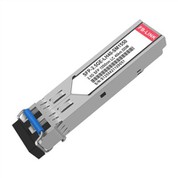
SFP 2.5GBASE LX
SFP 2.5GBASE LX Small Form Factor Pluggable (SFP) transceivers are compatible with the Small Form Factor Pluggable Multi-Sourcing Agreement (MSA).

- Product Introduction
Item Spotlights
● Up to 2.5Gb/s data links
● DFB laser transmitter and PIN photo-detector
● Up to 20km on 9/125µm SMF
● Hot-pluggable SFP footprint
● Duplex LC/UPC type pluggable optical interface
● Low power dissipation
● Metal enclosure, for lower EMI
● RoHS compliant and lead-free
● Support Digital Diagnostic Monitoring interface
● Single +3.3V power supply
● Compliant with SFF-8472
● Case operating temperature:
Commercial: 0°C to +70°C
Extended: -10°C to +80°C
Industrial: -40°C to +85°C
Description
|
Compatible |
SFP 2.5GBASE LX |
Vendor Name |
FB-LINK |
|
Form Factor |
SFP |
Max Data Rate |
2.5Gbps |
|
Wavelength |
1310nm |
Max Cable Distance |
20km |
|
Connector |
Duplex LC |
Media |
SMF |
|
Transmitter Type |
DFB |
Receiver Type |
PIN |
|
TX Power |
-5~0dBm |
Receiver Sensitivity |
<-18dBm |
|
Power Consumption |
≤1W |
Extinction Ratio |
>8.2dB |
|
DDM/DOM |
Supported |
Commercial Temperature Range |
0 to 70°C (32 to 158°F) |
|
Power Supply Voltage |
3.3V |
Warranty |
3 Years |
Mechanical Specifications(Unit:mm)

Fully compatible

Network connectivity demands have skyrocketed in recent years, pushing businesses to seek reliable solutions for high-speed data transmission. Optical transceivers have emerged as the critical component enabling seamless communication across fiber optic networks, bridging the gap between electronic and optical signals with remarkable efficiency.
What Makes Optical Transceivers Essential?
Optical transceivers serve as the interface between network equipment and fiber optic cables, converting electrical signals into optical signals for transmission and vice versa. These compact modules have revolutionized data centers, telecommunications networks, and enterprise infrastructure by enabling faster speeds over longer distances compared to traditional copper-based solutions.
The technology behind optical transceivers combines sophisticated laser transmitters with sensitive photo-detectors, packaged into hot-pluggable form factors like SFP (Small Form Factor Pluggable). This design philosophy allows network administrators to upgrade or replace modules without powering down entire systems, minimizing downtime and maximizing operational flexibility.
Key Performance Factors in Optical Transceivers
When selecting optical transceivers for your network infrastructure, several technical specifications determine overall performance and compatibility. Data rate capability stands as the primary consideration, with modern modules supporting speeds from 1Gbps to 400Gbps and beyond. The 2.5Gbps tier represents a sweet spot for many applications, offering substantial bandwidth improvements over legacy gigabit connections while maintaining cost-effectiveness.
Transmission distance varies significantly based on wavelength and fiber type. Single-mode fiber configurations with 1310nm wavelengths commonly achieve ranges up to 20 kilometers, making them ideal for metropolitan area networks and campus backbones. The choice between single-mode and multi-mode fiber impacts both distance capabilities and overall system cost.
Power consumption and thermal management have become increasingly important as data centers prioritize energy efficiency. Quality optical transceivers maintain low power dissipation while operating reliably across extended temperature ranges, from standard commercial environments to harsh industrial settings where temperatures may fluctuate between -40°C and +85°C.
Advanced Features: Digital Diagnostic Monitoring
Modern optical transceivers incorporate Digital Diagnostic Monitoring (DDM) functionality, also known as Digital Optical Monitoring (DOM). This feature provides real-time visibility into module performance metrics including temperature, voltage, laser bias current, transmitted optical power, and received optical power. Network administrators leverage this telemetry data for proactive maintenance, identifying potential issues before they cause service disruptions.
DDM-enabled optical transceivers communicate with network equipment through standardized interfaces, typically complying with SFF-8472 specifications. This standardization ensures compatibility across different vendor equipment, simplifying network management and reducing operational complexity.
Compatibility and Standards Compliance
The optical transceivers industry relies heavily on Multi-Source Agreements (MSAs) that define mechanical, electrical, and optical specifications. These standards ensure interoperability between modules from different manufacturers and network equipment from various vendors. Compliance with SONET, SDH, and Ethernet standards guarantees seamless integration into existing infrastructure.
Hot-pluggable designs with duplex LC/UPC connectors have become the industry norm, providing tool-free installation and removal. The metal enclosures used in quality optical transceivers provide effective electromagnetic interference (EMI) shielding while dissipating heat efficiently, contributing to long-term reliability.
Applications Across Industries
Optical transceivers power diverse applications across multiple sectors. Enterprise networks rely on these modules for high-speed connections between switches, routers, and servers. Service providers deploy them throughout metropolitan and long-haul networks, enabling broadband services and mobile backhaul. Data centers utilize optical transceivers extensively for both east-west traffic between servers and north-south traffic to external networks.
The flexibility of optical transceivers makes them suitable for environments ranging from climate-controlled facilities to outdoor installations exposed to extreme weather conditions. Industrial-grade variants operate reliably in manufacturing plants, transportation infrastructure, and utility networks where harsh environmental conditions are commonplace.
Ensuring Quality and Reliability
Reputable manufacturers subject optical transceivers to rigorous testing protocols, validating performance across specified operating parameters. Quality assurance processes verify optical power levels, sensitivity thresholds, extinction ratios, and eye diagram characteristics. Extended warranty periods, typically three years or longer, reflect manufacturer confidence in module reliability.
RoHS compliance and lead-free manufacturing have become standard requirements, addressing environmental concerns and regulatory mandates. These practices ensure optical transceivers meet sustainability goals without compromising performance or reliability.
Future-Proofing Your Network Investment
Selecting the right optical transceivers involves balancing current requirements with future growth projections. Modular designs allow incremental upgrades as bandwidth demands increase, protecting initial infrastructure investments. The widespread availability of compatible modules from multiple vendors prevents vendor lock-in and promotes competitive pricing.
Organizations should consider total cost of ownership when evaluating optical transceivers, accounting for energy consumption, maintenance requirements, and expected service life. While initial purchase price matters, long-term operational costs often have greater impact on overall economics.
Frequently Asked Questions
What's the difference between SFP and SFP+ optical transceivers?
SFP modules typically support data rates up to 2.5Gbps, while SFP+ modules handle speeds up to 10Gbps. Despite the same physical form factor, the higher-speed SFP+ requires more sophisticated electronics and consumes more power. Both remain hot-pluggable and share similar mechanical specifications, but they're not interchangeable due to speed differences.
Can I mix optical transceivers from different manufacturers in the same network?
Yes, provided all modules comply with relevant MSA standards and operate at compatible wavelengths and speeds. Standards compliance ensures interoperability, though it's advisable to verify compatibility through testing before large-scale deployment. Some network equipment may impose vendor restrictions through software, requiring configuration changes.
How do I determine the right transmission distance for my optical transceivers?
Calculate the physical distance between connection points and add margin for cable routing, patch panels, and future modifications. Single-mode fiber with appropriate wavelengths supports longer distances compared to multi-mode fiber. Always verify that your chosen module's maximum distance specification exceeds your actual requirement by at least 20% to account for signal degradation over time.
What role does wavelength play in optical transceiver performance?
Wavelength determines how far optical signals can travel before requiring amplification or regeneration. Common wavelengths include 850nm for short-reach multi-mode applications, 1310nm for medium distances on single-mode fiber, and 1550nm for long-haul transmission. Different wavelengths also enable wavelength-division multiplexing (WDM), allowing multiple signals on a single fiber strand.
How important is temperature rating when selecting optical transceivers?
Temperature rating critically impacts reliability and deployment flexibility. Commercial-grade modules (0°C to 70°C) suit controlled environments like data centers. Extended-range modules (-10°C to 80°C) handle unregulated spaces, while industrial-grade versions (-40°C to 85°C) operate in extreme conditions. Choosing inappropriate temperature ratings leads to premature failure and network instability.
What maintenance do optical transceivers require?
Optical transceivers require minimal maintenance, primarily involving periodic connector cleaning and monitoring of DDM parameters. Dust and contamination on fiber connector end-faces cause signal loss and potential damage. Regular inspection of diagnostic data helps identify degrading modules before they fail. Keep spare modules on hand for quick replacement when necessary.
Should I enable Digital Diagnostic Monitoring on all my optical transceivers?
Absolutely. DDM provides invaluable insight into network health without additional cost or complexity. Real-time monitoring of optical power levels, temperature, and other parameters enables predictive maintenance strategies. Most modern network management systems integrate DDM data, triggering alerts when parameters drift outside normal ranges.
What factors affect optical transceiver lifespan?
Operating temperature, humidity, power cycling frequency, and optical power levels all influence longevity. Quality modules from reputable manufacturers typically last 7-10 years under normal conditions. Running transceivers within specified temperature ranges and avoiding contamination maximize lifespan. DDM monitoring helps track aging effects on laser and detector performance.
Hot Tags: Optical Transceivers
You Might Also Like