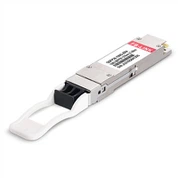
The published 800GAUI-8 interface and eight-lane PAM4 architecture let engineering teams screen electrical compatibility before samples are ordered. That reduces the chance of selecting an 800G optical module that fits mechanically but is not supported by the host.

FB-LINK 800G OSFP SR8 Optical Transceiver
The FB-LINK 800G OSFP SR8 Optical Transceiver uses eight-lane PAM4 and 850 nm VCSEL optics for short OM4 links in supported data center systems, with samples available for host qualification before volume orders.
- Product Introduction
800G OSFP SR8 Optical Transceiver - Qualification Specifications
| Product | 800G OSFP SR8 optical transceiver |
|---|---|
| Supported aggregate modes | 2×425 Gb/s or 850 Gb/s |
| Form factor | OSFP; OSFP MSA compliant |
| Electrical interface | 8×106.25 Gb/s PAM4; 800GAUI-8 |
| Optical interface | 8×106.25 Gb/s PAM4 |
| Optical technology | 850 nm VCSEL array |
| Fiber medium | OM4 multimode fiber |
| Published maximum reach | Up to 100 m over OM4 multimode fiber; confirm the required interface and link budget against the final datasheet before ordering |
| Power supply | Single 3.3 V |
| Case temperature | Commercial, 0°C to 70°C |
| Management interface | CMIS 5.0 or later |
| Installation | Hot-swappable |
Before requesting a volume quote: send FB-LINK the host platform, software release, cable interface, channel length, and target quantity. These five details determine whether the published module profile matches the actual deployment.

Short-Reach 800G Multimode Transceiver for Data Center Fabrics
This hot-swappable OSFP module combines eight 106.25 Gb/s PAM4 electrical and optical lanes for 2×425 Gb/s or 850 Gb/s operation. Its 850 nm VCSEL design is intended for short OM4 connections, making it relevant to buyers planning high-capacity links within a data hall rather than long-reach campus or DCI routes.
The buying decision should not stop at "800G" and "OSFP." Confirm the cage type, host firmware, cable interface, polarity, channel length, and optical loss budget as one system. CMIS 5.0 or later gives operations teams a standard management framework, while the 0°C to 70°C case rating defines the published environmental boundary. A qualification sample should reproduce the planned host and cable path before the module is approved for a bulk order.
Bulk 800G OSFP Transceiver Procurement: What Buyers Gain
A Clear Host-Qualification Starting Point
A Defined Short-Reach Fiber Plan
The 850 nm VCSEL and OM4 media requirements give installers a clear basis for cable selection, polarity planning, inspection, and loss testing. Procurement can therefore quote the transceiver and the channel requirements together instead of treating optics and cabling as separate risks.
Acceptance Criteria Before Volume Release
CMIS access, link stability, temperature behavior, and host recognition can all be checked during sample qualification. For a volume 800G transceiver order, agreed pass criteria are more useful than broad claims about compatibility.
850 nm VCSEL OSFP Module: Interface and Deployment Fit
850 nm VCSEL Transmission
The transmitter uses an 850 nm vertical-cavity surface-emitting laser array, paired with an eight-lane PAM4 optical interface. For short-reach infrastructure, this defines the wavelength and multimode fiber environment that must be validated during link design.
OSFP Thermal and Electrical Fit
The OSFP module operates from a single 3.3 V supply and is specified for a 0°C to 70°C commercial case range. Buyers should qualify the exact cage, airflow, heatsink arrangement, and host power profile as one configuration because form-factor fit alone does not confirm system-level thermal acceptance.

800G SR8 Optics for AI Clusters and Leaf-Spine Networks
Leaf-to-Spine Connections
Use the SR8 module where the OSFP host, OM4 route, connector configuration, and measured loss budget all match the approved link design. It is a short-reach choice, not a universal substitute for every 800G interface.
AI and High-Performance Fabrics
The 850 Gb/s aggregate mode can support bandwidth-intensive east-west traffic between qualified platforms. Sample testing should cover host firmware, lane mapping, case temperature, CMIS visibility, and sustained link behavior.
Short Equipment-Room Links
For enterprise or research networks, this 800G multimode transceiver is relevant when the installed cable plant and OSFP platform pass interoperability and optical-budget checks. Existing OM4 alone does not confirm compatibility.
Custom OSFP SR8 Transceivers for OEM and Integration Projects
FB-LINK should receive the host platform, OSFP cage type, software release, target channel length, cable interface, polarity plan, operating conditions, required CMIS fields, and forecast quantity with the RFQ. That information turns a generic request for "800G optics" into a configuration that engineering can actually evaluate.
For an OEM, system integrator, or data center project, the useful deliverable is a written approval matrix covering the host, module profile, cable assembly, firmware environment, and test conditions. The public product data confirms eight 106.25 Gb/s PAM4 lanes, 850 nm VCSEL optics, CMIS 5.0-or-later management, a single 3.3 V supply, and a 0°C to 70°C commercial case range. Any requirement beyond those published items should be written into the quotation and final specification rather than assumed from the product family name.
Send Your Host and Link Requirements
Factory-Tested 800G Optical Modules: Qualification Checklist
The available product information identifies compliance with the OSFP MSA, CMIS 5.0 or later, and the 800GAUI-8 electrical interface. Use those published requirements as the starting point for incoming qualification, not as a substitute for host-level testing.
Confirm 8×106.25 Gb/s PAM4 host electrical support.
Check CMIS access and required diagnostic fields.
Measure the OM4 link loss against the approved budget.
Verify OSFP cage, heatsink, airflow, and power compatibility.
Inspect connector end faces and validate fiber polarity.
Test operation across the project's case-temperature range.
Compliance boundary: no additional certification or certificate number is stated on the target product page. Add any project-specific compliance requirement to the RFQ for documentary confirmation.
Ask FB-LINK for a sample qualification quote with the host platform and acceptance criteria attached. This gives both sides a defined test target before production quantities are scheduled.
Volume OSFP Transceiver Orders: Packaging and Shipping
The public product page does not specify a standard packing format or shipping term. For a bulk OSFP module order, include the destination, labeling format, handling requirements, documentation, and requested Incoterm in the purchase specification. The supplier quotation should confirm these items together with the approved configuration so receiving teams can identify the correct module revision and avoid mixing unqualified stock.
800G SR8 Module MOQ, Samples, and Lead Time
No standard MOQ or fixed lead time is published for this module. Ask FB-LINK to quote the sample quantity, target production quantity, required configuration, and delivery destination separately. This keeps engineering qualification distinct from the volume schedule and gives procurement a clearer basis for comparing an 800G OSFP supplier on total project readiness-not unit price alone.
800G OSFP Transceiver Product Gallery


Why Source 800G SR8 Optics from FB-LINK?
FB-LINK is an 800G optical transceiver manufacturer and supplier with products across SR8, DR8, 2×DR4, 2×FR4, and 2×LR4 interface families. That range matters when a project contains more than one reach or fiber requirement: the sourcing conversation can begin with the link design instead of forcing every connection into the same optical format.
Choose SR8 when the planned channel uses OM4 multimode fiber and falls within the qualified reach. If the network design calls for single-mode fiber or a different distance, compare the available 800G transceiver options before requesting samples for a DR8, 2×DR4, 2×FR4, or 2×LR4 configuration.
For this short-reach model, FB-LINK publishes the details buyers need for an initial technical screen: eight-lane PAM4 operation, 850 nm VCSEL optics, OM4 media, OSFP MSA compliance, CMIS 5.0-or-later management, single-supply operation, and a commercial case-temperature range. The next step is not a vague request for a "compatible 800G module." It is a host-specific sample plan with the cable path, diagnostics, acceptance tests, quantity, and delivery target attached.
Request an FB-LINK Sample and Volume Quote
800G OSFP SR8 Optical Transceiver - Procurement FAQs
What host information is needed for an 800G OSFP SR8 quote?
Provide the switch or adapter platform, OSFP cage type, software release, link distance, OM4 cable plan, connector configuration, operating conditions, and quantity. The FB-LINK technical sales team can use those details to quote the appropriate sample and define what must be verified before volume approval.
What electrical and optical lane rates does the module use?
The module uses eight 106.25 Gb/s PAM4 lanes on both its electrical and optical interfaces. It supports 2×425 Gb/s or 850 Gb/s aggregate operation, subject to the approved host and configuration.
Which fiber and wavelength does the SR8 optical module use?
The published design uses an 850 nm VCSEL array and OM4 multimode fiber. The product information states reach up to 100 m over OM4, but the final cable interface, channel loss, and supported distance should be confirmed in the approved datasheet for the quoted configuration.
Is this OSFP transceiver universally compatible?
No pluggable optic should be approved on form factor alone. Confirm the host hardware, software release, cage and thermal design, electrical interface, cable assembly, and CMIS behavior during sample testing.
Does the module provide diagnostic access?
CMIS 5.0 or later provides the management framework and access to operating information. Specify the fields your network software needs so they can be included in the qualification discussion.
What operating temperature is specified?
The published commercial case-temperature range is 0°C to 70°C. Treat this as a case-temperature requirement and validate the complete cage, heatsink, airflow, and host power environment during qualification.
What are the MOQ and lead time for a volume order?
No fixed MOQ or lead time is published. FB-LINK quotes commercial terms against the required configuration, sample plan, production quantity, and destination, so include all four items in the RFQ.
Request an 800G OSFP SR8 Optical Transceiver Quote
Hot Tags: Optical Transceivers
←
Previous: OSFP 800G SR8 MPO-12
Next: No Information
→
Send Inquiry