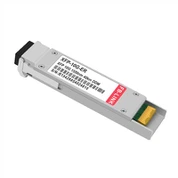
100G ZR4
100G ZR4 QSFP28 1310nm 80km DOM Duplex LC SMF Optical Transceiver Module Product Introduction The 100G ZR4 optical module is designed to transmit up to 80km of 100GBASE Ethernet throughput using 1310nm wavelength single mode fiber (SMF) through duplex LC connectors. Adopting a BOX+FPC+PCBA split...

- Product Introduction
Product Features
● High throughput: It can support high-speed data transmission of 100Gbps, meeting the needs of large amounts of data transmission.
● Long distance transmission: With a wavelength of 1310nm, it can achieve a long-distance transmission of 80 kilometers, meeting the needs of large-scale data transmission.
● Stability and reliability: Made with high-quality components and high-precision processing technology, it can ensure stable operating performance and reduce system error rates.
● Low power consumption: Adopting low-power design to reduce energy consumption and support energy conservation and environmental protection.
● Multi protocol support: Supports multiple network protocols, progressive upgrades, and can meet the needs of different application environments.
● Easy to manage: Provides simple and easy-to-use management functions, allowing administrators to monitor and optimize network performance at any time, improving reliability.
In summary, the 100G ZR4 QSFP28 1310nm 80km is a high-performance, reliable, energy-saving, and easy to manage fiber optic module that can be widely used in data centers, enterprises, telecommunications operators, and other fields, providing users with a high-quality network service experience.
Product parameters
| P/N | Description | Data Rate | Reach | Tx | Rx | Output Power | Sensitivity |
| FBL-100G-ZR4 | QSFP28 ZR4 | 103.1Gb/s | 80km | LWDM EML | SOA-PIN | +2.0~+6.5dBm | ≤-28.0dBm |
Product compatibility

Product Qualification


800G OSFP SR8

400G OSFP SR4

200G QSFP56 SR4

100G QSFP28 SR4
When it comes to building robust network infrastructure, selecting the right optical transceivers can make all the difference between seamless connectivity and frustrating bottlenecks. The 100G ZR4 QSFP28 module represents a significant advancement in fiber optic technology, delivering exceptional performance for demanding enterprise and telecommunications applications.
What Makes 100G ZR4 Optical Transceivers Stand Out?
Modern data centers and telecommunications networks demand solutions that can handle massive data volumes while maintaining signal integrity over extended distances. Optical transceivers built on the ZR4 standard address these challenges by combining high-speed capabilities with remarkable reach.
The ZR4 technology utilizes four wavelength channels multiplexed through LWDM (Lan Wavelength Division Multiplexing), operating at 1310nm wavelength. This architecture enables organizations to transmit data at speeds exceeding 100 gigabits per second while maintaining reliable performance across distances up to 80 kilometers-all through standard single-mode fiber infrastructure.
Key Advantages for Network Infrastructure
Exceptional Distance Capabilities
Unlike many optical transceivers limited to shorter spans, ZR4 modules excel at long-haul applications. The 80-kilometer reach eliminates the need for signal regeneration in most metro and campus deployments, reducing infrastructure complexity and costs.
Energy-Efficient Operation
Power consumption remains a critical concern for large-scale deployments. Advanced optical transceivers incorporating low-power design principles help organizations reduce operational expenses while supporting sustainability initiatives. The efficient power profile ensures minimal heat generation, contributing to lower cooling requirements.
Protocol Flexibility
Network environments constantly evolve, requiring optical transceivers that adapt to changing requirements. Multi-protocol support ensures these modules integrate seamlessly with various network architectures, from traditional Ethernet to emerging standards, protecting infrastructure investments.
Superior Signal Performance
Quality components and precision engineering deliver consistent output power between +2.0 and +6.5 dBm, while high-sensitivity receivers can detect signals as low as -28.0 dBm. This robust link budget ensures reliable communication even in challenging conditions.
Applications Across Industries
Data Center Interconnection
Optical transceivers play a vital role in connecting distributed data center facilities. The combination of high bandwidth and extended reach makes ZR4 modules ideal for inter-campus links, disaster recovery connections, and cloud infrastructure.
Telecommunications Networks
Service providers leverage these optical transceivers to build out metro networks, connect central offices, and deliver high-capacity services to enterprise customers. The 80km reach covers most metropolitan areas without requiring intermediate amplification.
Enterprise Campus Networks
Large corporate campuses, universities, and research facilities benefit from optical transceivers that can span multiple buildings while delivering consistent gigabit performance. The reliable operation reduces network maintenance overhead.
5G Fronthaul and Backhaul
Next-generation wireless networks require high-capacity fiber connections. Optical transceivers supporting 100G speeds provide the bandwidth needed for 5G base station connectivity and core network aggregation.
Technical Considerations
When deploying optical transceivers in production environments, several factors influence performance. Fiber quality, connector cleanliness, and proper installation techniques all impact link reliability. The SOA-PIN receiver technology employed in ZR4 modules provides excellent sensitivity, but maintaining clean fiber terminations remains essential for optimal performance.
The LWDM approach used by these optical transceivers offers advantages over traditional CWDM or DWDM systems for specific applications. The wider wavelength spacing improves tolerance to temperature variations and reduces the precision required for wavelength control, translating to lower costs and improved reliability.
Management and Monitoring
Modern optical transceivers incorporate digital diagnostic monitoring capabilities, allowing network administrators to track key performance metrics in real-time. Parameters such as temperature, voltage, laser bias current, and optical power levels provide valuable insights for proactive maintenance and troubleshooting.
This visibility enables teams to identify potential issues before they impact service quality, optimize network performance, and plan capacity upgrades based on actual usage patterns rather than estimates.
Frequently Asked Questions
Q: What's the difference between ZR4 and other optical transceiver types like SR4 or LR4?
A: The primary distinctions lie in reach and wavelength. SR4 optical transceivers use multimode fiber for short distances (typically 100 meters), LR4 modules operate on single-mode fiber up to 10km, while ZR4 extends this to 80km. Each type serves different network segments based on distance requirements.
Q: Can I use 100G ZR4 optical transceivers with existing fiber infrastructure?
A: Yes, ZR4 modules work with standard single-mode fiber (SMF) commonly deployed in enterprise and carrier networks. This compatibility allows upgrades without replacing existing cabling, making it cost-effective for capacity expansion.
Q: How do I ensure optimal performance from optical transceivers?
A: Key practices include maintaining clean fiber connectors, using proper insertion/extraction tools, monitoring diagnostic data regularly, and ensuring adequate ventilation around equipment. Following manufacturer guidelines for operating temperature and power specifications also helps maximize reliability.
Q: What bandwidth can I expect in real-world deployments?
A: These optical transceivers deliver full 100 Gigabit Ethernet throughput with proper configuration. The actual usable bandwidth depends on protocol overhead, but users can expect effective data transfer rates exceeding 95 Gbps in typical implementations.
Q: Are 100G optical transceivers backward compatible with lower-speed equipment?
A: Direct compatibility with 10G or 40G equipment isn't standard, but network switches supporting auto-negotiation or breakout cables can enable mixed-speed deployments. Consult equipment specifications to verify compatibility options.
Q: How does wavelength selection impact performance?
A: The 1310nm wavelength used by ZR4 optical transceivers offers low dispersion in standard single-mode fiber, making it ideal for high-speed, long-distance transmission without dispersion compensation. This wavelength choice balances performance with cost-effectiveness.
Q: What maintenance do optical transceivers require?
A: Optical transceivers are generally maintenance-free, but periodic monitoring of diagnostic data, visual inspection of connectors, and cleaning when necessary help ensure continued performance. Firmware updates may occasionally be available to enhance functionality.
Making the Right Choice
Selecting appropriate optical transceivers requires understanding your specific requirements-distance, bandwidth, budget, and future scalability. The 100G ZR4 QSFP28 platform offers an excellent balance of performance and value for organizations needing reliable, high-capacity connectivity over metropolitan distances.
As network demands continue growing, investing in capable optical transceivers provides the foundation for supporting emerging applications, from artificial intelligence workloads to ultra-high-definition video streaming. The combination of proven technology and forward-looking capabilities makes these modules a smart choice for future-ready infrastructure.
Whether upgrading existing networks or building new facilities, understanding the capabilities and benefits of advanced optical transceivers helps ensure your infrastructure can meet both current needs and tomorrow's challenges.
Hot Tags: Optical Transceivers
You Might Also Like