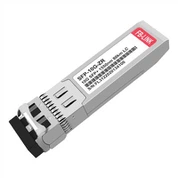
10G SFP+ LRM2 2KM
10G SFP+ 2KM is transmitted through single-mode optical fiber, and the distance can reach 2km. It has a dual-fiber LC interface and a transmission wavelength of 1310nm.

- Product Introduction
Specifications
| Form Factor | SFP+ | Max Distance | 2 km |
| Wavelength | 1310nm | DDM | Support |
| Connector | Duplex LC | Working Voltage | 3.3V |
| TX Power | -8.2~0.5dBm | Data Rate | 10G |
| Fiber Type | SMF | Commercial Temperature Range | 0 to 70°C (32 to 158°F) |
Connectivity Solutions

DDM

Widely used

Fully compatible

High-speed data transmission has become the backbone of modern enterprise infrastructure, and optical transceivers serve as the critical components enabling seamless connectivity across network environments. For organizations seeking reliable, cost-effective solutions for medium-distance fiber optic communications, understanding the capabilities of advanced transceiver technology is essential for building robust network architectures.
The Role of Optical Transceivers in Modern Networks
Optical transceivers function as bidirectional communication devices that convert electrical signals into optical signals and vice versa. These compact modules have revolutionized data center connectivity, campus networks, and enterprise communications by enabling high-bandwidth transmission over fiber optic cables. Unlike traditional copper-based solutions, optical transceivers deliver superior performance across longer distances while maintaining signal integrity and minimizing latency.
The evolution of these modules has addressed the growing demands for faster data rates and increased reliability. Organizations deploying 10-gigabit infrastructure particularly benefit from the enhanced performance characteristics that modern optical transceivers provide, making them indispensable for bandwidth-intensive applications.
Understanding Single-Mode Fiber Technology
Single-mode fiber (SMF) optical transceivers represent a significant advancement in network transmission technology. Operating on the 1310nm wavelength spectrum, these devices excel at delivering consistent performance across metropolitan area networks and campus backbones. The duplex LC connector interface ensures secure, reliable connections while maintaining the compact form factor that network administrators value.
What sets quality optical transceivers apart is their ability to maintain optimal power levels throughout the transmission path. With carefully calibrated transmission power specifications, these modules ensure that signals arrive at their destination with sufficient strength for accurate data recovery, even when spanning distances up to two kilometers.
Enhanced Monitoring and Management Capabilities
Digital Diagnostic Monitoring (DDM) functionality has become a game-changer for network operations teams. Optical transceivers equipped with DDM capabilities provide real-time insights into critical performance parameters, enabling proactive maintenance and troubleshooting. This intelligent monitoring allows administrators to track temperature, voltage, bias current, transmit power, and receive power-all essential metrics for maintaining network health.
The integration of DDM support within optical transceivers transforms these devices from passive connectivity components into active network intelligence assets. This visibility enables predictive maintenance strategies, reducing unexpected downtime and extending the operational lifespan of network infrastructure.
Versatility Across Operating Environments
Commercial-grade optical transceivers designed for standard operating temperature ranges offer exceptional versatility for typical enterprise deployments. Whether installed in climate-controlled data centers or standard telecommunications rooms, these modules maintain consistent performance across varying environmental conditions. The wide voltage tolerance ensures compatibility with diverse networking equipment while providing stable operation under different power supply conditions.
Applications and Use Cases
Organizations leverage optical transceivers across numerous deployment scenarios. Enterprise data centers utilize these modules for server-to-switch connectivity, enabling high-speed storage area networks and virtualized computing environments. Campus networks benefit from the extended reach capabilities, connecting buildings across geographic areas without signal degradation.
Service providers deploy optical transceivers for customer access networks, delivering high-bandwidth services to business customers. The 10-gigabit capacity supports demanding applications including video conferencing, cloud services, and real-time data analytics. Financial institutions rely on these modules for low-latency trading platforms, while healthcare organizations use them for picture archiving and communication systems (PACS) that demand reliable, high-speed image transmission.
Key Considerations for Deployment
When implementing optical transceivers, several factors merit careful consideration. Compatibility with existing network equipment ensures seamless integration and avoids costly infrastructure modifications. The hot-swappable nature of SFP+ form factor optical transceivers allows for easy maintenance and upgrades without network disruption.
Power budgeting represents another critical aspect of successful deployment. Understanding the relationship between transmit power, fiber attenuation, and receiver sensitivity ensures that optical transceivers operate within optimal parameters. Proper cable management and connector cleanliness also play vital roles in maintaining performance over time.
Future-Proofing Network Infrastructure
Investing in quality optical transceivers provides a foundation for scalable network growth. As bandwidth demands continue escalating, having infrastructure capable of supporting 10-gigabit transmission positions organizations for future technology adoption. The standardized interfaces and protocols used by modern optical transceivers ensure long-term compatibility and protect infrastructure investments.
Frequently Asked Questions
Q: What is the difference between SFP and SFP+ optical transceivers?
A: SFP+ optical transceivers support data rates up to 10 Gbps, while standard SFP modules typically support up to 1 Gbps. SFP+ modules feature enhanced electrical specifications and are designed specifically for 10-gigabit Ethernet applications. Although physically similar, the two types serve different performance tiers in network architecture.
Q: Can optical transceivers work with both single-mode and multi-mode fiber?
A: Optical transceivers are specifically designed for either single-mode or multi-mode fiber applications-they are not interchangeable. Single-mode optical transceivers use longer wavelengths (typically 1310nm or 1550nm) and support greater distances, while multi-mode transceivers use shorter wavelengths (850nm or 1300nm) for shorter distances. Always match the transceiver type to your fiber infrastructure.
Q: How important is DDM functionality in optical transceivers?
A: Digital Diagnostic Monitoring significantly enhances network management capabilities. DDM-enabled optical transceivers allow administrators to monitor performance metrics in real-time, identify potential issues before they cause failures, and optimize network performance. This feature is particularly valuable in mission-critical environments where uptime is paramount.
Q: What factors affect the maximum transmission distance of optical transceivers?
A: Several factors influence transmission distance, including wavelength, fiber type, fiber quality, connector losses, and splice losses. Single-mode optical transceivers operating at 1310nm typically support longer distances than multi-mode variants. The specified maximum distance assumes good-quality fiber and proper installation practices.
Q: Are all optical transceivers compatible with any networking equipment?
A: While optical transceivers follow industry standards, compatibility verification is essential. Check that the transceiver's data rate, wavelength, and connector type match your equipment specifications. Some networking equipment vendors maintain approved transceiver lists, and using compatible optical transceivers ensures optimal performance and may be necessary for warranty coverage.
Q: How do I know when to replace optical transceivers?
A: Optical transceivers should be replaced when they exhibit performance degradation, fail diagnostic tests, or when monitored parameters fall outside acceptable ranges. DDM-enabled modules make this determination easier by providing measurable performance data. Physical damage, persistent link failures, or increased bit error rates also indicate replacement necessity.
Q: What maintenance do optical transceivers require?
A: Optical transceivers require minimal maintenance but benefit from regular connector cleaning and periodic performance monitoring. Keep unused transceivers in protective dust caps, handle modules by their housings rather than optical ports, and ensure proper ventilation around installed units. Regular DDM monitoring helps identify potential issues before they impact network performance.
Hot Tags: Optical Transceivers