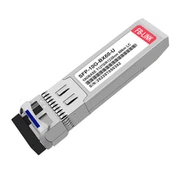
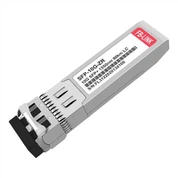
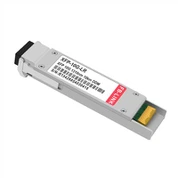
10G SFP+ ZR 80km
10G SFP+ ZR is a 10G ZR single-mode SFP+ transceiver that uses 1550nm wavelength and has a transmission distance of up to 40km. The module can be used with 10G Ethernet, SONET or SDH networks.

- Product Introduction
Pin Defintion And Functions

Description
| Wavelength (nm) | 1550 |
| Type | SMF |
| Distance | 80KM |
| TX Power | 0~+4dBm |
| Receiver Sensitivity | <-24dBm |
| Commercial Temperature Range | 0 to 70°C (32 to 158°F) |
| DDM/DOM | Supported |
Package Dimensions

Fully compatible

Application

Network infrastructure demands continue to escalate as businesses expand their digital footprint across metropolitan and regional areas. Optical transceivers have emerged as the backbone technology enabling seamless, high-speed data transmission over extraordinary distances, fundamentally transforming how enterprises build resilient communication networks.
Why Long-Distance Optical Transceivers Matter
Modern businesses require reliable connectivity that spans cities, campuses, and even cross-country links. Optical transceivers designed for extended reach solve critical challenges that traditional networking equipment cannot address. These sophisticated modules convert electrical signals into optical light for transmission through fiber optic cables, then reverse the process at the receiving end-all while maintaining signal integrity across vast distances.
The evolution of fiber optic technology has reached remarkable milestones. Single-mode fiber (SMF) implementations paired with cutting-edge optical transceivers now routinely achieve transmission distances that seemed impossible just years ago. This capability eliminates the need for costly signal repeaters and intermediate amplification stations, dramatically reducing both infrastructure expenses and maintenance complexity.
Key Advantages of Extended-Range Optical Transceivers
Exceptional Distance Capability
Extended-reach optical transceivers bridge geographical gaps that conventional networking equipment cannot span. By operating at wavelengths optimized for minimal signal attenuation, these modules maintain data integrity across metropolitan areas without degradation. This makes them ideal for connecting distributed facilities, linking remote data centers, or establishing redundant network paths.
Superior Signal Performance
Advanced optical transceivers incorporate sophisticated digital diagnostic monitoring (DDM) capabilities that provide real-time visibility into module performance. Network administrators can proactively track optical power levels, signal quality, and operational parameters-enabling predictive maintenance and preventing unexpected downtime.
Cost-Effective Network Design
Deploying long-distance optical transceivers significantly reduces total cost of ownership. Organizations eliminate intermediate equipment racks, power consumption at relay points, and the ongoing maintenance burden of multi-hop network architectures. A single direct link replaces what previously required multiple network segments.
Ideal Applications for High-Performance Optical Transceivers
Metropolitan Area Networks (MANs): Service providers rely on robust optical transceivers to connect central offices, aggregation points, and customer premises across urban landscapes. These modules ensure reliable service delivery for both enterprise and residential customers.
Campus Connectivity: Universities, corporate campuses, and hospital systems utilize extended-reach optical transceivers to interconnect buildings separated by considerable distances. This approach maintains consistent network performance without the complexity of intermediate distribution frames.
Data Center Interconnection: Modern cloud architectures depend on low-latency, high-bandwidth links between geographically separated data centers. Optical transceivers with extended reach capability enable direct connections that support disaster recovery, workload distribution, and data replication strategies.
Telecom Infrastructure: Telecommunications carriers deploy these advanced optical transceivers in access networks, backhaul links, and regional transport systems where distance and reliability are paramount considerations.
Selection Considerations for Optical Transceivers
When evaluating optical transceivers for your network infrastructure, several critical factors warrant careful consideration:
Temperature Tolerance: Operating environments vary dramatically. Commercial-grade optical transceivers function reliably across standard temperature ranges, making them suitable for climate-controlled facilities and many outdoor applications.
Power Budget: The relationship between transmitter output power and receiver sensitivity determines maximum achievable distance. Higher-quality optical transceivers maintain generous power budgets that accommodate fiber aging, connector losses, and splice attenuation.
Fiber Compatibility: Single-mode fiber deployment with appropriate optical transceivers provides the foundation for future-proof networks. This combination supports current bandwidth requirements while preserving upgrade paths to higher speeds.
Monitoring Capabilities: Modern optical transceivers with digital diagnostics deliver unprecedented operational visibility. This feature transforms troubleshooting from reactive guesswork into data-driven problem resolution.
Frequently Asked Questions About Optical Transceivers
What distance can optical transceivers realistically achieve?
Long-reach optical transceivers routinely span dozens of kilometers over single-mode fiber, with some specialized modules exceeding one hundred kilometers. Actual achievable distance depends on fiber quality, wavelength selection, and the power budget engineered into the module design.
How do I know if optical transceivers are compatible with my existing equipment?
Optical transceivers follow standardized form factors like SFP, SFP+, and QSFP. Multi-source agreement (MSA) compliance ensures mechanical and electrical compatibility across vendors. Always verify that wavelength, data rate, and distance specifications align with your switch or router capabilities.
What maintenance do optical transceivers require?
Optical transceivers themselves are solid-state devices requiring minimal maintenance. However, fiber optic connections demand attention-keep connector end-faces clean, avoid tight bend radii, and utilize diagnostic features to monitor signal quality. Regular monitoring prevents gradual degradation from becoming critical failures.
Can I mix different optical transceiver brands in the same network?
Industry standards enable interoperability between properly specified optical transceivers from different manufacturers. Ensure wavelength, power levels, and protocol compatibility match on both ends of the link. Some vendors implement proprietary coding that restricts mixing, though third-party modules often provide universal compatibility.
How does temperature affect optical transceiver performance?
Optical transceivers specify operational temperature ranges reflecting their component tolerances. Commercial-grade modules handle typical data center and office environments. Extended temperature variants serve harsh environments. Operating outside specified ranges degrades performance and shortens component lifespan.
What is DDM/DOM and why does it matter?
Digital Diagnostic Monitoring in optical transceivers provides real-time telemetry including temperature, voltage, bias current, transmit power, and receive power. This data enables proactive network management, allowing administrators to identify degrading links before they fail completely.
Are optical transceivers hot-swappable?
Most modern optical transceivers support hot-swapping, allowing installation and removal without powering down network equipment. This capability significantly reduces maintenance windows and improves network availability during upgrades or troubleshooting.
How do I calculate if an optical transceiver will work for my distance?
Compare the module's power budget (transmit power minus receiver sensitivity) against your total link loss. Factor in fiber attenuation per kilometer, connector losses (typically 0.5dB each), and splice losses. Maintain at least 3dB margin for aging and unforeseen losses.
Building Future-Ready Networks
Selecting appropriate optical transceivers represents a strategic infrastructure decision that impacts network performance, reliability, and scalability for years to come. As bandwidth demands continue their relentless growth, the foundation you establish with quality fiber optic components determines your organization's ability to adapt and compete.
Extended-reach optical transceivers eliminate traditional distance constraints, enabling network architects to design topologies based on operational requirements rather than technical limitations. This flexibility proves invaluable as businesses expand, consolidate, or redistribute their infrastructure footprint.
Investing in robust optical transceivers with comprehensive diagnostic capabilities provides not just connectivity, but insight. The ability to monitor link health, predict failures, and optimize performance transforms network operations from reactive troubleshooting to proactive management.
The evolution of optical transceivers continues accelerating, with each generation delivering improved performance, lower power consumption, and enhanced features. Standardized interfaces ensure that infrastructure investments remain relevant even as technology advances, protecting capital expenditures while enabling incremental improvements.
Organizations that prioritize quality in their optical transceiver selection build networks characterized by exceptional reliability, minimal downtime, and the agility to embrace emerging technologies. In an era where connectivity underpins every business function, this foundation becomes a genuine competitive advantage.
Hot Tags: Optical Transceivers
You Might Also Like