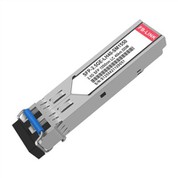
25G LR 10KM
The 25G LR 10KM transceiver uses LC duplex connector, 1310nm wavelength, providing up to 10km transmission distance over single mode fiber (SMF).25G SFP28 LR conventional optical modules are mainly used for interconnecting servers, switches and routers in data centers.

- Product Introduction

Product Specifications
| Part Number | SFP28-25G-LR | Distance | 10km |
| Product type | SFP28 | TX Power | -7.0~-2.0dBm |
| Rate | 25Gb/s | Receiver Sensitivity | <-12.0dBm |
| Connector | Duplex LC | DDM | Supported |
| Wavelength | 1310nm | Temperature Range | 0~70°C |
Products Description
Hot-swappable SFP28 package
Supports 25Gbps data rate
Supports 10km links
DFB laser and PIN photodetector
Built-in CDR on both transmitter and receiver
Duplex LC socket
Single-ended 3.3V power supply
Power consumption <1.5w
Supports digital diagnostic function, I2C communication interface
Meet RoHS6 (lead-free)
Operating temperature: 0℃ + 70℃
Widely Used
Be used in a wide range of industries.

Transceiver

Network Card

Switch

Router

Firewall

Communication
Fully Compatible

Understanding 25G SFP28 Long-Range Optical Transceivers: A Comprehensive Guide
The evolution of data center connectivity has brought optical transceivers to the forefront of network infrastructure. Among these critical components, 25G SFP28 long-range modules represent a significant leap forward in high-speed data transmission capabilities.
What Makes 25G SFP28 Optical Transceivers Essential?
Modern network environments demand faster, more reliable connectivity solutions. Optical transceivers designed for 25 Gigabit Ethernet applications bridge the gap between legacy 10G systems and next-generation 100G networks. The SFP28 form factor has become the industry standard for these mid-range speed requirements, offering exceptional performance in a compact package.
Long-range optical transceivers operating at 1310nm wavelength can achieve transmission distances up to 10 kilometers over single-mode fiber. This capability makes them ideal for campus networks, metropolitan area connections, and inter-building data center links where extended reach is crucial.
Technical Architecture and Performance
The underlying technology of these optical transceivers relies on sophisticated laser transmission systems. Operating with transmit power ranging from -7.0 to -2.0 dBm, these modules maintain signal integrity across extended distances. The receiver sensitivity threshold of -12.0 dBm ensures reliable data reception even as signals attenuate over fiber spans.
Duplex LC connectors provide the physical interface, enabling bidirectional communication through paired fiber strands. This standard connector type ensures compatibility across diverse networking equipment from multiple manufacturers.
Digital Diagnostics and Network Management
Contemporary optical transceivers incorporate Digital Diagnostic Monitoring (DDM) functionality, also known as Digital Optical Monitoring (DOM). This feature enables real-time monitoring of critical parameters including temperature, voltage, laser bias current, transmit power, and receive power. Network administrators can leverage this diagnostic data to predict failures, optimize performance, and maintain network health proactively.
Operating Environment Considerations
Designed for commercial temperature ranges between 0 to 70 degrees Celsius, these optical transceivers suit standard data center and enterprise networking environments. This temperature specification ensures reliable operation in climate-controlled facilities while maintaining performance consistency across varying ambient conditions.
Applications and Use Cases
Long-range optical transceivers excel in several deployment scenarios:
Enterprise Campus Networks - Connecting buildings across corporate campuses requires modules that can span distances beyond 500 meters. The 10km reach eliminates the need for signal regeneration equipment in most campus environments.
Metropolitan Area Networks - Service providers utilize these optical transceivers to deliver high-bandwidth services across urban areas, connecting central offices to distribution points and customer premises.
Data Center Interconnection - Organizations with multiple data center facilities rely on long-range modules to establish high-speed links between geographically separated locations within metropolitan regions.
Storage Area Networks - High-performance storage architectures benefit from the low latency and high bandwidth these optical transceivers provide, especially when storage arrays are distributed across multiple equipment rooms.
Integration and Compatibility
Modern optical transceivers follow Multi-Source Agreement (MSA) standards, ensuring interoperability across switches, routers, and other network equipment from various vendors. The SFP28 form factor maintains backward compatibility with SFP+ ports when operating at reduced speeds, providing migration flexibility.
Performance Optimization Strategies
Maximizing the effectiveness of optical transceivers requires attention to several factors. Fiber cleanliness directly impacts signal quality-contaminated connector end-faces introduce insertion loss and reflections that degrade performance. Regular inspection and cleaning protocols preserve optimal operation.
Proper fiber type selection is equally critical. Single-mode fiber (SMF) is mandatory for long-range optical transceivers, as multimode fiber cannot support 10km transmission distances at 25G speeds. The fiber's attenuation characteristics and dispersion parameters must align with the transceiver's specifications.
Future-Proofing Network Infrastructure
Investing in 25G optical transceivers provides a strategic advantage as bandwidth demands continue escalating. These modules support smooth migration paths to higher-speed networks-four 25G links can aggregate into a single 100G connection using breakout cables or appropriate switching infrastructure.
Frequently Asked Questions
Q: What's the difference between short-range and long-range optical transceivers?
A: Short-range optical transceivers typically use 850nm wavelength over multimode fiber and reach up to 100 meters, while long-range modules operate at 1310nm over single-mode fiber extending to 10 kilometers or more. The long-range variants utilize laser technology optimized for greater distance at higher power levels.
Q: Can I use 25G optical transceivers in a 10G network?
A: Many 25G SFP28 optical transceivers support multi-rate operation and can function at 10G speeds when connected to 10GBASE-LR compatible equipment. However, this capability varies by manufacturer, so verification of specific module specifications is essential.
Q: How do I know if my optical transceivers are performing optimally?
A: Utilize the DDM capabilities to monitor transmit and receive power levels. Compare these values against the manufacturer's specifications-transmit power should fall within the stated range, and received power should exceed the sensitivity threshold with adequate margin (typically 2-3 dB).
Q: What causes optical transceivers to fail prematurely?
A: Common failure causes include excessive operating temperature, contaminated fiber connections, power surges, and electrostatic discharge during installation. Implementing proper handling procedures, maintaining clean fiber infrastructure, and ensuring adequate cooling significantly extends module lifespan.
Q: Are all optical transceivers compatible with my networking equipment?
A: While MSA standards promote interoperability, some network vendors implement coding that restricts third-party module compatibility. Verify compatibility lists from your equipment manufacturer or choose optical transceivers specifically validated for your hardware platform.
Q: How important is wavelength when selecting optical transceivers?
A: Wavelength is critical for compatibility and performance. The 1310nm wavelength used in long-range optical transceivers optimizes for low dispersion in single-mode fiber at these speeds and distances. Mixing different wavelengths in the same link will prevent communication.
Q: What maintenance do optical transceivers require?
A: Beyond fiber cleaning, optical transceivers are largely maintenance-free. Regular monitoring of diagnostic parameters helps identify degradation trends before failures occur. Ensure adequate airflow around modules and maintain ambient temperatures within specifications.
Hot Tags: Optical Transceivers