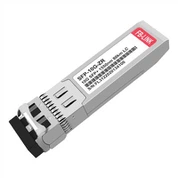
200G Transponder
FB-LINK muxponders and transponders for 200G capacity over single wavelength. The solution provides secure transport per service or per 200G uplink, with embedded Layer-1 encryption based on GCM-AES-256 standards and Diffie-Hellman (DH) Key Exchange. Encryption over 200G supports the following services: 10/25/40/100Gb Ethernet, 8G/16G/32G Fibre Channel, OTU2/2e/OTU3/OTU4, OC-192/STM-64.

- Product Introduction
200G Transponder Product Specification
| Parametric Indicators | Description |
| Maximum capacity of single board |
a)10*10G bi-directional transmission + 1*100G bi-directional transmission b)2*100G bi-directional transmission |
| Wavelength (frequency) range | DWDM:1529.16nm-1567.14nm(191.3THz-196.05THz) |
| Modulation mode | DP-QPSK@100G;DP-16QAM@200G;DP-8QAM@200G;DP-QPSK@200G |
| Line Side Protocol | OpenROADM/OpenZR+/SCFEC |
| dispersion tolerance | ±40000ps/nm@100G |
| OSNR tolerance |
<11.5dB@100GQPSK;<18.5dB@200GDP-8QAM;<21.5dB@200GDP-16QAM; <14dB@200G DP-QPSK |
| Service Access Type |
10G:10GE/10G WAN/10G LAN/SDH/OTU2 100G:100GE,100GE KR4,OTU4 |
| operating temperature | -5℃ ~ 45℃ |
| Storage Temperature | -40℃ ~80℃ |
| Relative Temperature | 5% ~ 95% non-condensing |
| Board Size | 172(W)× 40(H)× 210(D)(mm) |
| Safety and EMC | Conforms to FCC, UL, CE, TUV, CSA standards |
| Power Consumption | <100W |
200G over Single DWDM Wavelength

Related products

200G Ethernet

400G Ethernet

2U DCI BOX 3.2T

1U DCI BOX 1.6T
Next-Generation DCI Solutions: Transforming Data Center Connectivity with Advanced Optical Transport
The exponential growth of cloud services, streaming platforms, and enterprise applications has created unprecedented demand for high-capacity data center interconnect solutions. Organizations worldwide are seeking robust DCI technologies that can seamlessly bridge geographically distributed data centers while maintaining ultra-low latency and exceptional reliability.
Understanding Modern DCI Architecture
Data center interconnect technology serves as the critical backbone connecting multiple data center facilities, enabling real-time data synchronization, disaster recovery, and workload distribution. Advanced DCI platforms leverage dense wavelength division multiplexing (DWDM) to maximize fiber efficiency, delivering terabits of aggregate capacity over existing infrastructure.
Modern DCI deployments require flexible transport solutions capable of supporting diverse service types. Enterprise-grade platforms seamlessly accommodate Ethernet services ranging from 10 gigabits to 100 gigabits per second, alongside legacy SDH networks and OTN protocols. This versatility ensures organizations can migrate to next-generation architectures without disrupting existing operations.
Key Capabilities Driving DCI Performance
Adaptive Modulation for Optimal Reach
Leading DCI solutions implement intelligent modulation schemes that dynamically adapt to link conditions. Dual-polarization QPSK modulation enables extended transmission distances exceeding 1,000 kilometers for critical long-haul DCI applications. When distance permits, advanced 16QAM and 8QAM formats maximize spectral efficiency, potentially doubling capacity on shorter metro routes.
Superior Optical Performance
Chromatic dispersion compensation remains crucial for DCI networks spanning diverse fiber types. High-performance transponders deliver exceptional dispersion tolerance, accommodating up to 40,000 picoseconds per nanometer without external compensation modules. This capability simplifies network design and reduces deployment costs.
Optical signal-to-noise ratio (OSNR) requirements directly impact system reach and resilience. Advanced coherent detection enables DCI operation with minimal OSNR margins - below 12 dB for standard 100G services and under 22 dB for spectrally-efficient 200G channels utilizing 16QAM modulation.
Wavelength Flexibility and Grid Alignment
Comprehensive wavelength coverage across the C-band spectrum provides network planners maximum flexibility. Supporting frequencies from 191.3 THz to 196.05 THz ensures compatibility with both legacy DWDM infrastructure and emerging open optical standards like OpenROADM and OpenZR+.
Business Benefits of Advanced DCI Technology
Operational Efficiency: Consolidating multiple 10G services and high-capacity 100G channels onto a single platform reduces equipment footprint, power consumption, and operational complexity.
Investment Protection: Multi-rate, multi-protocol support enables gradual network evolution, protecting existing capital investments while accommodating future bandwidth requirements.
Simplified Operations: Standardized open interfaces reduce vendor lock-in and streamline network management across multi-vendor DCI ecosystems.
Environmental Sustainability: Modern platforms consuming less than 100 watts per module significantly reduce data center power and cooling requirements compared to legacy systems.
Deployment Scenarios for DCI Solutions
Cloud Service Provider Networks
Hyperscale cloud operators leverage DCI technology to interconnect regional data centers, ensuring consistent user experiences and enabling real-time data replication. The ability to transport hundreds of gigabits across metro and regional distances supports explosive growth in cloud storage and computing services.
Enterprise Hybrid Cloud Connectivity
Organizations adopting hybrid cloud strategies require reliable DCI connections between on-premises data centers and public cloud facilities. High-capacity transponders enable seamless workload mobility and disaster recovery capabilities essential for business continuity.
Financial Services and Low-Latency Trading
Financial institutions depend on ultra-low-latency DCI links for high-frequency trading, market data distribution, and regulatory compliance. Coherent optical transport minimizes processing delays while delivering the bandwidth required for massive data volumes.
Content Delivery Networks
Streaming platforms and content providers utilize DCI infrastructure to position media assets closer to end users. Efficient wavelength utilization allows cost-effective scaling as video quality and concurrent user counts continue increasing.
Technical Innovations Enabling Next-Gen DCI
Coherent Detection Technology
Digital signal processing combined with coherent detection has revolutionized DCI capabilities. This technology enables compensation for fiber impairments in the electrical domain, eliminating bulky dispersion compensation modules and enabling flexible modulation formats.
Forward Error Correction
Advanced FEC algorithms including soft-decision codes significantly extend optical reach by recovering transmitted data despite signal degradation. Modern DCI platforms support both proprietary and open-standard FEC, including OpenROADM-compliant implementations.
Environmental Resilience
Data center interconnect equipment must operate reliably across varying environmental conditions. Industrial-temperature-rated components ensure consistent performance from -5°C to 45°C operating temperatures, accommodating diverse data center cooling strategies and central office environments.
Frequently Asked Questions About DCI Technology
What is DCI and why is it important for modern data centers?
DCI (Data Center Interconnect) refers to networking technology that connects two or more data centers across metro, regional, or long-haul distances. It's critical for enabling cloud services, disaster recovery, data backup, and workload distribution across geographically dispersed facilities. Modern DCI solutions provide the high-capacity, low-latency connectivity essential for real-time applications and seamless user experiences.
How does DWDM improve DCI efficiency?
Dense Wavelength Division Multiplexing (DWDM) multiplexes multiple optical channels onto a single fiber pair, dramatically increasing capacity without requiring additional fiber infrastructure. For DCI applications, DWDM enables organizations to scale bandwidth from hundreds of gigabits to multiple terabits using existing fiber assets, reducing cost per bit while maximizing infrastructure utilization.
What's the difference between metro and long-haul DCI?
Metro DCI typically spans distances under 200 kilometers within a metropolitan area, often using spectrally-efficient modulation formats to maximize capacity on short routes. Long-haul DCI extends beyond 200 kilometers and may require robust modulation schemes that prioritize reach over spectral efficiency. Advanced platforms support both scenarios through adaptive modulation, optimizing performance based on specific distance requirements.
Can DCI solutions support both legacy and modern protocols?
Yes, enterprise-grade DCI platforms provide comprehensive multi-protocol support. They accommodate traditional SDH/SONET services, OTN protocols (OTU2, OTU4), and various Ethernet formats (10GE, 100GE) simultaneously. This flexibility enables gradual network migration while protecting existing infrastructure investments.
How do open standards like OpenROADM benefit DCI deployments?
OpenROADM defines interoperable interfaces for optical networking, reducing vendor lock-in and simplifying multi-vendor DCI network integration. Organizations leveraging OpenROADM-compliant platforms gain procurement flexibility, simplified operations, and the ability to deploy best-of-breed solutions without compatibility concerns.
What factors determine DCI optical reach?
Optical reach depends on several factors including modulation format, fiber type and quality, chromatic dispersion, OSNR requirements, and FEC overhead. QPSK modulation provides maximum reach (often exceeding 1,000 km), while higher-order formats like 16QAM optimize spectral efficiency on shorter links. Network designers balance these parameters based on specific distance and capacity requirements.
How does coherent DCI technology reduce network complexity?
Coherent detection with digital signal processing compensates for fiber impairments electronically, eliminating external dispersion compensation modules and optical amplifiers on many routes. This reduces equipment count, power consumption, and operational complexity while improving network flexibility and scalability.
What security considerations apply to DCI networks?
DCI links carry sensitive inter-data-center traffic requiring robust security measures. Layer 1 encryption at the optical transport layer provides line-rate security without impacting application performance. Additionally, physical layer monitoring detects unauthorized fiber taps or signal degradation that might indicate security threats.
Selecting the Right DCI Platform
Choosing an optimal DCI solution requires careful evaluation of current requirements and future growth projections. Key selection criteria include:
Capacity scalability: Ensure platforms support current bandwidth needs with headroom for 3-5 year growth
Distance requirements: Match modulation capabilities to specific span lengths
Protocol diversity: Verify support for all required service types and client interfaces
Operational standards: Prioritize open, interoperable platforms to avoid vendor lock-in
Environmental specifications: Confirm equipment ratings match deployment environments
Power efficiency: Calculate total cost of ownership including ongoing energy consumption
Organizations should also consider vendor ecosystem maturity, including availability of professional services, technical support capabilities, and software update cadence for security and feature enhancements.
The Future of DCI Technology
The DCI market continues evolving rapidly, driven by insatiable bandwidth demand and technological innovation. Emerging trends include:
Higher baud rates enabling 400G and 800G per wavelength capacity through advanced modulation and DSP improvements. These developments will allow data centers to scale bandwidth while minimizing wavelength consumption.
Artificial intelligence integration for predictive maintenance, automated network optimization, and intelligent traffic engineering. AI-driven DCI platforms will self-optimize based on traffic patterns and link conditions.
Coherent pluggables bringing coherent DCI capabilities to compact, hot-swappable form factors. This evolution democratizes high-performance optical networking, reducing deployment complexity and improving operational agility.
Open disaggregation continuing the industry shift toward standardized, interoperable building blocks. This trend empowers organizations to construct purpose-built DCI networks using best-in-class components from multiple vendors.
Conclusion
Data center interconnect technology has become the invisible infrastructure powering digital transformation across industries. Advanced DCI platforms combining flexible modulation, comprehensive protocol support, and open standards compliance enable organizations to build resilient, scalable networks that adapt to evolving business requirements.
Whether connecting hyperscale cloud regions, enabling enterprise hybrid cloud strategies, or supporting latency-sensitive financial applications, modern DCI solutions deliver the performance, reliability, and operational efficiency essential for digital-first organizations. By carefully evaluating capacity requirements, distance constraints, and operational priorities, enterprises can select DCI platforms that provide immediate value while accommodating long-term growth.
The convergence of coherent optics, open standards, and intelligent automation positions DCI technology as a strategic enabler for the next generation of cloud services, distributed applications, and data-driven innovation.
Hot Tags: dci
You Might Also Like