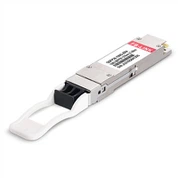
2U DWDM Frame
FBL2800-II 2U DWDM Frame platform is mainly used in network access layer and aggregation layer. It supports multi kinds of sub cards used in service access.

- Product Introduction
2U DWDM Frame
The FBL2800-II is a versatile 2U DWDM frame platform designed for deployment in network access and aggregation layers. This comprehensive solution specializes in optical transmission and protection services while supporting advanced capabilities including optical fiber sensing, optical crossover monitoring, and fiber optic surveillance.
Key Applications & Compatibility
The platform is engineered for CWDM/DWDM, Optical Line Protection (OLP), and Real-Time Fiber Sensing (RTFS) deployments. It accommodates over 30 service card types, including:
EDFA (Erbium-Doped Fiber Amplifier)
OUT (Optical Units)
SOA (Semiconductor Optical Amplifier)
OLP (Optical Line Protection)
OBP (Optical Bypass)
FEC (Forward Error Correction)
OTN (Optical Transport Network)
OSC (Optical Supervisory Channel)
OMU (Optical Monitoring Unit)
DCM (Dispersion Compensation Module)
All service cards feature hot-swap capability for seamless maintenance operations.
Design & Reliability
The FBL2800-II features a compact hardware architecture with optimized power efficiency and flexible configuration options. Redundancy is built into the system with:
1+1 dual power supply backup (supports dual AC220V, dual DC-48V, or AC220V + DC-48V configurations)
1+1 supervisor card redundancy
High-reliability chassis design
Management & Control
The platform includes a browser-based Network Management System (NMS) with an intuitive interface that enables:
Powerful centralized management capabilities
Rapid service provisioning and activation
Simplified equipment maintenance and administration
Industry Applications
The FBL2800-II platform serves diverse sectors including telecommunications carriers, energy and utilities, broadcast media, security infrastructure, and other mission-critical applications.
Item Spotlights
● Universal platform for CWDM and DWDM
● Support for 4 slots
● Support dual AC power supply, or dual DC power supply, or AC+DC power supply
● Unified management, easy network expansion, and smooth evolution on the multi-service transport platform.
● Easy for deployment
Description
|
Characteristics |
Description |
|
Slot capacity |
2 slots for universal service board, the maximum 200G service bandwidth for single slot, service slots support electronic cross protection and 1+1 control backup; |
|
System Interface |
OTU2/2e,OTU4,OTUC2; |
|
Client Interface |
GE/FE,10GE LAN/WAN,40GE,100GE; |
|
Power Supply |
1+1 backup DC power supply; |
|
Power Consumption |
Max. 350W; |
|
Environment |
Working temperature: 0°C~45°C; |
Network operators face mounting pressure to deliver higher bandwidth while maintaining cost efficiency and operational simplicity. The evolution of optical transport technology has led to sophisticated solutions that combine multiplexing and transponder functionality into unified platforms. A DWDM Muxponder represents this convergence, offering network architects a streamlined approach to wavelength division multiplexing and signal conversion.
Understanding DWDM Muxponder Technology
A DWDM Muxponder (Dense Wavelength Division Multiplexing Muxponder) integrates multiple network functions into a single chassis, eliminating the complexity of managing separate transponder and multiplexer equipment. This integrated approach enables operators to aggregate diverse client signals, convert them to appropriate wavelengths, and transmit them across metro and long-haul networks with exceptional efficiency.
Modern DWDM Muxponder platforms serve as the backbone for access and aggregation layers, bridging the gap between client services and core transport infrastructure. By consolidating various optical functions, these systems reduce rack space requirements, minimize power consumption, and simplify network operations.
Key Advantages of Advanced DWDM Muxponder Solutions
Versatile Service Integration
Contemporary DWDM Muxponder platforms accommodate an extensive range of client interfaces and transport protocols. From legacy SDH/SONET services to cutting-edge 100GE and OTN technologies, these systems provide seamless integration across multiple service types. This versatility ensures network operators can support existing infrastructure while preparing for future bandwidth demands.
Enhanced Reliability Architecture
Mission-critical networks demand unwavering availability. Advanced DWDM Muxponder systems incorporate redundant power supplies with flexible configurations supporting dual AC, dual DC, or hybrid power arrangements. Card-level protection schemes and hot-swappable modules enable maintenance without service disruption, achieving carrier-grade reliability standards.
Scalable Bandwidth Management
As network traffic continues its exponential growth, scalability becomes paramount. Modern DWDM Muxponder platforms offer modular slot architectures supporting bandwidth expansion without forklift upgrades. Individual service cards can deliver up to 200G capacity per slot, allowing networks to scale incrementally based on actual demand.
Technical Capabilities Defining Excellence
Comprehensive Optical Functions
High-performance DWDM Muxponder systems incorporate specialized optical components including optical amplifiers (EDFA, SOA), optical line protection (OLP), forward error correction (FEC), and dispersion compensation modules (DCM). This comprehensive feature set enables operators to build resilient, long-distance optical networks without requiring multiple equipment types.
Intelligent Network Management
Web-based network management systems provide intuitive interfaces for configuring and monitoring DWDM Muxponder installations. These management platforms streamline service provisioning, reduce configuration time, and offer real-time visibility into network performance. Centralized management capabilities become increasingly valuable as network complexity grows.
Flexible Wavelength Options
Supporting both CWDM and DWDM grid standards, modern muxponder platforms adapt to various network architectures. This flexibility allows operators to optimize spectral efficiency based on specific deployment scenarios, whether building new infrastructure or upgrading existing networks.
Real-World Applications Across Industries
Telecommunications Operators
Service providers leverage DWDM Muxponder technology to expand metro and regional network capacity efficiently. The ability to aggregate multiple client services onto shared optical infrastructure reduces transport costs while maintaining service quality commitments.
Energy and Utility Networks
Power grid operators require secure, reliable communications for supervisory control and data acquisition (SCADA) systems. DWDM Muxponder platforms provide the redundancy and deterministic performance essential for critical infrastructure protection.
Broadcasting and Media
High-bandwidth video contribution and distribution demands make DWDM Muxponder solutions ideal for broadcast networks. Support for various signal formats ensures compatibility with production equipment while delivering the capacity needed for uncompressed video transport.
Security and Surveillance
Smart city initiatives and public safety networks benefit from the scalable architecture and multi-service capabilities of DWDM Muxponder platforms. These systems accommodate growing camera deployments and data analytics requirements without constant infrastructure refresh.
Selecting the Right DWDM Muxponder Platform
When evaluating DWDM Muxponder solutions, network architects should consider several critical factors. Slot capacity determines future expandability, while supported client interfaces ensure compatibility with existing equipment. Power efficiency impacts operational costs, particularly in large-scale deployments. Management capabilities affect operational overhead and troubleshooting effectiveness.
Compact form factors optimize data center and central office space utilization. Equipment measuring two rack units or less provides substantial functionality without consuming excessive vertical space. This density advantage becomes significant as network nodes multiply.
Environmental specifications determine deployment flexibility. Systems operating across extended temperature ranges enable installation in diverse locations, from climate-controlled facilities to remote outdoor cabinets. This adaptability broadens potential deployment scenarios.
Frequently Asked Questions
What distinguishes a DWDM Muxponder from a standard transponder?
While traditional transponders perform wavelength conversion for individual signals, a DWDM Muxponder combines multiplexing and transponder functions in one platform. This integration aggregates multiple client signals, converts them to appropriate wavelengths, and multiplexes them onto shared fiber infrastructure, reducing equipment count and operational complexity.
How does a DWDM Muxponder improve network economics?
By consolidating multiple network functions into a unified chassis, DWDM Muxponder systems reduce capital expenditure through lower equipment costs and minimize operational expenses via decreased power consumption, reduced cooling requirements, and simplified management. The modular architecture enables pay-as-you-grow scaling, avoiding over-provisioning.
Can DWDM Muxponder platforms support both new and legacy services simultaneously?
Yes, modern DWDM Muxponder solutions provide extensive protocol support spanning legacy SDH/SONET interfaces through current 100GE and OTN standards. This multi-service capability enables smooth network evolution, allowing operators to migrate services gradually without disrupting existing traffic.
What protection mechanisms do DWDM Muxponder systems offer?
Comprehensive protection includes redundant power supplies with 1+1 backup, hot-swappable service cards for maintenance without interruption, optical line protection for fiber path diversity, and control card redundancy. These layered protection schemes deliver carrier-grade availability for mission-critical services.
How does slot architecture affect DWDM Muxponder performance?
Slot configuration determines system flexibility and maximum capacity. Platforms offering dedicated slots for universal service cards, specialized WDM/amplifier functions, and power supplies enable optimal resource allocation. Higher per-slot bandwidth capacity (such as 200G) provides headroom for future service growth without chassis replacement.
What management capabilities should a DWDM Muxponder provide?
Effective network management systems offer intuitive web-based interfaces, rapid service provisioning workflows, comprehensive performance monitoring, fault isolation tools, and centralized multi-site management. These capabilities reduce operational overhead and accelerate troubleshooting, particularly valuable for geographically distributed networks.
Hot Tags: DWDM Frame
You Might Also Like