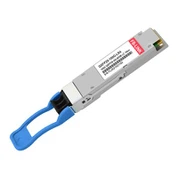
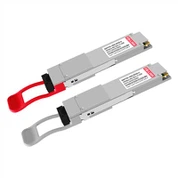
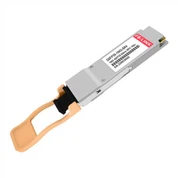
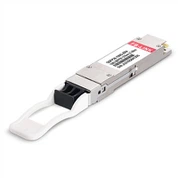
100G ER4 Lite
The central wavelengths of the 4 LAN WDM channels are 1295.56, 1300.05, 1304.58 and 1309.14 nm as members of the LAN WDM wavelength grid defined in IEEE 802.3ba.

- Product Introduction
Product Features
The 100G ER4 lite is a top-tier telecommunications product that boasts a number of impressive features. Here are six of the standout characteristics that make this product so reliable and valuable:
● Ultra-fast data transfer: With a data transfer speed of up to 100 gigabits per second, the 100G ER4 lite is capable of moving large amounts of data in an incredibly short amount of time. This makes it a great option for industries like finance, healthcare, and telecommunications that require rapid data transfer.
● Long-distance connectivity: The 100G ER4 lite has a reach of up to 40 kilometers, making it ideal for long-distance connections. Whether it's connecting data centers across a city or linking two remote offices, this feature ensures that data can be shared and accessed quickly and reliably.
● Multiple interfaces: This product is equipped with multiple interfaces (QSFP28, SFP28) which allow for greater versatility and compatibility across systems. This means it can be incorporated into a wider range of networks and applications.
● Cost-effective: Despite its impressive performance and advanced features, the 100G ER4 lite is surprisingly cost-effective. This makes it a smart choice for businesses and organizations looking to upgrade their networks while keeping costs under control.
● Low power consumption: Concerned about energy usage? The 100G ER4 lite has low power consumption, making it an eco-friendly choice that's easy on the environment and on your energy bills.
● Advanced cryptography: Finally, the 100G ER4 lite utilizes advanced encryption and authentication protocols, ensuring that data is transmitted securely. This feature is essential in an era of high cybercrime and hacking threats, giving businesses and organizations peace of mind that their data is protected.
Overall, the 100G ER4 lite is an impressive product with a range of advanced features that make it a smart choice for a variety of industries and applications. So if you're looking for a reliable, efficient, and cost-effective telecommunications solution, look no further than the 100G ER4 lite.
Products Description
|
Compatible |
100G ER4 lite |
Vendor Name |
FB-LINK |
|
Form Factor |
QSFP28 |
Max Data Rate |
103.125Gbps |
|
Wavelength |
1310nm |
Max Cable Distance |
40km |
|
Connector |
Duplex LC |
Media |
SMF |
|
Transmitter Type |
4xEML |
Receiver Type |
APD |
|
TX Power |
-2.9~4.5dBm |
Receiver Sensitivity |
<-20.9dBm |
|
Powerbudget |
18dB |
Receiver Overload |
-4.9dBm |
|
Power Consumption |
≤4.5W |
Extinction Ratio |
>4dB |
|
DDM/DOM |
Supported |
Commercial Temperature Range |
0 to 70°C (32 to 158°F) |
|
Packaging Technology |
BOX Packaging |
CDR(Clock Data Recovery) |
TX & RX Built-in CDR |
|
Protocols |
QSFP28 MSA Compliant |
Warranty |
3 Years |
Product compatibility
| Arista | Ruijie | Ciena | D-Link |
| mikrotik | TP-LINK | H3C | Brocade |
| Huawei | Juniper | IBM | HP |
| Cisco | Mellanox | Avago | Netgear |
| Dell | Generic | Alcatel-Lucent | Avaya |
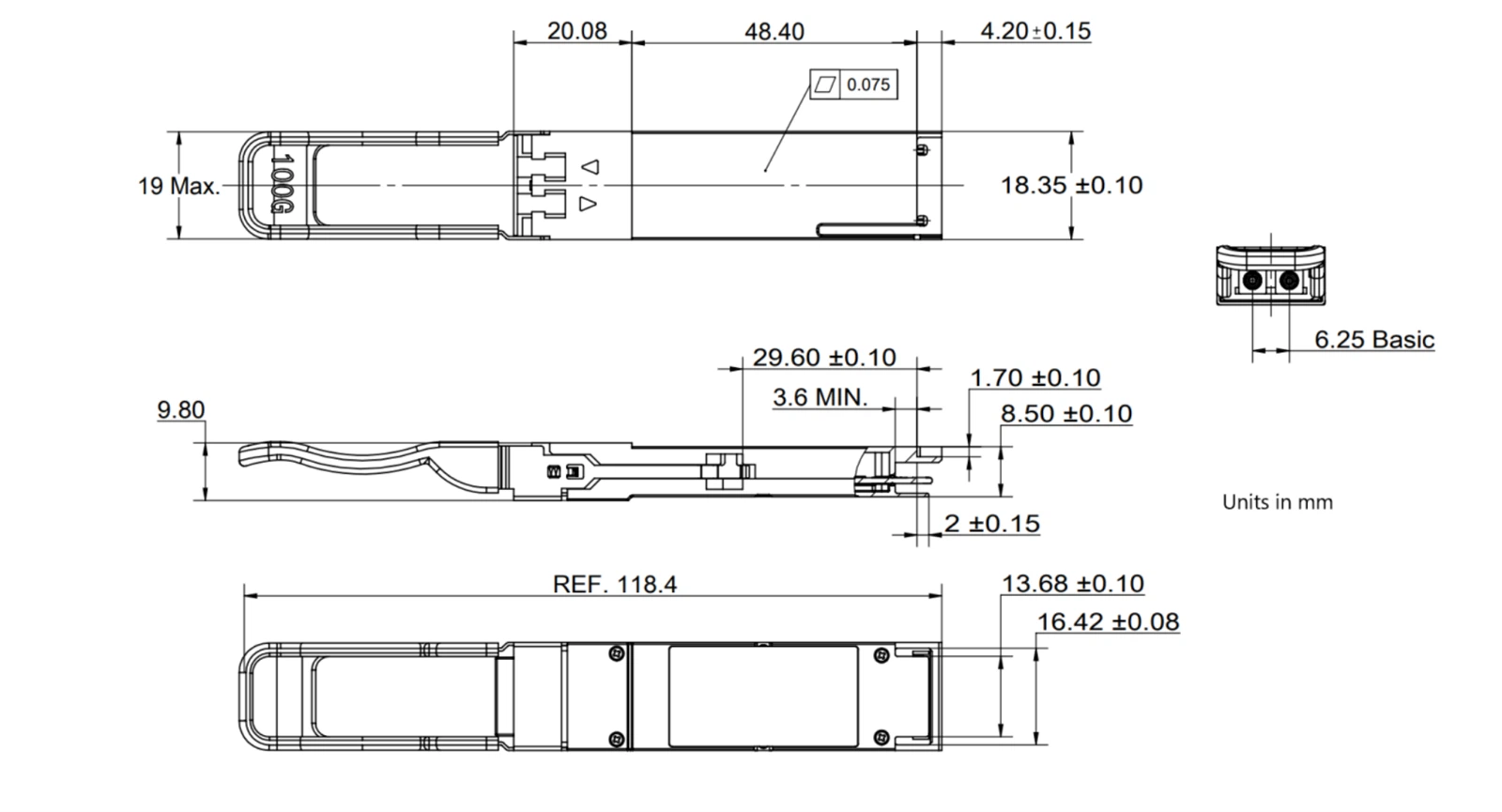
Mechanical Dimensions
Part Number Ordering Information
| Part Number | Data Rate (Gb/s) | Wavelength (nm) | Transmission | Temperature (℃) |
| FBL4-ER040C | 103.125 | 1295.56, 1300.05, 1304.58, 1309.14 | 40 | 0~70 |
| FBL4-ER040E | 103.125 | 1295.56, 1300.05, 1304.58, 1309.14 | 40 | -5~85 |
| FBL4-ER040I | 103.125 | 1295.56, 1300.05, 1304.58, 1309.14 | 40 | -40~85 |
Network demands continue to escalate as businesses handle increasingly massive data volumes across distributed locations. Optical transceivers have become the backbone of modern telecommunications, enabling seamless connectivity between data centers, enterprise networks, and cloud infrastructure. Among these critical components, the FB-LINK 100G ER4 Lite stands out as a powerful solution designed for extended-reach applications.
Why Optical Transceivers Matter in Enterprise Networks
Optical transceivers serve as the translators between electrical signals and optical light, making long-distance, high-speed data transmission possible. Without these compact yet sophisticated devices, the digital economy as we know it would grind to a halt. Financial institutions processing millions of transactions, healthcare facilities sharing critical patient data, and telecommunications providers delivering seamless connectivity all depend on reliable optical transceivers.
The QSFP28 form factor has emerged as an industry standard for 100-gigabit applications, offering the perfect balance between port density and performance. This small form-factor pluggable design allows network administrators to upgrade bandwidth without overhauling entire infrastructure systems.
Extended Reach Capabilities That Transform Connectivity
Distance matters when connecting distributed facilities. The FB-LINK 100G ER4 Lite delivers exceptional reach across single-mode fiber, extending connectivity up to 40 kilometers without signal degradation. This extended range eliminates the need for intermediate regeneration equipment, reducing both complexity and total cost of ownership.
Operating at 1310nm wavelength with four EML (Electroabsorption Modulated Laser) transmitters, this solution maintains signal integrity across metropolitan distances. The APD (Avalanche Photodiode) receiver technology ensures reliable detection even at the edge of transmission range, with sensitivity specifications that provide substantial power budget margins.
Energy Efficiency Without Performance Compromise
Power consumption has become a critical consideration as data centers seek to reduce operational expenses and environmental impact. Modern optical transceivers incorporate advanced power management, keeping consumption below 4.5 watts while delivering full 103.125 Gbps throughput. This efficiency translates to lower cooling requirements and reduced carbon footprint across large-scale deployments.
The commercial temperature range support (0°C to 70°C) ensures stable operation across various environmental conditions, from climate-controlled facilities to edge locations with less precise environmental management.
Security Features Built for Zero-Trust Environments
Data security cannot be an afterthought in today's threat landscape. Advanced optical transceivers integrate encryption capabilities and authentication protocols directly into the physical layer. This hardware-based security approach creates an additional barrier against sophisticated attacks that might bypass software-only protections.
The duplex LC connector interface ensures secure physical connections while maintaining compatibility with existing fiber infrastructure. This standardization allows organizations to implement robust security without proprietary lock-in.
Monitoring and Management Through Digital Diagnostics
Digital Diagnostic Monitoring (DDM) support provides real-time visibility into transceiver performance. Network teams can track temperature, voltage, transmit power, receive power, and laser bias current without disrupting operations. This proactive monitoring capability enables predictive maintenance, catching potential failures before they impact services.
The built-in Clock Data Recovery (CDR) on both transmit and receive paths ensures clean signal regeneration, maintaining data integrity even in electrically noisy environments or with timing variations from connected equipment.
Cost-Effective Scaling for Growing Bandwidth Needs
Budget constraints challenge every network upgrade decision. High-performance optical transceivers deliver enterprise-grade capabilities at price points that make 100G deployments financially viable for organizations beyond hyperscale operators. The three-year warranty coverage provides additional investment protection, ensuring long-term reliability.
QSFP28 MSA compliance guarantees interoperability across multi-vendor environments, preventing vendor lock-in and enabling competitive procurement strategies. Organizations can confidently deploy these optical transceivers knowing they'll integrate seamlessly with existing Cisco, Juniper, Arista, and other major networking platforms.
Applications Across Industry Verticals
Financial Services: High-frequency trading platforms and real-time risk analysis systems demand microsecond-level latency. Extended-reach optical transceivers enable direct connections between trading floors and colocation facilities without intermediate switching.
Healthcare: Medical imaging systems generate enormous file sizes that must move quickly between diagnostic centers, specialists, and archive systems. Reliable optical transceivers ensure that critical patient data flows without delays that could impact care decisions.
Telecommunications: Service providers building out 5G infrastructure and expanding fiber-to-the-home networks rely on scalable optical transceivers to deliver promised bandwidth to end users.
Cloud & Data Centers: Interconnecting geographically distributed cloud regions requires optical transceivers that can maintain performance across metropolitan distances while supporting massive concurrent data flows.
Frequently Asked Questions
What makes ER4 Lite optical transceivers different from standard ER4 versions?
Lite versions typically optimize for specific use cases, offering excellent performance characteristics while streamlining features that may not be necessary for all deployments. This focused approach often results in better price-to-performance ratios for organizations with well-defined requirements.
How do I know if 40km reach optical transceivers are right for my network?
Evaluate the physical distance between your connection points. If sites are separated by 10-40 kilometers and you're using single-mode fiber, extended-reach optical transceivers provide direct connectivity without intermediate equipment. For shorter distances, LR (10km) options may suffice; for longer spans, consider ZR solutions.
Can these optical transceivers work with existing fiber infrastructure?
Yes, compatibility with standard single-mode fiber and duplex LC connectors means these optical transceivers integrate with existing cabling infrastructure. The 1310nm operating wavelength works with conventional SMF installations without requiring specialized fiber types.
What does the 18dB power budget mean for network reliability?
Power budget represents the difference between transmit power and receiver sensitivity. An 18dB budget provides substantial margin for fiber loss, connector losses, and aging effects. This generous budget ensures reliable operation even as fiber infrastructure ages or if installation quality varies.
How does built-in CDR improve network performance?
Clock Data Recovery regenerates timing information from the data stream itself, compensating for jitter and timing variations introduced by long fiber runs or cascaded equipment. This results in cleaner signals, lower bit error rates, and more stable high-speed connections.
Are optical transceivers with DDM support worth the investment?
Absolutely. Digital diagnostics transform network management from reactive to proactive. Rather than discovering failures when users report problems, teams can identify degrading optical transceivers before they fail, schedule maintenance during planned windows, and maintain detailed performance histories for capacity planning.
What temperature considerations affect optical transceiver deployment?
Commercial-grade optical transceivers operate reliably from 0°C to 70°C, suitable for most data center and office environments. Extreme locations like outdoor enclosures or industrial facilities may require extended or industrial temperature-rated versions designed for harsher conditions.
How do I ensure compatibility with my existing switches and routers?
Check that your networking equipment supports QSFP28 form factors and 100G speeds. MSA compliance ensures optical transceivers work across vendors, but always verify specific platform compatibility lists or conduct testing before large-scale deployments.
Hot Tags: Optical Transceivers