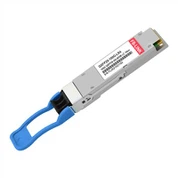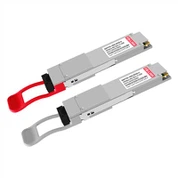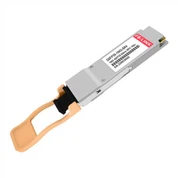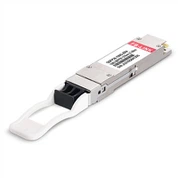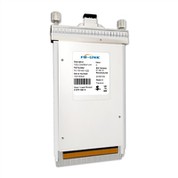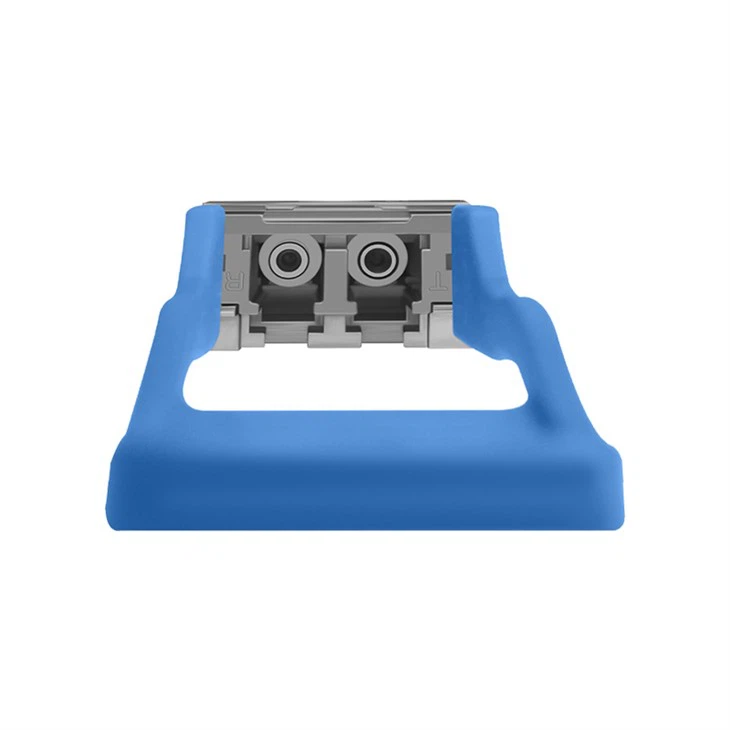
100G QSFP28 LR4
This product is a 100Gb/s transceiver module designed for optical communication applications compliant to 100GBASE-LR4 of the IEEE P802.3ba standard.

- Product Introduction
Products Description
|
Compatible |
100GBASE QSFP28 LR4 |
Vendor Name |
FB-LINK |
|
Form Factor |
QSFP28 |
Max Data Rate |
103.125Gbps |
|
Wavelength |
1310nm |
Max Cable Distance |
10km |
|
Connector |
Duplex LC |
Media |
SMF |
|
Transmitter Type |
4xLAN WDM DML(DFB) |
Receiver Type |
PIN |
|
TX Power |
-4.3~4.5dBm |
Receiver Sensitivity |
<-10.6dBm |
|
Powerbudget |
6.3dB |
Receiver Overload |
4.5dBm |
|
Power Consumption |
≤3.5W |
Extinction Ratio |
>4dB |
|
DDM/DOM |
Supported |
Commercial Temperature Range |
0 to 70°C (32 to 158°F) |
|
Protocols |
IEEE 802.3ba 100GBASE-LR4, IEEE 802.3bm, QSFP28 MSA, SFF-8665, SFF-8636 |
Warranty |
3 Years |
Our advantage

Office

Sensing

Workshops

Workshops
Optical transceivers have revolutionized the way data centers and telecommunications networks operate. These compact yet powerful devices serve as the critical interface between electrical and optical signals, enabling high-speed data transmission across fiber optic cables. As businesses demand faster connectivity and greater bandwidth, understanding optical transceivers has become essential for network engineers and IT professionals alike.
What Makes Optical Transceivers Essential?
Optical transceivers function as both transmitters and receivers, converting electrical signals into optical signals for transmission and then reversing the process at the receiving end. This bidirectional capability makes them indispensable in modern networking infrastructure. Unlike traditional copper-based solutions, optical transceivers can transmit data over significantly longer distances without signal degradation, making them ideal for everything from campus networks to intercontinental fiber routes.
The evolution of optical transceivers has been remarkable. Early versions supported megabit speeds, while contemporary modules handle 100 gigabits per second and beyond. This progression reflects the exponential growth in data consumption driven by cloud computing, streaming services, and IoT applications.
Key Technologies Behind Optical Transceivers
Modern optical transceivers employ sophisticated technologies to achieve their performance metrics. Wavelength Division Multiplexing (WDM), for instance, allows multiple data streams to travel simultaneously over a single fiber by using different light wavelengths. This technology multiplies the effective capacity of fiber optic infrastructure without requiring additional cables.
The laser technology within optical transceivers has also advanced considerably. Distributed Feedback (DFB) lasers and Directly Modulated Lasers (DML) provide the precise wavelength control necessary for long-distance transmission. These components work in concert with PIN photodiodes on the receiver side to ensure reliable signal detection even after the optical signal has traveled considerable distances.
Applications Across Industries
Optical transceivers find applications across diverse sectors. Data centers rely on them to interconnect servers, storage systems, and networking equipment at speeds that copper simply cannot match. Telecommunications providers use optical transceivers to build out their backbone networks, delivering gigabit internet services to businesses and consumers.
Enterprise networks increasingly deploy optical transceivers to future-proof their infrastructure. A well-designed network incorporating high-quality optical transceivers can scale to meet growing bandwidth demands without requiring complete infrastructure overhauls. Financial institutions, healthcare providers, and educational campuses particularly benefit from the low latency and high reliability that optical transceivers provide.
Selecting the Right Optical Transceivers
Choosing appropriate optical transceivers requires careful consideration of several factors. Distance requirements dictate which technology to deploy-short-range applications might use multimode fiber with cost-effective transceivers, while long-haul connections demand single-mode fiber and more sophisticated modules.
Power consumption represents another critical consideration. Modern optical transceivers have become increasingly energy-efficient, with some modules consuming less than 4 watts while delivering 100 gigabit throughput. This efficiency translates to lower operational costs and reduced cooling requirements in data centers.
Temperature tolerance matters significantly in certain environments. Optical transceivers deployed in outdoor telecommunications cabinets or industrial settings must withstand wider temperature ranges than those in climate-controlled data centers. Understanding your environmental requirements ensures reliable operation under actual deployment conditions.
The Role of Standards and Compatibility
Optical transceivers adhere to various industry standards established by organizations like IEEE and the Multi-Source Agreement (MSA) groups. These standards ensure interoperability between equipment from different manufacturers, preventing vendor lock-in and promoting competitive pricing.
Digital Diagnostic Monitoring (DDM) capability in optical transceivers provides real-time performance metrics including transmit power, receive power, temperature, and voltage. This visibility enables proactive network management, allowing administrators to identify potential issues before they cause outages.
Future Trends in Optical Transceivers
The roadmap for optical transceivers points toward even higher speeds and greater integration. 400G and 800G modules are becoming mainstream, while research continues on terabit-scale transceivers. Coherent technology, once reserved for long-haul telecommunications, is migrating into data center optical transceivers, enabling unprecedented reach and spectral efficiency.
Silicon photonics represents another frontier for optical transceivers. By integrating optical components directly onto silicon chips, manufacturers can reduce costs, improve reliability, and enable new form factors. This technology promises to make high-performance optical transceivers accessible to broader markets.
Frequently Asked Questions About Optical Transceivers
Q: How long do optical transceivers typically last?
A: Quality optical transceivers typically offer warranties ranging from 3 to 5 years, and many units exceed this operational lifespan when properly maintained. Environmental factors like temperature, humidity, and power quality significantly impact longevity. Regular monitoring through DDM features helps maximize service life.
Q: Can I mix optical transceivers from different manufacturers?
A: Yes, provided the optical transceivers conform to the same standards and specifications. MSA-compliant modules should interoperate regardless of manufacturer. However, always verify compatibility in your specific equipment, as some vendors implement proprietary features or coding that may require matching transceivers.
Q: What's the difference between single-mode and multimode optical transceivers?
A: Single-mode optical transceivers use lasers to transmit light through narrow-core fiber, enabling distances up to tens of kilometers. Multimode optical transceivers typically use LEDs or VCSELs with wider-core fiber, suitable for shorter distances up to several hundred meters. Single-mode offers greater reach; multimode provides cost advantages for shorter runs.
Q: Do optical transceivers require special handling?
A: Optical transceivers contain sensitive optical components that require careful handling. Always use dust caps when modules are not installed, avoid touching optical interfaces, and use proper cleaning procedures when necessary. Static electricity can damage electronic components, so proper ESD precautions are essential during installation.
Q: How do I troubleshoot optical transceiver issues?
A: Start by checking DDM parameters if available-unusual power levels or temperatures often indicate problems. Verify fiber cleanliness, as contamination is a common issue. Check for fiber damage or excessive bending. Ensure the transceiver is fully seated and properly configured for your network equipment. Testing with known-good modules can isolate whether issues stem from the transceiver or other network components.
Q: What impact does power budget have on network design?
A: Power budget in optical transceivers represents the difference between transmit power and receiver sensitivity, indicating how much signal loss the link can tolerate. Adequate power budget accounts for fiber attenuation, connector losses, and aging while maintaining reliable operation. Insufficient power budget leads to bit errors and connection instability, making it crucial to calculate this margin during network design.
Hot Tags: Optical Transceivers
You Might Also Like