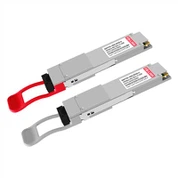
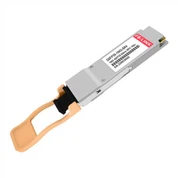
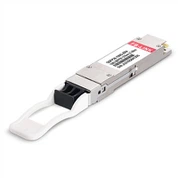
QSFP28 LR4
The 100GBASE QSFP28 LR4 optical module is generally used with LC single-mode fiber patch cords, and the maximum transmission distance can reach 10km. The QSFP28 LR4 optical module converts 4 channels of 25Gbps electrical signals into 4 channels of LAN WDM optical signals, and then multiplexes them into a single channel to achieve 100GBASE optical transmission.

- Product Introduction
Item Spotlights
● Universal QSFP28 Transceiver
● Use FB-LINK to configure to almost any vendor
● For 100GBASE-LR4 Ethernet links
● Integrated Clock-Data-Recovery (CDR)
● Supported Data Rates: 103.12 Gbit/s
● Up to 10 km via Singlemode OS2
● LC-Duplex Connector
Description
|
Compatible |
100GBASE QSFP28 LR4 |
Vendor Name |
FB-LINK |
|
Form Factor |
QSFP28 |
Max Data Rate |
103.125Gbps |
|
Wavelength |
1310nm |
Max Cable Distance |
10km |
|
Connector |
Duplex LC |
Media |
SMF |
|
Transmitter Type |
4xLAN WDM DML(DFB) |
Receiver Type |
PIN |
|
TX Power |
-4.3~4.5dBm |
Receiver Sensitivity |
<-10.6dBm |
|
Powerbudget |
6.3dB |
Receiver Overload |
4.5dBm |
|
Power Consumption |
≤3.5W |
Extinction Ratio |
>4dB |
|
DDM/DOM |
Supported |
Commercial Temperature Range |
0 to 70°C (32 to 158°F) |
|
Protocols |
IEEE 802.3ba 100GBASE-LR4, IEEE 802.3bm, QSFP28 MSA, SFF-8665, SFF-8636 |
Warranty |
3 Years |
The exponential growth of data traffic has transformed how enterprises approach network infrastructure. As bandwidth demands continue to surge, optical transceivers have become the cornerstone of high-speed connectivity, enabling seamless data transmission across vast distances while maintaining signal integrity and reliability.
The Evolution of Optical Transceivers in Enterprise Networks
Optical transceivers serve as the critical interface between electrical and optical signals, converting data from one medium to another with remarkable precision. These compact modules have revolutionized data center connectivity, supporting everything from short-reach connections within racks to long-haul transmissions spanning kilometers.
The transition to 100-gigabit Ethernet has marked a significant milestone in network evolution. Organizations worldwide are deploying next-generation optical transceivers to meet the demanding requirements of cloud computing, artificial intelligence workloads, and real-time data analytics. The QSFP28 form factor has emerged as the industry standard for 100G applications, offering superior port density and power efficiency compared to previous generations.
Why 100GBASE-LR4 Technology Matters
Long-reach optical transceivers utilizing LR4 technology address a specific but crucial need in network architecture. When connections must span multiple buildings, campus environments, or metro area networks, these optical transceivers provide the extended reach necessary without sacrificing performance.
The LR4 specification employs wavelength-division multiplexing (WDM) technology, transmitting four parallel lanes of 25G traffic over different wavelengths across a single fiber pair. This elegant solution maximizes existing fiber infrastructure while delivering aggregate 100G throughput. Organizations can extend their networks up to ten kilometers using standard singlemode fiber, eliminating the need for costly intermediate repeaters or signal regeneration equipment.
Universal Compatibility: The Game-Changer
One of the most significant challenges in deploying optical transceivers has historically been vendor compatibility. Network equipment from different manufacturers often requires specific transceiver coding, creating inventory headaches and limiting flexibility. Universal optical transceivers solve this problem by supporting configurable vendor identification, allowing a single transceiver to work seamlessly across multi-vendor environments.
This configurability dramatically reduces operational complexity. Network administrators can maintain a unified inventory of optical transceivers rather than stocking separate modules for each equipment vendor. The result is lower capital expenditure, simplified logistics, and faster deployment times when expanding or upgrading network infrastructure.
Technical Excellence in Modern Optical Transceivers
Contemporary optical transceivers incorporate sophisticated features that ensure reliable operation even in demanding environments. Integrated Clock-Data-Recovery (CDR) circuits compensate for signal degradation over distance, regenerating clean digital signals at the receiver. This technology is essential for maintaining bit error rates within acceptable thresholds across extended fiber runs.
Digital Diagnostic Monitoring (DDM) capabilities represent another critical advancement in optical transceivers. This feature enables real-time monitoring of key parameters including optical power levels, temperature, and bias current. Network operations teams can proactively identify potential issues before they cause service disruptions, implementing predictive maintenance strategies that maximize uptime.
The power efficiency of modern optical transceivers also deserves attention. With data centers consuming enormous amounts of electricity, every watt matters. Advanced designs keep power consumption below 3.5 watts per module while delivering 100G throughput, contributing to both operational cost savings and environmental sustainability goals.
Applications Across Industries
Financial services institutions rely on high-performance optical transceivers for low-latency trading connections between data centers. Educational institutions use them to interconnect campus buildings with high-bandwidth infrastructure supporting research and distance learning. Healthcare organizations depend on optical transceivers to transmit medical imaging data and support telemedicine applications.
Service providers deploy these optical transceivers extensively in metro networks, connecting central offices and aggregation points across cities. Enterprise customers leverage them for data center interconnection, ensuring business continuity through geographically distributed infrastructure. The versatility of quality optical transceivers makes them suitable for virtually any application requiring reliable, high-speed connectivity.
Selecting the Right Optical Transceivers
When evaluating optical transceivers for your network, several factors warrant consideration. First, confirm the required reach matches your application-LR4 modules excel at distances between two and ten kilometers over singlemode fiber. Next, verify protocol support aligns with your equipment specifications, particularly IEEE 802.3ba compliance for 100G Ethernet.
Temperature ratings matter significantly for installations in environments without climate control. Commercial-grade optical transceivers typically operate reliably from 0 to 70°C, suitable for most indoor deployments. Industrial applications may require extended temperature range options.
Warranty coverage provides important risk mitigation. Reputable manufacturers back their optical transceivers with comprehensive warranties, typically spanning three years. This coverage protects your investment and demonstrates the manufacturer's confidence in product reliability.
Future-Proofing Your Network Investment
As networks continue evolving toward 400G and beyond, choosing optical transceivers from manufacturers committed to innovation ensures longer-term value. Look for companies investing in next-generation technologies and maintaining backward compatibility with existing infrastructure.
The modular nature of optical transceivers provides inherent upgrade flexibility. As bandwidth requirements grow, you can often replace individual modules without overhauling entire network segments. This incremental upgrade path protects capital investments while providing a clear migration strategy toward higher-speed technologies.
Frequently Asked Questions
Q: What is the difference between QSFP28 and QSFP+ optical transceivers?
A: QSFP28 optical transceivers support 100G data rates, while QSFP+ modules typically support 40G. Although they share similar physical form factors, QSFP28 incorporates enhanced electrical specifications and signaling to achieve the higher bandwidth. Most modern switches provide backward compatibility, allowing QSFP+ modules to operate in QSFP28 ports at the lower data rate.
Q: Can I use LR4 optical transceivers with multimode fiber?
A: No. LR4 optical transceivers are specifically designed for singlemode fiber (OS2) and will not function properly with multimode fiber. For shorter distances using multimode fiber, consider SR4 variants instead. Using the wrong fiber type can result in complete transmission failure or extremely poor performance.
Q: How do universal optical transceivers differ from OEM modules?
A: Universal optical transceivers can be configured to work with equipment from multiple vendors, while OEM modules are coded for specific manufacturers. Universal modules offer identical technical performance but provide greater flexibility and often lower cost. They're particularly valuable in mixed-vendor environments or when maintaining spare inventory.
Q: What does the power budget specification indicate?
A: The power budget represents the difference between transmitted optical power and receiver sensitivity. A 6.3dB power budget means the optical transceivers can tolerate up to 6.3dB of signal loss in the optical path, accounting for fiber attenuation, connector losses, and splices. Higher power budgets provide greater margin for imperfect installations or future degradation.
Q: Why is DDM/DOM support important in optical transceivers?
A: Digital Diagnostic Monitoring allows optical transceivers to report real-time operational parameters to the network management system. This visibility enables proactive troubleshooting, helps identify failing components before complete failure, and assists in maintaining optimal network performance. Without DDM, diagnosing optical layer issues requires manual testing equipment.
Q: How long do optical transceivers typically last?
A: Quality optical transceivers typically provide reliable operation for 10-15 years under normal conditions. However, operational lifespan depends on environmental factors like temperature, humidity, and handling. Regular monitoring through DDM helps identify degradation early, allowing timely replacement before performance impacts occur.
Q: Can I mix different brands of optical transceivers in the same network?
A: Yes, as long as both optical transceivers comply with the same industry standards (IEEE, MSA) and operate at compatible wavelengths and data rates. Standards-compliant modules from different manufacturers should interoperate seamlessly. This flexibility is one advantage of using industry-standard optical transceivers rather than proprietary solutions.
Q: What maintenance do optical transceivers require?
A: Optical transceivers require minimal maintenance but benefit from keeping fiber connectors clean and protected when not in use. Always use dust caps on unused ports, and clean connectors with appropriate tools before making connections. Regular monitoring of DDM parameters helps identify potential issues. Avoid hot-plugging modules whenever possible to prevent electrical stress.
Hot Tags: Optical Transceivers
You Might Also Like