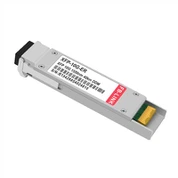
10G SFP+ LR
10G SFP+ LR is a 10G LR single-mode SFP+ transceiver that uses 1310nm wavelength and has a transmission distance of up to 10km. The module can be used with 10G Ethernet, SONET or SDH networks.

- Product Introduction
Item Spotlights
● Hot-pluggable SFP+ form factor
● Power dissipation <1W
● Industrial temperature range of -40°C to 85°C
● Single 3.3V power supply
● Transmission distance up to 10km
● Support DDM diagnosis function
● Duplex LC connector
● RoHS compliant
Description
| Type | 10G SFP+ LR | Operating Temperature | 0°C to 70°C |
| Form Factor | SFP+ | Fiber Type | Single Mode |
| TX Power | -8.2~0.5dBm | Connector | Duplex LC |
| Max Cable Distance | 10km | Receiver Sensitivity | <-14.4dBm |
| Wavelength | 1310nm | Warranty | 3 Years |
Widely used

Our advantage

ISO9001/ CE/ FC/ 3C/ ROHS
and other certifications

A shelf life of up to three years reduces after-sales worries.

fully compatible with Huawei, Mellanox, Cisco Etc,.

Professional Testing Equipment, making products of higher quality.
Certificate


When it comes to high-speed data transmission over extended distances, optical transceivers have become indispensable components in enterprise networks, data centers, and telecommunications infrastructure. Among the various types available, 10G SFP+ long reach modules stand out as a reliable solution for organizations requiring robust performance across distances up to 10 kilometers.
What Makes This Technology Essential?
Optical transceivers serve as the critical bridge between electrical signals in networking equipment and optical signals transmitted through fiber optic cables. The 10 Gigabit small form-factor pluggable plus (SFP+) variant represents a compact yet powerful solution that delivers enterprise-grade performance while maintaining compatibility with standard networking equipment.
The hot-swappable nature of these modules allows network administrators to replace or upgrade components without shutting down entire systems, minimizing downtime and maintaining business continuity. This feature alone makes optical transceivers a preferred choice for mission-critical applications where network availability is paramount.
Technical Advantages for Demanding Environments
Operating on a 1310nm wavelength over single-mode fiber, these optical transceivers achieve exceptional transmission clarity with minimal signal degradation. The output power range ensures consistent performance, while the sensitive receiving capabilities maintain signal integrity even over maximum distance spans.
Energy efficiency remains a key consideration in modern network design. With power consumption below one watt, these modules significantly reduce operational costs and heat generation in densely populated equipment racks. The single 3.3V power requirement simplifies integration with existing infrastructure without requiring specialized power management solutions.
For industrial deployments, environmental resilience cannot be overlooked. Optical transceivers designed for extended temperature ranges provide reliable operation in challenging conditions, from freezing warehouses to heat-intensive manufacturing floors. This industrial-grade construction ensures consistent performance regardless of ambient conditions.
Advanced Monitoring and Management
Digital Diagnostic Monitoring (DDM) functionality elevates these optical transceivers beyond simple data transmission devices. Network administrators gain real-time visibility into critical parameters including temperature, voltage, laser bias current, transmit power, and received signal strength. This proactive monitoring capability enables predictive maintenance strategies, helping teams identify potential issues before they impact network performance.
The duplex LC connector interface provides a standardized, reliable connection method that's become an industry standard. This connector type offers high port density while maintaining excellent optical performance and ease of installation.
Environmental Responsibility and Compliance
Modern optical transceivers meet RoHS (Restriction of Hazardous Substances) compliance standards, reflecting a commitment to environmental responsibility. This certification ensures that these components are manufactured without harmful materials like lead, mercury, and cadmium, making them suitable for global deployment while minimizing environmental impact.
Application Scenarios
These optical transceivers excel in diverse networking scenarios:
Campus Networks: Connecting buildings across corporate or educational campuses where fiber runs extend several kilometers.
Metropolitan Area Networks: Linking distributed office locations or retail sites within city limits.
Data Center Interconnects: Establishing connections between server rooms or separate data center facilities.
Storage Networks: Supporting high-speed SAN (Storage Area Network) deployments requiring consistent, low-latency performance.
Telecommunications Infrastructure: Serving as cost-effective transport solutions for service provider access networks.
Frequently Asked Questions
What's the difference between SFP and SFP+ optical transceivers?
SFP+ modules support data rates up to 10 Gbps, representing a significant upgrade from standard SFP modules which typically handle up to 1 Gbps. While they share similar physical dimensions, SFP+ optical transceivers are specifically engineered for higher bandwidth applications and are not backward compatible with SFP ports.
Can I use single-mode optical transceivers with multimode fiber?
No, single-mode optical transceivers are designed specifically for single-mode fiber which has a much smaller core diameter (typically 9 microns). Using them with multimode fiber would result in poor performance or complete signal failure. Always match the transceiver type to your fiber infrastructure.
How do I know if my optical transceiver is failing?
With DDM-enabled optical transceivers, you can monitor performance parameters in real-time. Warning signs include increasing error rates, fluctuating signal strength, elevated operating temperatures, or laser bias current drift. Many network management systems can alert you to these conditions before complete failure occurs.
What does the -8.2 to 0.5 dBm transmit power specification mean?
This indicates the optical power output range of the transceiver's laser. The negative dBm values represent milliwatt power levels on a logarithmic scale. This range ensures the transceiver delivers sufficient power for 10km transmission while staying within safe operating parameters that won't damage receiving equipment.
Are these optical transceivers compatible with all switch manufacturers?
Most 10G SFP+ optical transceivers follow MSA (Multi-Source Agreement) standards, ensuring broad compatibility. However, some manufacturers implement proprietary coding or firmware checks. It's advisable to verify compatibility with your specific switch model, though many transceivers offer multi-vendor compatibility.
How important is the industrial temperature rating?
The industrial temperature rating is crucial for deployments in non-climate-controlled environments. Standard commercial optical transceivers typically operate from 0°C to 70°C, while industrial-grade modules function reliably from -40°C to 85°C. For outdoor installations, warehouse applications, or industrial settings, the extended temperature range prevents failures during extreme weather conditions.
What maintenance do optical transceivers require?
Optical transceivers themselves require minimal maintenance. Primary care involves keeping connector endfaces clean and dust-free, monitoring DDM parameters for early warning signs, and ensuring adequate cooling in equipment racks. Regular firmware updates through your network equipment may optimize performance.
Hot Tags: Optical Transceivers
You Might Also Like